Ready to start a business? See the 8-step process, real costs, timelines, and mistakes to avoid before you register.
There are 36,207,130 small businesses in the United States.[1]
Starting a one can feel like a lot at once. Between choosing a structure, registering with the state, and figuring out what you're allowed to call yourself before you've made a sale, it's easy to stall out before you even get moving.
The good news is that whether you want to start a small business as a side venture or launch something bigger, the process follows the same core sequence. Break it into steps, take them one at a time, and the process becomes manageable. Most new businesses do make it past their first year, and the ones that stumble usually skip one of the steps below rather than being unlucky.
This guide walks you through the 8-step path to starting a business, plus straight answers to the questions people ask most.
1. Validate Your Idea and Research the Market
Before you spend a dollar, find out if people actually want what you're planning to sell. Talk to potential customers directly. Ask what they'd pay, what frustrates them about current options, and whether they'd buy from you today.
Look at your competitors while you're at it. Understanding who else is solving this problem, and how, helps you find the gap you can fill. The SBA's official startup checklist treats market research as the foundation on which every other step builds, and that order matters. Skipping this step is one of the most common reasons a promising idea doesn't turn into a stable business.
2. Write a Simple Business Plan
Your business plan doesn't need to be a hundred pages. For most small businesses, a one-page plan covering your mission, your ideal customer, and how you'll make money is enough to guide your first year.
If you're planning to seek a loan or bring on investors, you'll want a more detailed version with financial projections and a competitive breakdown. Either way, write it down. A plan that only lives in your head is hard to stay consistent with once things get busy.
3. Choose Your Business Structure
The structure you pick affects your taxes, your paperwork, and how exposed your personal assets are if something goes wrong. The main options are sole proprietorship, partnership, LLC, S corporation, and C corporation.
Do I Need an LLC to Start a Business?
No, you can start a business without one. A sole proprietorship is legal and requires no separate filing. The tradeoff is that there's no wall between your personal assets and your business debts, so if the business is sued or can't pay a bill, your personal savings and property are on the table.
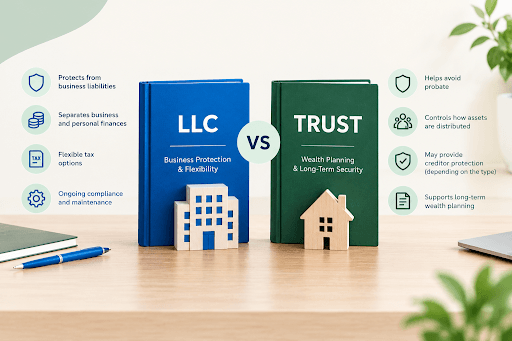
An LLC creates that separation while staying simple to run. It's the most common choice for small business owners who want real protection without corporate-level paperwork. If you're ready to move forward, you can compare business structures side by side to see which one fits.
4. Register Your Business and Get Your EIN
Once you've picked a name and structure, it's time to make things official. You'll file your formation documents with your state, which is what actually creates your LLC or corporation as a legal entity.
You'll also need an Employer Identification Number (EIN) from the IRS. It works like a Social Security number for your business, and you'll need it to open a bank account, hire employees, and file taxes. The IRS issues EINs online at no cost, and most online applications are approved within minutes as long as the information is accurate. Most states also require your business to have a registered agent on file, someone who can accept legal and state documents on your behalf.
If you haven't settled on a name yet, Swyft's business name generator can help you find something available before you file.
5. Apply for Licenses and Permits
What you need here depends heavily on your industry and location. A home-based consulting business and a restaurant face very different requirements. Check with your city, county, and state to see what applies to you, and don't assume a general business license covers everything.
Some industries, like food service, childcare, or anything involving health and safety, need additional permits on top of the basics. Swyft's business license guidance and state-specific guides can help you figure out what's required before you open your doors, so you're not caught off guard later.
6. Fund Your Business
Startup costs vary widely depending on what you're building. A service-based business run from home can often get started for a few thousand dollars, while a storefront or a business with inventory and employees usually needs a larger cushion, sometimes tens of thousands of dollars, to cover the first year.
Common funding sources include personal savings, small business loans, crowdfunding, grants, and outside investors. Each comes with different tradeoffs around control and repayment, so weigh what matters most to you: keeping full ownership or moving faster with outside capital.
7. Open a Business Bank Account
Keep your business and personal money separate from day one. It makes bookkeeping easier, keeps your tax filing clean, and protects the liability shield that an LLC or corporation gives you. Mixing funds can undo that protection even if your paperwork is otherwise in order.
Most banks will ask for your EIN, your formation documents, and sometimes your business license before opening an account. Have these ready so you're not making multiple trips.
8. Build Your Online Presence and Launch
Even a simple website builds trust before a customer ever talks to you. Include what you offer, how to reach you, and enough detail that someone can decide whether you're the right fit. Claim your social media handles too, even if you're not ready to post regularly yet.
When you're ready, launch. Announce it to your network, ask early customers for feedback, and treat the first few months as a chance to learn what's working and adjust what isn't.
Keep Learning
Starting a business covers a lot of ground, and no single guide can cover every path. If any of these fit your situation, these go deeper:
- Understand the common business models to help you choose the right one
- Why it may be a good time to start a business
- Maybe now is a good time to start a less risky micro business
- How to start a home-based business
- How to start a business with little to no money
- When to incorporate your side hustle
- How to create a business plan
For a full walkthrough from idea to launch, Swyft's How to Start a Business From Scratch ebook goes into more detail than one blog post can. You can learn even more in our Learning Center.
Getting Started
Starting a business comes down to a manageable set of steps: validate your idea, plan, choose a structure, register, get licensed, fund it, separate your finances, and launch. None of these steps are optional, but none of them have to be overwhelming either when you take them one at a time.
If the registration and compliance side feels like the part you'd rather hand off, Swyft Filings can help you form your LLC and stay on track with your state's requirements, so you can spend your time building the business instead of chasing paperwork.
Bibliography
[1] U.S. Small Business Administration Office of Advocacy. Frequently Asked Questions (FAQs). Accessed on July 28, 2026.
FAQs
It depends on the type of business. A home-based service business can often start for a few thousand dollars, mostly covering registration fees, a website, and basic supplies. A business with a physical location, inventory, or employees typically needs a larger budget, often tens of thousands of dollars, to cover both startup costs and several months of operating expenses. Building a simple cost worksheet before you commit to spending helps you avoid surprises.
The legal steps move faster than most people expect. Filing your formation paperwork online is usually approved within a few business days in most states, and your EIN can arrive the same day if you apply online. Add time for choosing a name, opening a bank account, and gathering any licenses you need, and most people can go from idea to legally registered business within a couple of weeks.
The most common ones are skipping market research, underestimating how much money you'll need, and operating without a clear business structure. Cash flow problems catch a lot of new owners off guard, especially when they use short-term revenue to cover long-term purchases like equipment. Falling behind on ongoing compliance requirements after you register is another one that catches people off guard later. Writing even a simple plan and separating your finances early helps you sidestep most of these.
Registration is the legal starting line, not the finish line. Right after, get your EIN, open your business bank account, and confirm you have every license and permit your industry requires. From there, set up basic bookkeeping so you're not scrambling at tax time, and start building the online presence that will bring in your first customers.