

Form Your Nonprofit Corporation Online with Confidence

Serving Nonprofit corporations in All 50 States
501(c)(3) Tax Exempt Ready Documents Included
Compliance Monitoring & Deadline Alert
Live Human Support Through Call or Chat
Document Review by a Specialist
Affordable Nonprofit Formation Services
Register a Nonprofit Corporation in 3 Steps
Use the online process to start a nonprofit online, choose your state and package, and provide the information needed for the covered filing.
Tell Us About Your Organization
Provide the proposed nonprofit name, formation state, purpose, principal address, registered agent information, incorporator details, and director information requested for your state and order.
We Prepare and Review the State Filing
Our nonprofit filing service prepares the applicable articles of incorporation, certificate of formation, or equivalent document. A formation specialist reviews the order for common submission issues before filing.
The State Reviews Your Filing
We submit the covered document to the state office. The state decides whether to accept the filing and how long review takes. Available approved documents are added to your account after return.
Forming your nonprofit corporation with the state is separate from federal tax-exempt status. Eligible organizations apply for 501(c)(3) recognition with the IRS after formation is complete.
Choose Your Nonprofit Formation Package
Each package supports state nonprofit incorporation. Prices below are Swyft Filings service fees. State fees, optional products, optional government expedite fees, and the separate federal application are additional when applicable.
Perfect for DIYers who just want the essentials.
We'll handle the paperwork – customize as you go.
Verification of name availability
Preparation of Articles of Incorporation
Review by a Formation Specialist
Ongoing customer support from our team
Smart choice for those who want speed and peace of mind.
Launch faster and stay compliant from day one.
All basic features
Business banking essentials
Nonprofit Bylaws Preparation
Organizational Resolutions
Best for busy founders who want it all done right.
Expert legal support, privacy protection, and our fastest turnaround.
Everything in the standard package
Expedited state processing
Compliance alerts and reminders handled at no extra cost
Privacy protection with a professional business address
Why Choose Swyft Filings for Nonprofit Incorporation Online?
Focused State Formation Service
Clear Price and Package Scope
Specialist Review Before Filing
State-Specific Preparation
Governance Document Options
Online Access and Customer Support
Why Trust Swyft Filings for Your Nonprofit Formation?
Document Specialists Review Your Filings
Swyft Filings combine fast document processing with personal oversight. Your documents are checked by a real human to avoid common mistakes that might lead to state rejections or IRS delays.
Dependable Compliance Support
We help you stay organized with compliance reminders and guidance. This support helps you protect your tax exempt status so you can focus on your mission.
Professional Legal Documents Included
Our packages include essential documents such as bylaws and resolutions to help you establish a solid foundation without the need for complex legal research.
Trusted by Hundreds of Thousands of Founders
From startups to nonprofits, founders nationwide trust Swyft Filings for accuracy, transparency, and reliable support. We are proud to help our clients create their business/organizations with confidence.
Nonprofit Formation and Governance Resources
How to Start a Nonprofit
What Is a Nonprofit Organization?
501(c)(3) Application Support
Explore the Service
Nonprofit Requirements by State
Choose a State
Registered Agent Service
View the Service
Annual Report Filing
After Your Nonprofit Is Approved
State approval is the starting point. Here is what most nonprofit organizations handle in the months that follow.
Apply for 501(c)(3) status
Eligible organizations file IRS Form 1023 or Form 1023-EZ to request federal tax-exempt recognition. Filing within 27 months of formation lets your exemption apply retroactively to your formation date.
Register before you fundraise
Most states require charitable solicitation registration with the Attorney General or a charities regulator before you can accept donations from residents.
Stay compliant each year
Most tax-exempt organizations file an annual Form 990 with the IRS, and many states require a separate annual or periodic report to keep your nonprofit corporation in good standing.
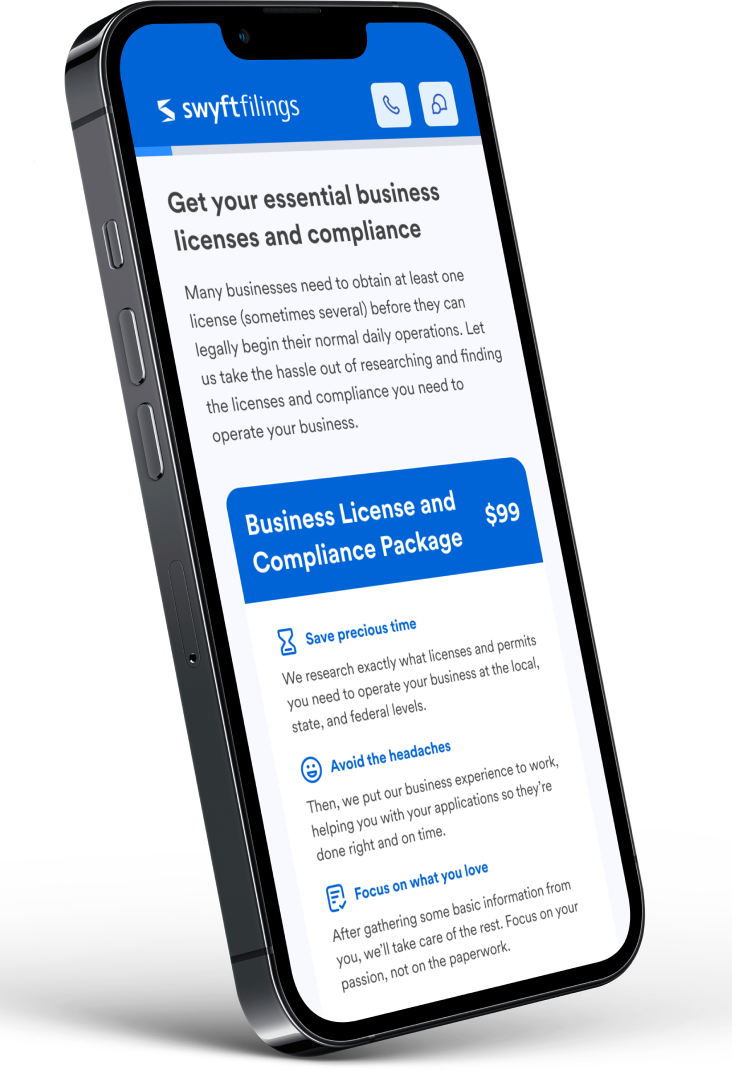
Why 600,000+ Owners Trust Swyft Filings
Get a direct line to business formation experts, available Monday - Friday | 8AM - 8PM CT by phone or chat. Call (877) 777-0450. We love to help!
Ready to Start Your Nonprofit Organization Today
As Seen On: Forbes, Entrepreneur, Inc., Business Insider • 600,000+ businesses formed




Form a Nonprofit in Any State
Nonprofit regulations and filing fees vary significantly across the country. We provide simple, step-by-step guides for all 50 states so you can launch your mission legally and smoothly. Select your state below to get started.
Your Nonprofit Questions, Answered
Here are answers to common questions about forming a Nonprofit
A nonprofit corporation is an entity formed under state law for a permitted nonprofit purpose. A 501(c)(3) is a federal tax status available to eligible organizations through a separate IRS application. State nonprofit formation does not automatically grant federal tax-exempt recognition, guarantee eligibility for grants, or make every donation tax deductible.
Federal recognition requires a separate application after state formation, and the IRS controls the review timeline. Processing time depends on the application used, the organization's circumstances, whether additional information is requested, and current IRS workloads. State nonprofit formation and federal tax-exempt recognition therefore have separate timelines.
Board requirements depend on the formation state, the organization's governing documents, and applicable nonprofit law. States can differ on the required number of directors, qualifications, terms, and other governance rules. The board generally oversees the organization's affairs and helps ensure that its activities remain consistent with its nonprofit purpose.
A nonprofit may generally compensate founders, officers, or employees for legitimate services, but compensation must comply with applicable nonprofit, tax, and governance rules and should be reasonable for the work performed. Compensation decisions should also follow the organization's conflict-of-interest and approval procedures.
The timing of a federal tax-exempt application can affect when recognition becomes effective. IRS rules may allow eligible organizations that apply within the applicable period after formation to receive recognition effective from their formation date. Organizations filing later can be subject to different effective-date rules, so review the current IRS requirements for the specific application.
Form 1023 is the standard IRS application for recognition of exemption under Section 501(c)(3). Form 1023-EZ is a streamlined application available only to organizations that meet the IRS eligibility requirements. Eligibility depends on more than organization size, so applicants should review the current IRS eligibility worksheet and filing instructions before choosing a form.
Organizations recognized under Section 501(c)(3) are subject to federal restrictions on political campaign activity and lobbying. They generally cannot participate or intervene in political campaigns for or against candidates for public office, while lobbying is subject to separate limits and rules. Other nonprofit classifications can have different requirements.
Post-formation compliance can include maintaining governance and financial records, following bylaws, filing applicable IRS information returns, submitting state reports, maintaining registered agent information, renewing licenses, and registering for charitable solicitation where required. Requirements depend on the organization's activities, tax status, and jurisdictions.
Building donor support generally involves communicating a clear mission, demonstrating how funds are used, maintaining accurate records, providing appropriate disclosures, and complying with charitable solicitation and tax rules. Federal tax-exempt recognition can affect whether certain contributions are deductible, but it does not guarantee donations or fundraising success.
Whether an LLC can become a nonprofit corporation depends on state law and the organization's circumstances. Some states may permit a statutory conversion, while other situations can require forming a new nonprofit corporation and transferring appropriate operations or assets. Tax, contract, licensing, and governance consequences should be reviewed before making the change.
Dissolution requirements depend on state law, the organization's governing documents, liabilities, and tax status. A nonprofit generally must address debts and obligations, complete required state and federal filings, and distribute remaining assets according to applicable restrictions. Organizations recognized under Section 501(c)(3) are generally subject to additional limits on where remaining charitable assets may be transferred.
Nonprofit incorporation cost can include a formation provider service fee, the state filing fee, optional government expedite fees, governance documents, registered agent or address services, publication, fundraising registration, and later annual filings. Basic has a $0 Swyft Filings service fee plus state fees. Standard, Premium, optional services, and separate government applications cost extra.
A free nonprofit formation claim can hide mandatory or separate costs. Basic has a $0 Swyft Filings service fee, but state fees apply. Optional services, expedited government handling, fundraising registrations, local requirements, and a separate federal tax-exempt application can create additional costs.
Swyft Filings collects the information needed for the covered state filing, prepares the applicable articles of incorporation, certificate of formation, or equivalent document, reviews the order for common submission issues, and submits the covered filing to the state. Package features can also include governance documents or other listed services. State fees, government approval, federal tax-exempt recognition, fundraising registration, licenses, and other separate requirements are not automatically included.