Key Takeaways
- You don't need an LLC to sell on Amazon, Shopify, or Etsy.
- The main reasons to form one are personal asset protection and cleaner finances, not automatic tax savings.
- No income level forces you to form an LLC, but self-employment tax applies once your net earnings reach $400.
- State fees and annual requirements vary, so check your state's rules before you file.
Learn the benefits of an LLC for an online store, how an LLC compares with a sole proprietorship, and the steps to set up an LLC for an online business.
No. You can sell online without an LLC, and the major platforms don't require one. Amazon says you don't need to be an LLC or a registered business to sell in its store. Shopify says an LLC is a state business structure, not a Shopify requirement.
Etsy doesn't require a business license, but it does expect you to follow the laws that apply to your shop.
Also, no matter what structure you pick, the IRS expects you to report income from your sales, whether or not you get a tax form.
So, the question is when an LLC starts to make sense. If you sell a few items, you may not need one yet. If you have steady orders, suppliers, and inventory, the answer can change. Keep reading to learn how.
What Are the Benefits of Getting an LLC for an Online Store?
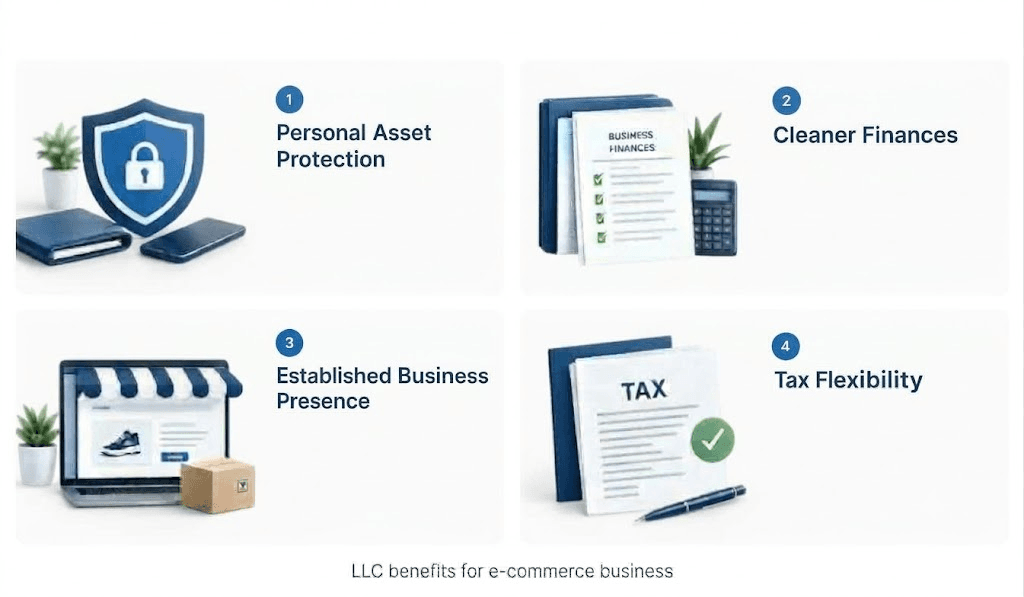
An LLC gives your store its own legal identity. For most sellers, four benefits matter most.
Personal Asset Protection
As a sole proprietor, your business assets aren't separate from your own. An LLC changes that. The SBA says LLCs protect you from personal liability in most instances, so your vehicle, house, and savings aren't at risk if the LLC faces a lawsuit or bankruptcy. For a store that ships products and buys from suppliers, asset separation can bring real peace of mind.
Cleaner Finances
An LLC can have its own bank account, its own name on supplier and payment accounts, and its own records. That makes it easier to see how the store is doing. It also helps you keep business and personal money apart, which supports your liability protection.
A More Established Look
Suppliers, wholesalers, and brand partners may take a registered business more seriously. A name ending in "LLC" shows you've filed with your state. They can also check the good standing of your business online and work with you confidently.
Tax Choices as You Grow
A one-owner LLC is taxed like a sole proprietorship by default, and you can choose a different tax treatment later.
Note: An LLC isn't insurance, and it doesn't replace good business habits. Think of it as one layer of protection, not the only one.
LLC vs. Sole Proprietorship for Online Sellers
If you sell online and haven't registered as another business type, you're automatically a sole proprietor. You and the business are the same. A sole proprietorship has no paperwork to form.
On the other side, an LLC is a business structure you create by filing with your state. It becomes its own legal entity, which is separate from you. Rules and fees vary by state. Let's compare both for an online business:
LLC vs. Sole Proprietorship for Online Sellers
If you sell online and haven't registered as another business type, you're automatically a sole proprietor. You and the business are the same. A sole proprietorship has no paperwork to form.
On the other side, an LLC is a business structure you create by filing with your state. It becomes its own legal entity, which is separate from you. Rules and fees vary by state. Let's compare both for an online business:
Feature | Sole Proprietorship | LLC |
Setup | Automatic when you start selling | File with your state |
Personal liability | Business and personal liabilities are not separate | Personal assets are generally separate from business debts |
Federal taxes | Reported on your personal return | By default, single-member LLCs are taxed like a sole proprietorship, and multi-member LLCs are taxed as a partnership. An LLC can also choose to be taxed as a corporation. |
Ongoing upkeep | Few formal filings | Annual report or fee in many states |
Good fit | Testing an idea | Businesses with risk or growing sales |
Is There an Income Level That Forces You to Form an LLC?
No. There's no income threshold to create an LLC. But some paperwork starts at very low income, whatever your structure. If your net earnings from self-employment are $400 or more, you owe self-employment tax, which covers Social Security and Medicare, and you file Schedule SE. Sole proprietors generally use Schedule C to figure those net earnings.
Payment apps and online marketplaces send Form 1099-K to you and the IRS when your payments meet federal reporting requirements. You must report your business income whether or not you receive a Form 1099-K.
Sales tax and local licenses depend on your state and city, not on whether you have an LLC. Shopify notes that many online sellers eventually need paperwork such as a local business license or a state seller's permit.
Which Business Structure Fits Your Online Business Stage?
The right structure depends on your risk and plans, not on a single revenue number. Here's a simple way to think about it.
Testing an idea: You list a few handmade candles on Etsy and see how it goes. A sole proprietorship is usually enough here. Keep a separate bank account and clear records; an LLC is usually not needed yet.
Steady sales: You dropship through a Shopify store, orders come in every week, and you work with a few suppliers. This is a good time to look at a single-member LLC. It keeps your taxes the same as a sole proprietor's while adding liability protection.
Scaling up: You sell through Amazon FBA, hold growing inventory, spend more on ads, and maybe hire help. These are signs that it may be time to consider formally registering your business.
Common options at this stage include a single-member or multi-member LLC, an LLC that elects S corp tax status for potential tax savings, or a C corporation if you plan to raise money from outside investors.
How to Set Up an LLC for an Online Store
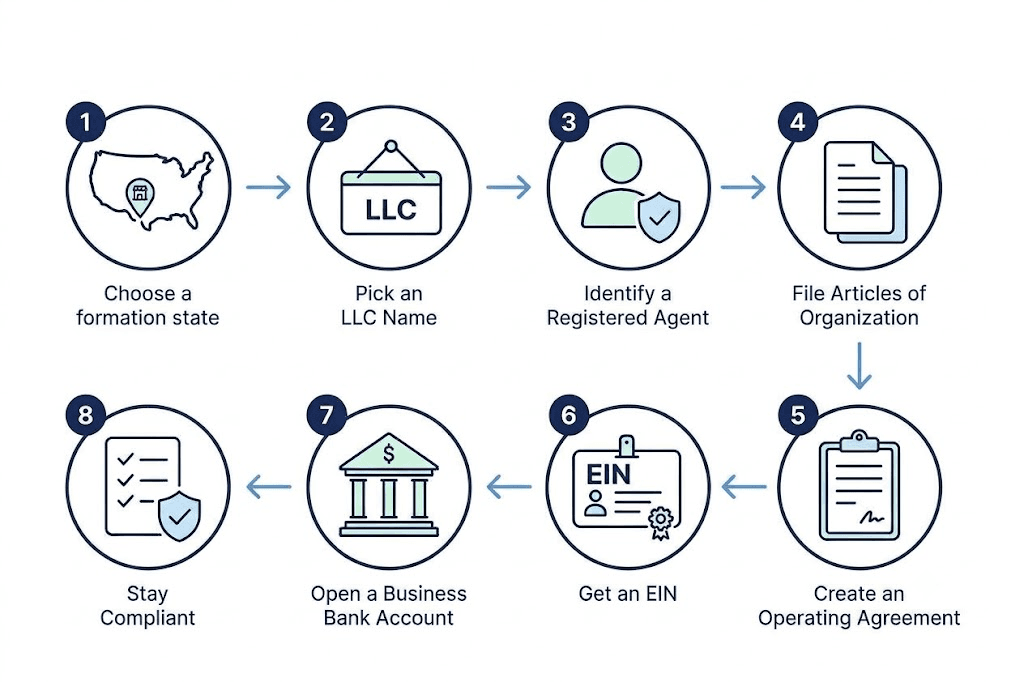
The core formation steps are similar in every state, and our guide on how to start an LLC covers them in detail. The steps below focus on what's different for online sellers.
1. Pick Your Filing State
Most online sellers file in the state where they live and work. Forming in another state, such as Delaware or Wyoming, doesn't remove your home-state duties. California, for example, applies its annual LLC tax to LLCs organized or doing business there. Browse our LLC guides for every state to compare rules.
2. Choose a Unique Business Name
Your LLC's legal name and your store name don't have to match. Amazon says your store name needs to be unique but doesn't need to match your business name. Check that your domain and marketplace store names are available before you file.
3. Name a Registered Agent
Every LLC needs a registered agent. This is a person or service with a physical address in your filing state who receives legal and state mail for your LLC. Many sellers use a registered agent service so their home address stays off public records.
4. File With the State
Submit your formation document and the state filing fee. Depending on your state, it's called Articles of Organization or a Certificate of Organization. Once the state approves it, your LLC legally exists. While you are waiting for approval, create an operating agreement stating your business rules. It is an internal document that is not filed with the state.
5. Get Your EIN From the IRS
Apply for an EIN after your LLC is approved. The IRS says to form your LLC with the state first, since applying earlier may delay your EIN application. The IRS doesn't charge a fee for an EIN.
6. Open a Business Bank Account
Use your LLC name and EIN. Keeping store money separate from personal money also supports your liability protection. Amazon requires the account that receives your payouts to be in your name or your business's name.
7. Update Your Platforms
Add your LLC name, EIN, and new bank account to your seller profiles on Amazon, Shopify, or Etsy. Amazon's registration asks for a company registration number, which is different from your EIN.
8. Check Sales Tax and Local Licenses
Rules vary by state and by what you sell. If your state requires one, apply for a Seller's Permit before you collect sales tax. Your state revenue department can confirm what applies to you.
Ready to Set Up Your Store the Right Way?
Choosing a structure is easier when it matches where your store is today. Swyft Filings has helped 600,000+ businesses since 2015. Our customers have highlighted fast filing, transparent pricing, and live support. Talk to our business formation specialist to start your LLC. We prepare and file your paperwork for free, and you only pay the state filing fee.
FAQs
Forming and maintaining an LLC for an e-commerce business varies widely by state. Filing fees range from $40 in Kentucky to $500 in Massachusetts, and many states add an annual report fee or tax, such as California's $800 minimum franchise tax.
Yes. Many states let you file online, and you can be the only owner. You'll need a name, a registered agent, and your state's formation form. Some sellers file on their own, and others use a service to handle the paperwork and keep track of deadlines.
An LLC adds paperwork and costs that a sole proprietorship doesn't have, such as state filings and, in some states, annual fees or taxes. It also doesn't lower your federal taxes by default, as many people think. Liability protection also depends on how you run the business and if you keep personal and business finances separate from each other. It doesn't protect you when you personally guarantee the loans or deals.
Your LLC still exists, and some state obligations continue whether or not the store earns anything. Check your state's annual report and fee rules so a slow season doesn't turn into a missed filing. If you decide to stop selling, you can close the LLC formally with your state.