
Key Takeaways
- Buy directly: Choose women-owned businesses when shopping for products or services, and become a repeat customer when you have a good experience.
- Spread the word: Leave detailed reviews, tag businesses on social media, and recommend them to others to increase visibility.
- Pay promptly: If you work with women-owned vendors, freelancers, or suppliers, faster payment can help improve their cash flow.
- Support funding: Share grant opportunities, donate to organizations that fund women entrepreneurs, or help connect founders with relevant funding resources.
- Offer mentorship: Share your business knowledge and experience through mentorship, workshops, or one-on-one guidance.
- Help with business needs: Reliable business formation and compliance services can also help women entrepreneurs manage important business requirements as they grow.
Support women-owned businesses by buying directly, sharing reviews, paying vendors promptly, funding entrepreneurs, and offering mentorship to help them grow.
Women own 40.6% of U.S. businesses, but receive only 4.6% of total business revenue. That difference is the real story.
According to Wells Fargo’s 2026 Impact of Women-Owned Businesses report, women own 15.7 million U.S. businesses, employ 12.6 million people, and generate $2.8 trillion in revenue. Their businesses grew 12.1% between 2022 and 2025, nearly twice as fast as men-owned businesses. Yet growth in ownership has not translated into equal scale.
Supporting women-owned businesses means more than making an occasional purchase or leaving a generic five-star review. The most meaningful support helps women founders attract customers, improve cash flow, access capital, and build companies that can create jobs. Here are five ways to make your support count.
1. Buy Directly Through Women-Owned Brands
Not every purchase is neutral. Every dollar you spend is a small vote for the kind of economy you want to see, and choosing a women-owned business over a default alternative is one of the few votes you can cast every single day. Here are some of the places where you can find women-owned businesses:
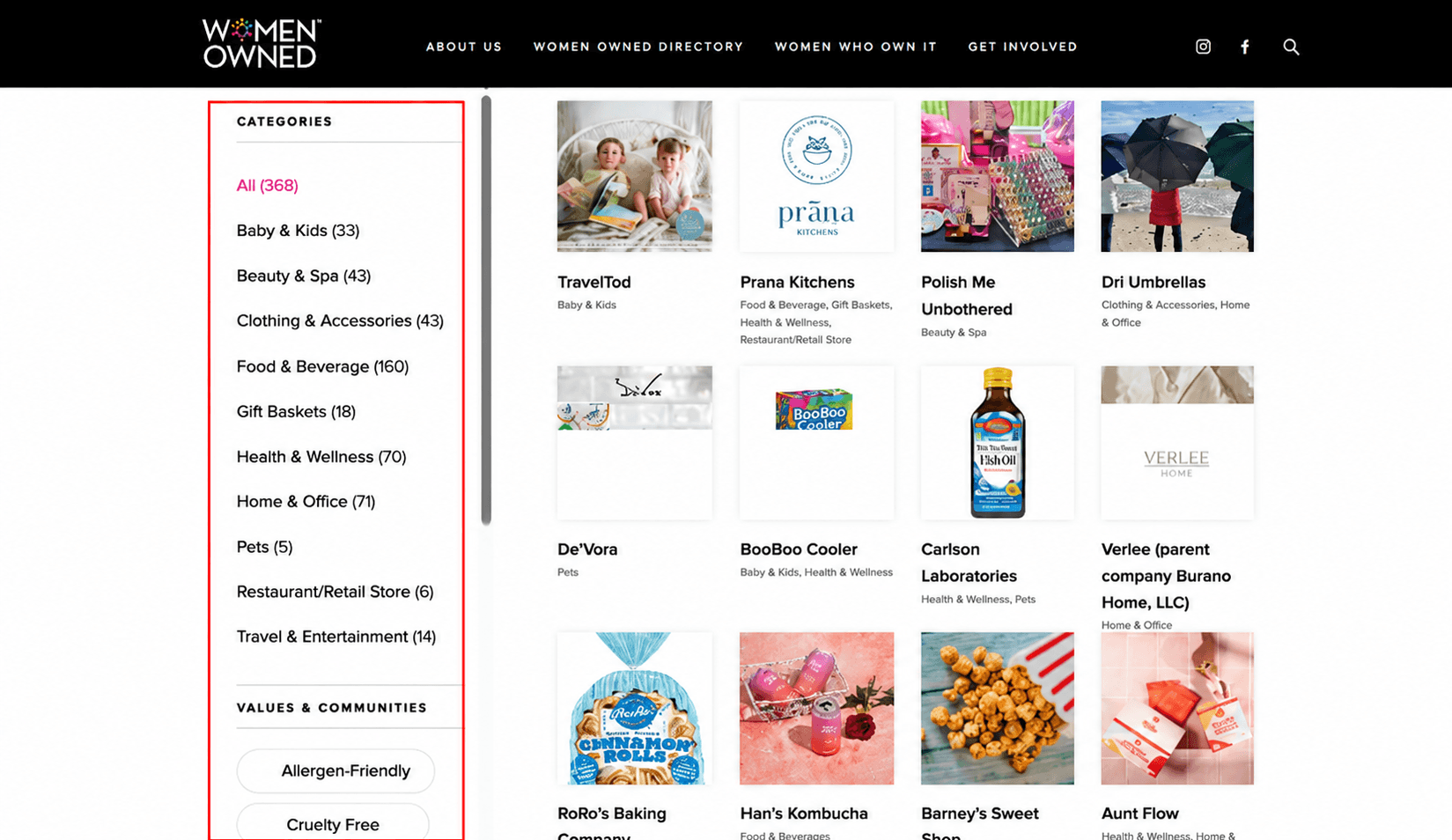
a) WBENC's Women Owned directory
Women Owned is an initiative by the Women’s Business Enterprise National Council (WBENC) and WEConnect International designed to encourage consumers and businesses to support women-owned companies. It helps raise awareness about where and how to intentionally spend with women-owned businesses.
Browse the Women-Owned Business Directory by category to discover certified women-owned brands and businesses. The directory makes it easier to turn your intention into action. Find women-owned brands that sell what you need, explore their products or services, and choose to spend your money there.
b) NAWBO
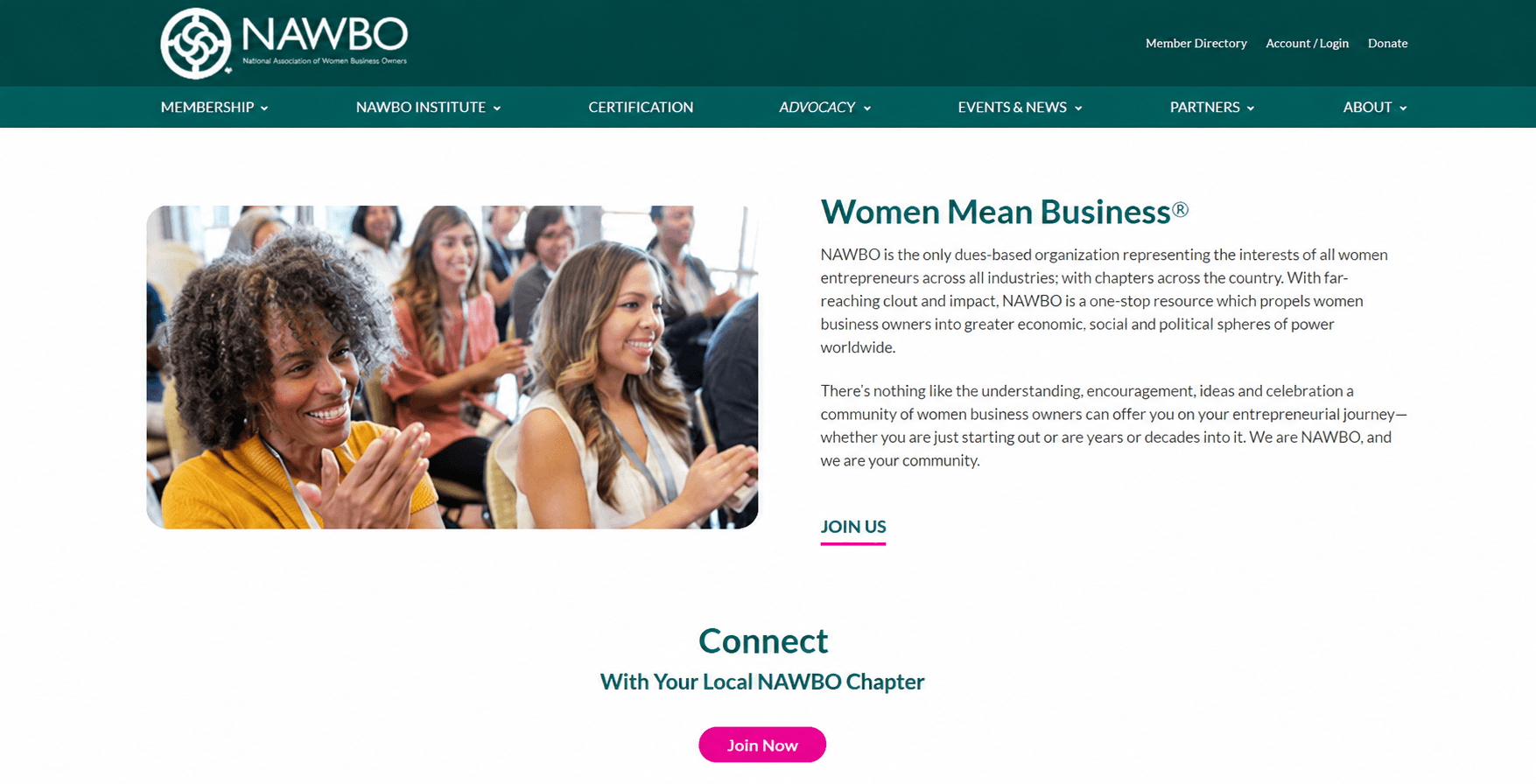
The National Association of Women Business Owners (NAWBO) is a dues-based organization representing women entrepreneurs across industries. Beyond advocacy and business resources, its local chapters can help you connect with women business owners in your community.
Check your local NAWBO chapter to discover member businesses nearby. You may find entrepreneurs offering everything from professional services and consulting to retail products, creative services, and other solutions you already need.
c) SBA’s Women’s Business Center Locator
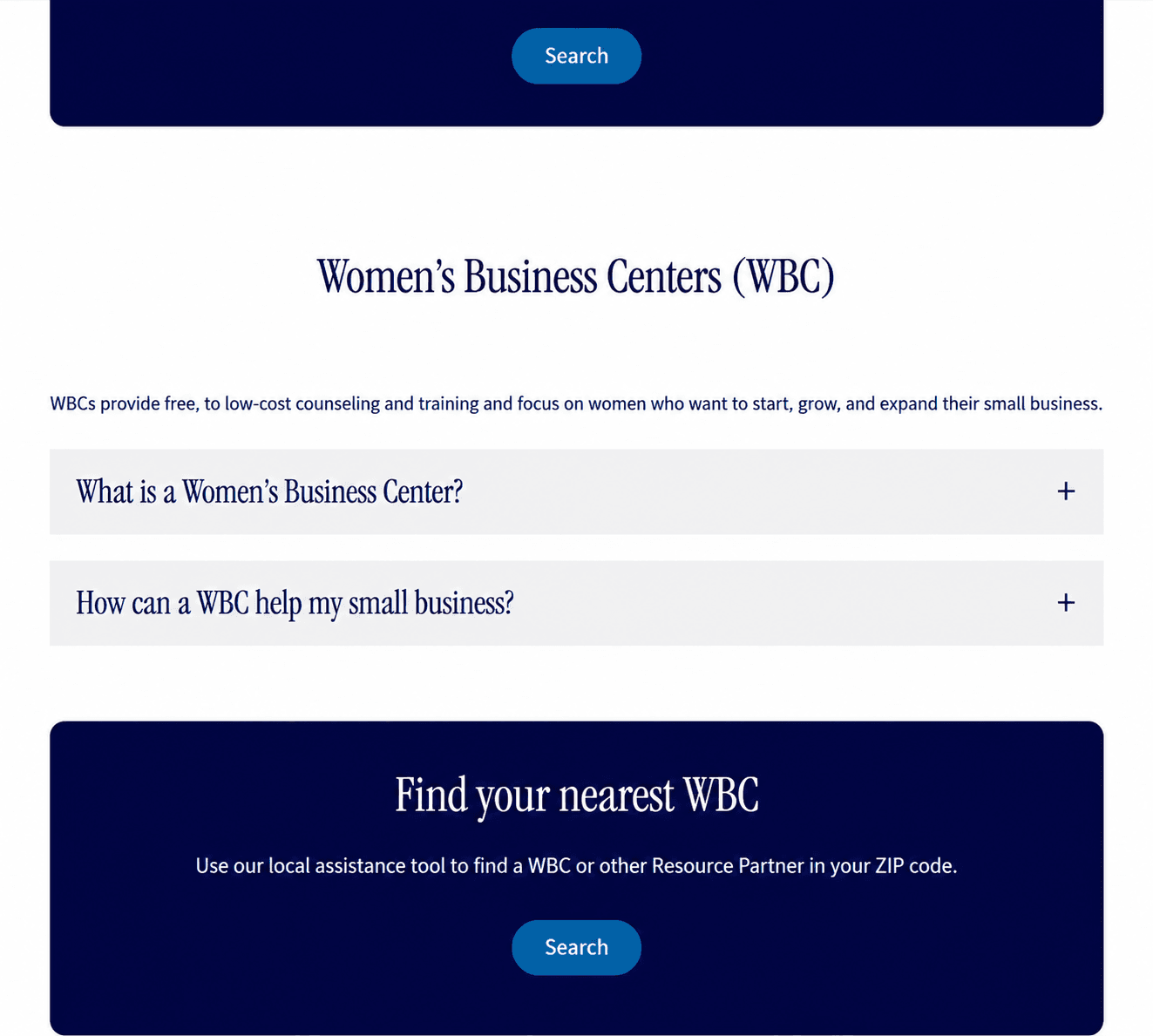
WBCs provide counseling, training, and other resources to help women start and grow their businesses. Click on the “Search” options shown in the image and the SBA local assistance tool to find a WBC in your ZIP code. Once you find a local center, reach out and ask whether they can point you toward women entrepreneurs or businesses in the community.
Take your women-owned businesses search offline, too!!
Once you find women-owned businesses offering products or services you genuinely need, keep going back. If you prefer exploring storefronts by foot instead of by the click of a mouse, there are plenty of ways to hunt down women-owned businesses. The next time you are running errands or doing some window shopping, keep your eyes peeled for the Women-Owned Logo.
2. Say So, Publicly
Visibility is oxygen for small women-owned businesses. A business may deliver an excellent product or service, but if people don’t know about it, reaching new customers becomes much harder. You can help by turning your positive experience into something other people can see, trust, and act on. A quiet supporter helps once. A vocal one helps every time someone else is deciding what to buy.
A few simple ways to publicly support women-owned small businesses include:
a) Write a Review That Says Something Specific
A five-star rating is helpful, but a detailed review is far more useful. Instead of writing “Great service!” or “Loved it,” explain what made your experience worth recommending to those women-owned businesses' service.
For example:
- Mention what you purchased or the service you used.
- Explain what you particularly liked about the experience.
- Share how the product solved a problem or met your needs.
- Mention something exceptional about the customer service.
- If appropriate, explain who you think would benefit from the business.
For example, instead of:
“Great bakery! Highly recommend.”
Try:
“I ordered a custom birthday cake from this women-owned bakery, and the design looked exactly like the reference I provided. The cake was fresh, the communication was excellent, and everyone at the party asked where it came from.”
b) Tag the Women-owned Business When You Post
If you share a product, service, meal, outfit, or experience from a women-owned business on social media, tag the business itself.
A tagged post can put the business in front of people who may not have discovered it otherwise. It also gives the women business owners an opportunity to reshare your post, creating another piece of authentic content they can use to introduce their business to a wider audience.
For example, if you purchase jewelry from a women-owned brand, tag the brand when you post a photo wearing it. If you hire a women-owned photography business, tag the photographer when sharing your photos.
You don't need to create a polished promotional post. A genuine recommendation from a real customer is often enough.
c) Comment Before You Scroll Past
If a women-owned business appears in your feed and you genuinely like what they are sharing, take a few seconds to interact with it. Leave a thoughtful comment, answer a question they asked, or share your experience with the product.
Instead of a generic “Love this,” try something meaningful:
- “I bought this last month, and the quality is excellent.”
- “Your packaging is always so thoughtful.”
- “Your previous collection is still one of my favorites.”
And unlike paid advertising, word-of-mouth support doesn't require a media budget. It simply requires someone who enjoyed the experience to say, “I tried this business, and here's why you should consider it too.” The next time you have a genuinely good experience with a women-owned business, don't keep it to yourself.
Review it. Tag it. Recommend it. Say so publicly.
3. Pay Them Like a Business Partner, Not a Charity Case
If you own a business, one of the most meaningful ways to support women-owned businesses is to treat them like valued business partners, not businesses you are simply trying to “help.” You don't necessarily need to spend more money. Sometimes, changing how you buy, pay, and refer can have a much bigger impact.
Did you know? Cash flow can determine how quickly women-owned small businesses can take on their next project, purchase inventory, pay employees, or invest in growth. If you already work with a woman-owned freelancer, contractor, supplier, or agency, look at your payment terms.
- If your standard terms are Net-30, consider moving to Net-15 or Net-7.
- For smaller invoices, same-day or faster ACH payments may also help.
For example, instead of making a women-owned marketing agency wait 30 days for a $2,000 invoice, paying within seven or 15 days gives the business access to that cash much sooner without increasing what you owe.
The same logic applies at scale for larger companies. Certified Women-Owned Small Businesses (WOSBs) and Economically Disadvantaged WOSBs (EDWOSBs) are eligible for federal contract set-asides under the SBA's WOSB Federal Contract Program, and agencies awarded a record $31.7 billion to WOSBs in fiscal year 2024. Any company building a supplier diversity program can use the same WOSB certification criteria the federal government uses as a vetted starting point for its own vendor search.
4. Put Capital Behind Women-Owned Businesses
Capital can determine whether a women-owned business simply keeps operating or gets the opportunity to grow. While buying from women-owned businesses and recommending them can generate revenue, grants, dedicated funds, and nonprofit programs can provide another layer of support, especially for entrepreneurs who struggle to access traditional financing or venture capital.
You don't have to be an investor to help. There are organizations that raise and distribute funding specifically for women entrepreneurs at different stages.
a) Amber Grant
Run by Women'sNet since 1998, Amber Grant awards three $10,000 grants every month (one general Amber Grant, one startup grant, and one rotating business-category grant), totaling $30,000 in monthly funding, plus year-end “$50,000 awards for standout past recipients. No time-in-business requirement, so it's especially useful for very early-stage women-owned brand founders.
NOTE: The application cutoff for the next $10,000 Amber Grant is August 31, 2026. Sharing the application with a woman entrepreneur you know can help put the opportunity on her radar.
b) NAWBO Institute for Entrepreneurial Development
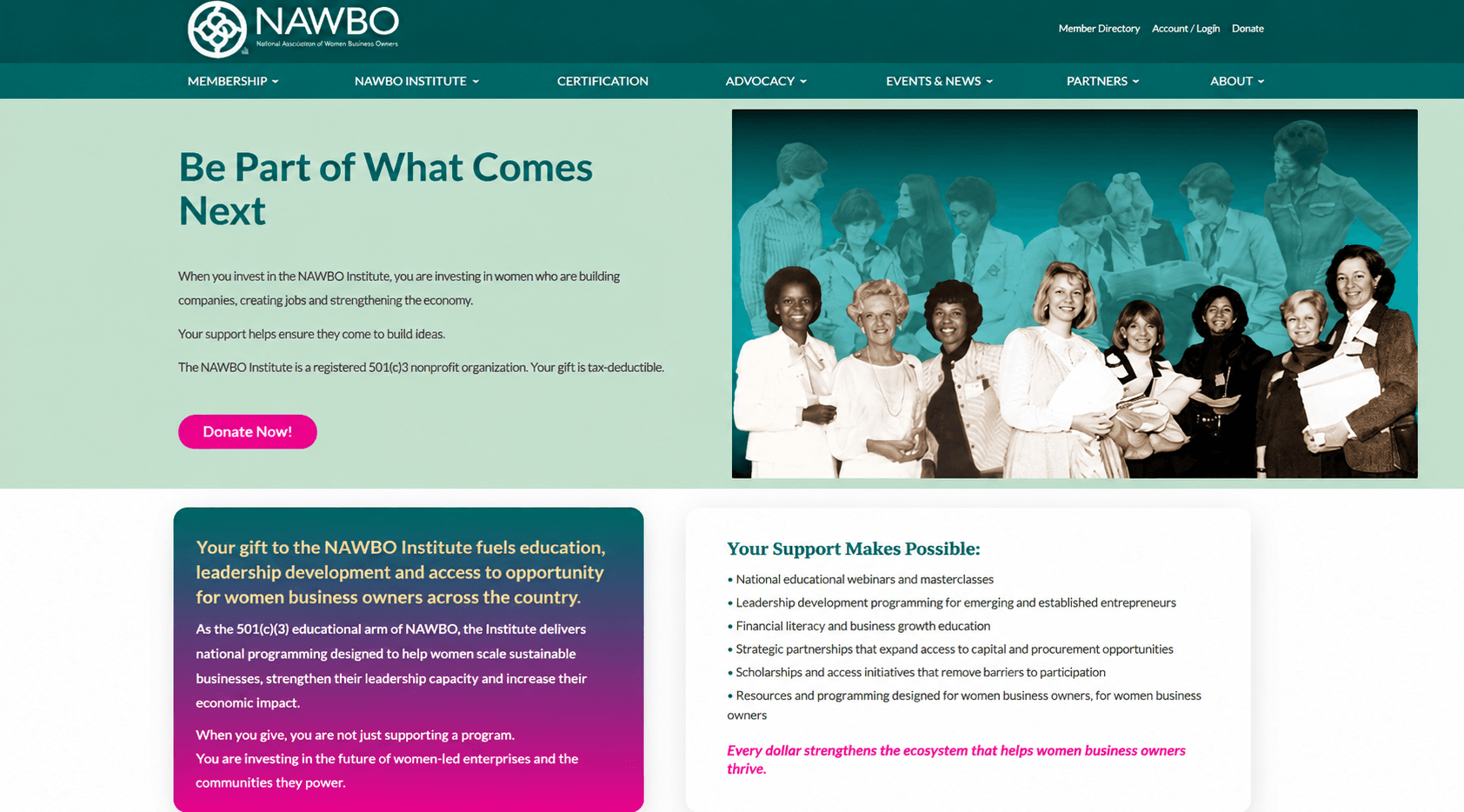
The NAWBO Institute for Entrepreneurial Development is a 501(c)(3) non-profit educational foundation established in 2003 by the National Association of Women Business Owners (NAWBO). It provides women business owners with education, leadership development, and practical resources to build sustainable businesses and strengthen their economic influence.
Through national programs, accessible learning opportunities, and scholarships, it helps reduce barriers and create greater opportunities for women entrepreneurs across the country. So, you can “donate” here as your every contribution strengthens the future of women-led businesses nationwide.
c) Ladies Who Launch
Ladies Who Launch supports women and nonbinary entrepreneurs through funding, education, and community resources designed to help women-owned businesses survive and grow. Its programs include a curated Small Business Grants Database, an AI-powered Funding Matchmaker that helps entrepreneurs discover relevant funding opportunities, and its own annual grant program (LWL Launch Program).
Since its inception in 2020, the Ladies Who Launch Program has granted $10,000 to ten US-based, women-owned businesses that generate growth for good.
2026 Launch Program Benefits
$10,000 cash grant: $7,500 for unrestricted business use + $2,500 for personal AI literacy.
d) Women's Venture Fund
Women often face institutional bias when applying for traditional loan funding. WVF states that there are 8.6 million women-owned firms in the US that generate over $1.3 trillion in revenues; only 3% of these businesses ever reach $1 million in revenues. The gap here is also a persistent funding gap. That’s why they are working to bridge that gap. If you know any women entrepreneurs seeking Women’s Business Loans, you can recommend this to them. If you just want to support women-owned businesses, you can “Donate” here.
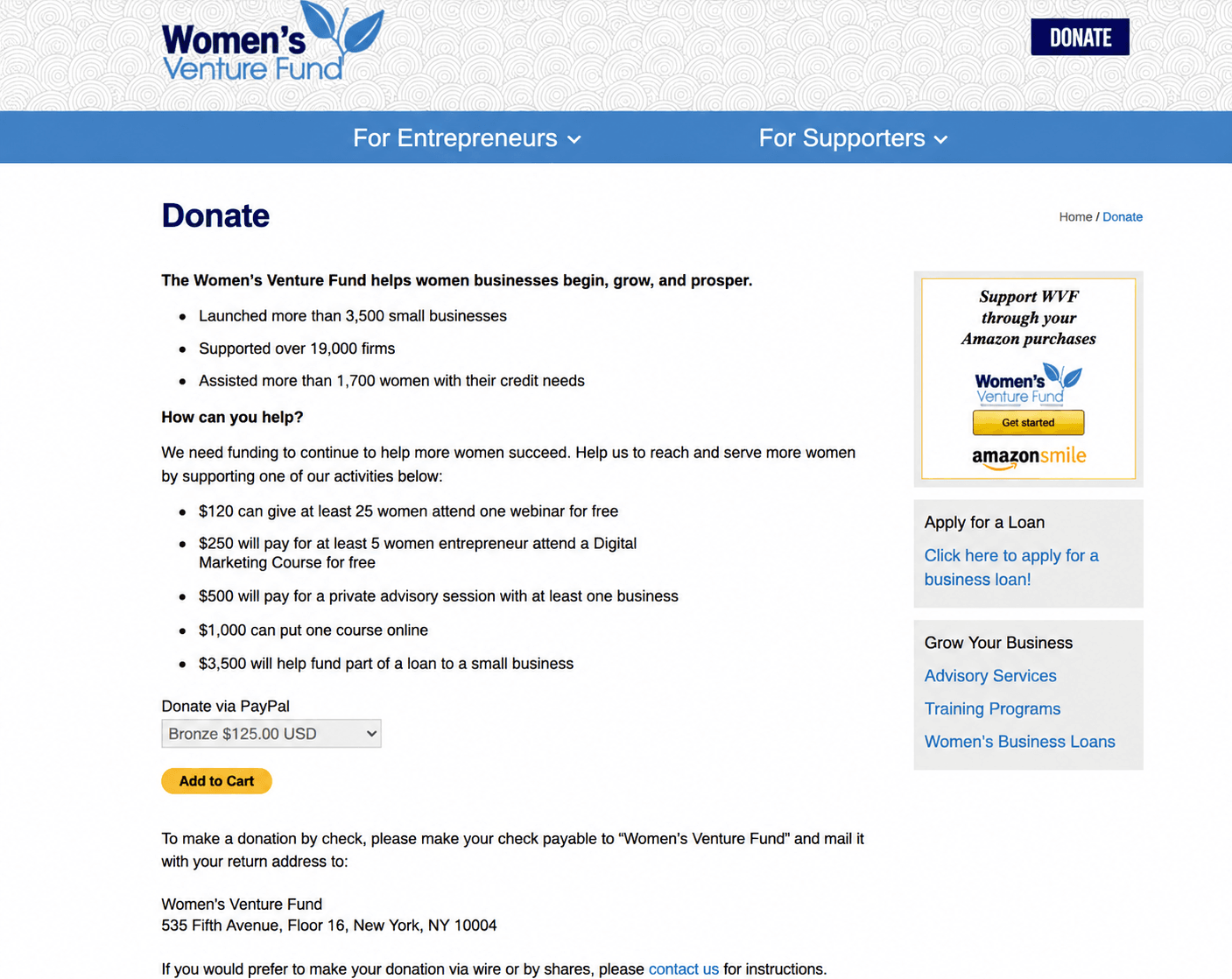
Donating to, volunteering with, or simply spreading the word about these funds does something a single purchase can't. It puts non-dilutive capital directly into the hands of women entrepreneurs who are otherwise locked out of the largest funding channel in the startup world.
5. Share Your Expertise Through Mentorship
If you have built a successful business, one of the most meaningful ways to support women entrepreneurs is to share what you have learned. Your experience with hiring, pricing, marketing, funding, or overcoming challenges can help another founder avoid costly mistakes and make better decisions.
You can become a mentor through SCORE and connect with entrepreneurs who need guidance. If you know any women entrepreneurs who are interested in gaining experience and tips, you can share this link: https://www.score.org/business-education/, which lists all upcoming workshops & events.
TIP: You don’t have to have all the answers. Sometimes, one honest conversation with someone who has already navigated the path can give a new women entrepreneurs the confidence and direction to keep moving forward.
Conclusion
Whether you buy from a women-owned brand, publicly recommend it, pay women-owned vendors promptly, share funding opportunities, or mentor an aspiring entrepreneur, your actions can have a lasting impact.
Another meaningful way to support women entrepreneurs is by helping them access reliable business formation and compliance services. Swyft Filings offers specialist-reviewed filings, live expert support, and attorney-crafted packages to simplify formation and compliance, helping business owners manage important requirements with greater confidence.
FAQs
Buying directly from women-owned businesses through their own websites or storefronts, rather than a third-party marketplace, and becoming a repeat customer is the highest-impact, lowest-effort action available to anyone, regardless of budget.
No. Simply owning a women-owned business does not qualify you for a special federal or state income tax break. However, Women-Owned Small Business (WOSB) certification can provide other financial advantages, including eligibility for certain federal contracting opportunities and set-aside contracts reserved for qualifying women-owned businesses.
Yes. Grants for women-owned businesses do exist, although they are competitive and eligibility varies by program. Funding may come from nonprofit organizations, foundations, corporations, and government-related programs. Women entrepreneurs can explore opportunities such as the Amber Grant, local women’s funds, and SBA-supported resources to find funding that aligns with their business and eligibility criteria.
The single biggest barrier women entrepreneurs still face is limited access to financial capital, compounded by deep-seated gender biases in funding decisions and the unequal burden of caregiving responsibilities.
Generally, a business qualifies as women-owned when one or more women own at least 51% of the company and actively control and manage its day-to-day operations. Specific requirements vary by certification program. For example, the SBA’s WOSB program has additional eligibility requirements for businesses seeking federal contracting opportunities.