Key Takeaways
- Arizona's growing population and small-business community create opportunities to start businesses in home services, healthcare, tourism, and digital marketing.
- HVAC, pool maintenance, landscaping, and pest control businesses can benefit from recurring demand in Arizona's hot climate.
- Costs to start a business in Arizona vary significantly, from roughly $500-$10,000 for a bilingual digital marketing agency to $200,000+ for a solar installation business.
- Cleaning, mobile windshield repair, and digital marketing businesses are relatively accessible options for first-time entrepreneurs.
- Specialized businesses such as HVAC, pest control, food trucks, and solar installation may require industry-specific licenses, permits, or certifications.
- Before you invest in starting a business in AZ, research local demand, estimate operating costs, check licensing requirements, and identify your first potential customers.
Explore 12 of the best businesses to start in Arizona in 2027. Compare startup costs, licensing requirements, and opportunities across growing industries.
A good business idea isn't necessarily the one everyone is talking about. It's the one that connects a real customer need with something you can deliver consistently and profitably. That's an important distinction when exploring business opportunities in Arizona.
The state’s diverse markets offer several directions to consider. Its desert climate makes pool care, irrigation, landscaping, and pest control relevant services for many property owners. Its popular tourist destinations support businesses connected to short-term rentals, transportation, and local experiences. Meanwhile, growing business communities create room for bookkeeping, consulting, IT services, and digital marketing agencies.
But market demand is only one part of the decision. You also need to understand how much it will cost to launch, whether you will need employees or specialized equipment, and what licenses or permits apply to your industry. A business that looks inexpensive on paper may have ongoing insurance, transportation, or operating expenses that affect its profitability. To help you narrow down your options, we have identified some of the best businesses to start in Arizona in 2027, with practical details about their investment needs, customers, and potential challenges.
Why Arizona Is a Smart Place to Start a Business
Before we get to the ideas, let's look at the numbers behind the hype. Good ideas fail in bad markets. Arizona's market is, by most measures, strong.
- The state keeps growing. Arizona's population hit about 7.62 million in 2025, up roughly 67,400 people in a year, according to USAFacts' Census-based data. Over the past decade, Arizona's population grew 13.7% compared with 6.2% for the US as a whole, ranking it 7th among states in population growth over that decade.
- Small business is the backbone. The SBA Office of Advocacy counts 678,357 small businesses in Arizona, which is 99.5% of all businesses in the state and employs 1.1 million people (42.8% of Arizona's workforce). You won't be a lonely pioneer.
- The growth is moving to the suburbs. Here's an insight most "best business" lists miss. According to Arizona Capitol Times, Phoenix itself added only 3,157 residents (0.2%) in the latest Census estimates, while exurbs like Buckeye and the city of Maricopa grew much faster. Pinal County grew 4.6% in a year, among the fastest-growing counties in the US. If you are launching a local service, think Queen Creek, Buckeye, Casa Grande, and Maricopa, not just downtown Phoenix.
The honest caveat: New businesses everywhere face tough odds. Arizona's growth tilts the odds a little in your favor, but only if you pick a real need and run it well.
12 Business Ideas to Start in Arizona in 2027
Short on time? Here's the cheat sheet. Costs are ballpark estimates and vary widely with scale, equipment, and business licensing requirements in Arizona. Then, read on for a closer look at each idea.
Business idea | Estimated startup cost | Startup difficulty | Business model | Key requirements | Best suited for |
HVAC Services | $40,000–$150,000 | High | Repairs, installations, maintenance plans | Trade experience, ROC license, tools, service van | Experienced HVAC technicians |
Pool Service and Maintenance | $3,000–$25,000 | Low to medium | Weekly cleaning, equipment checks, seasonal services | Pool-care knowledge, testing equipment, insurance | First-time owners who enjoy hands-on work |
Landscaping and Desert-Scape Design | $5,000–$60,000 | Medium | Maintenance contracts, yard design, irrigation work | Landscaping skills, equipment, possible ROC license | Outdoor service entrepreneurs |
Solar and Energy Storage Services | $2,000–$200,000+ | Medium to high | Installation, maintenance, consulting, sales | Technical knowledge; ROC license for installation | Energy-sector professionals and skilled contractors |
Senior Home Care Services | $15,000–$75,000 | High | Private-pay care, caregiver scheduling, family support | Caregiver recruitment, insurance, screening, applicable approvals | People with care-service or management experience |
Pest Control | $15,000–$80,000 | High | Quarterly treatments, inspections, commercial contracts | Applicator certification, business license, qualifying party | Trained pest-control professionals |
Cleaning Services | $2,000–$20,000 | Low | Residential, office, and rental turnover cleaning | Cleaning supplies, transportation, insurance | First-time and solo entrepreneurs |
Mobile Windshield Repair | $3,000–$15,000 | Medium | Mobile repairs, fleet contracts, insurance-covered jobs | Technical training, repair tools, vehicle | Hands-on entrepreneurs |
Food Truck | $40,000–$175,000 | High | Direct sales, events, catering, corporate bookings | Food permits, equipment, food safety certification | Food entrepreneurs and experienced operators |
Handyman and Remodeling Services | $2,000–$50,000 | Low to high | Small repairs, painting, flooring, remodeling | Trade skills, tools, ROC license when required | Skilled tradespeople |
Sign and Vinyl Graphics | $3,000–$25,000 | Medium | Vehicle graphics, storefront signs, banners | Design and installation skills, equipment, local permits | Creative and detail-oriented entrepreneurs |
Bilingual Digital Marketing Agency | $500–$10,000 | Low | SEO, websites, paid ads, social media retainers | Marketing skills, computer, software, portfolio | Digital marketers and bilingual professionals |
1. HVAC Services
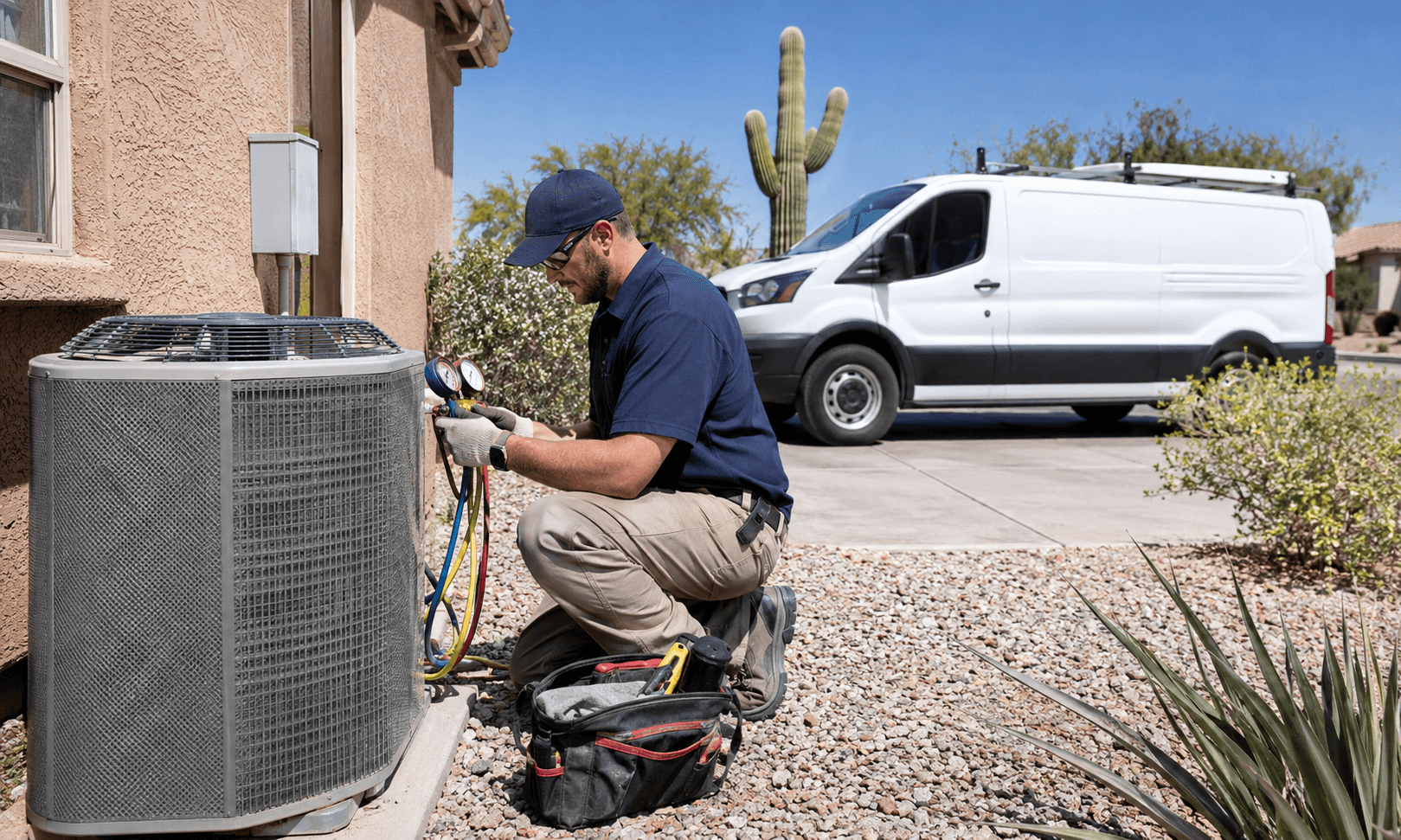
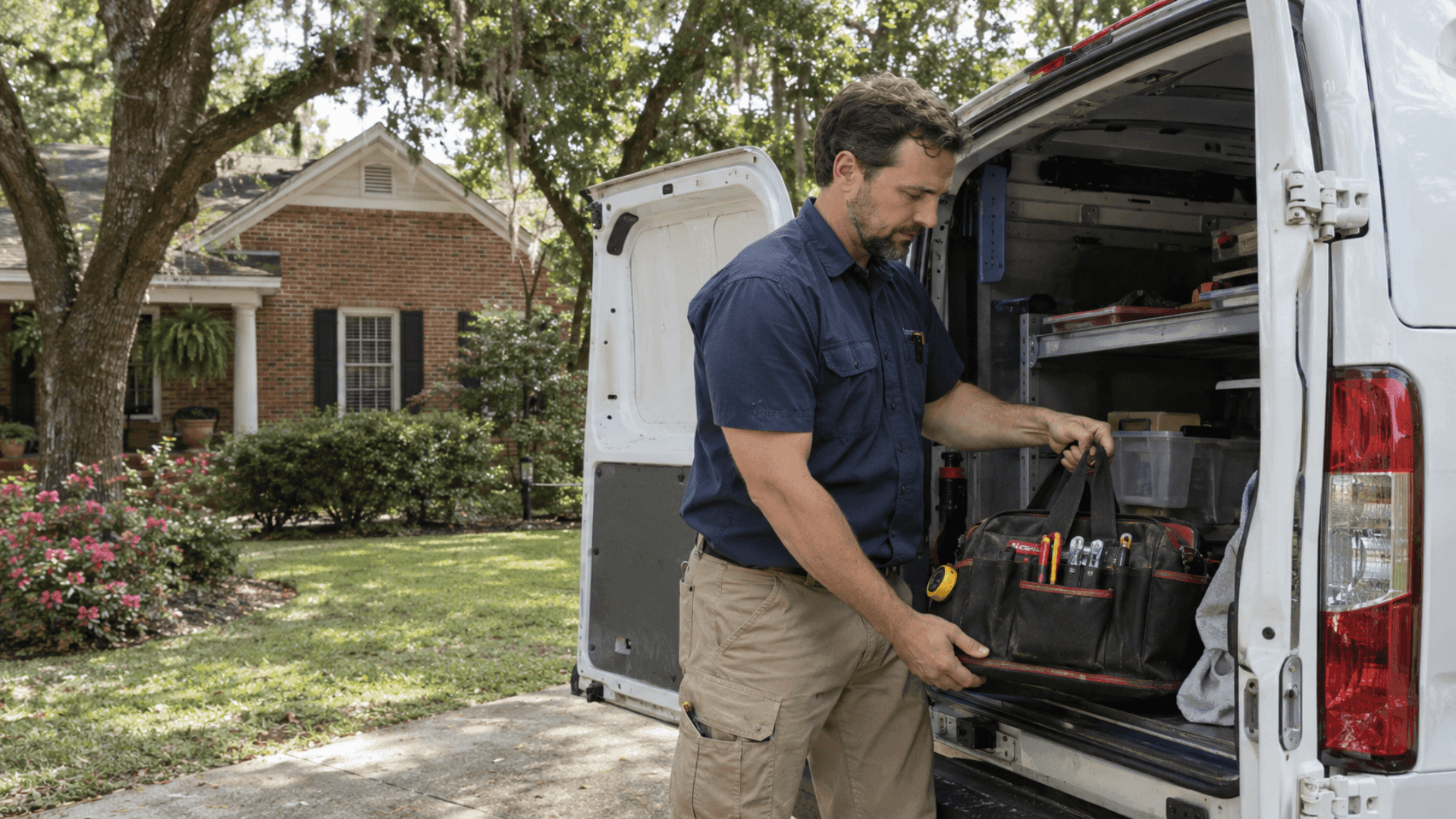
Installation, repair, and maintenance plans keep HVAC companies busy through Arizona's long cooling season.
Arizona had 3,373,746 housing units in 2025, and in a state with long, hot summers, almost every one of them depends on air conditioning. HVAC is also one of the few trades where a maintenance agreement turns a one-time repair into recurring revenue. A twice-a-year tune-up plan keeps customers on your calendar and gives you first call when the system finally fails. Residential work is the easier start, and light commercial contracts are the natural second step.
The barrier is credentials, not capital. Most owners work for a licensed contractor first to build the required experience.
- Estimated startup cost: $40,000–$150,000 for a service van, tools, diagnostic equipment, insurance, and a parts inventory.
- Licenses and permits: The Arizona Registrar of Contractors (ROC) generally requires a license when labor and materials exceed about $1,000, or when a job requires a permit regardless of the price. Licensing typically involves documented trade experience (commonly four years), passing scores of 70% on the business and trade exams, and a license bond. Processing often takes around 60 days, so apply before you promise customers a start date. Confirm the current dollar threshold and requirements with the ROC.
How to get started:
- Gain HVAC experience or hire qualified, licensed technicians.
- Choose your niche, such as residential repairs or commercial maintenance.
- Budget for a service van, tools, insurance, a license bond, and parts.
- Meet ROC licensing requirements before offering regulated work.
- Build relationships with homeowners and property managers to secure repeat work.
2. Pool Service and Maintenance

Weekly pool routes create predictable monthly income in Arizona.
Many homeowners have both a yard and a reason to protect it. For pool owners, weekly service is a routine expense, which makes pool maintenance one of the most predictable small businesses on this list. Start with 15 to 20 clients and grow by route density, because drive time between pools is your highest hidden cost. Once you have a steady route, you can add equipment checks, filter cleanings, and seasonal packages.
- Estimated startup cost: $3,000–$25,000 for a work truck or van, testing equipment, chemicals, brushes and poles, insurance, and marketing. A solo start with used gear sits at the low end.
- Licenses and permits: Routine cleaning and chemical balancing are treated differently from repair and construction work. Repairs and equipment replacement above the ROC's thresholds can require a pool-contractor license from the ROC, so confirm where your services fall. Most cities also require a local business license, and customers and property managers often ask for proof of liability insurance.
How to get started:
- Choose your services, such as weekly cleaning, equipment checks, or repairs.
- Check whether any of your planned work requires an ROC license.
- Buy only the equipment you need for your first route.
- Get liability insurance and a city business license.
- Sign up neighbors and HOAs in one or two suburbs first, then expand your route.
3. Landscaping and Desert-Scape Design
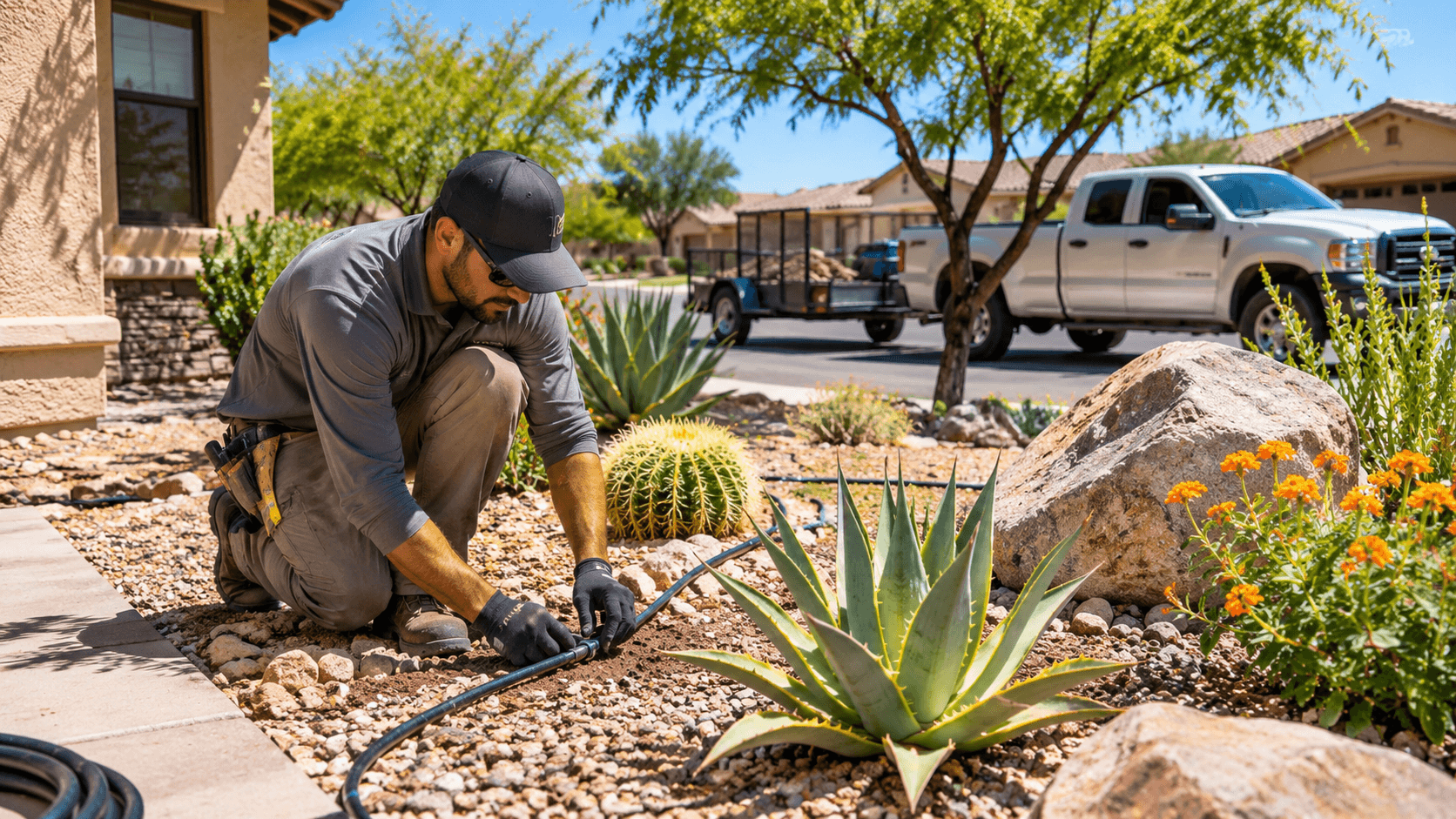
Water-wise desert landscaping and maintenance contracts can become a recurring revenue stream in Arizona.
Arizona homeowners, HOAs, apartment communities, and shopping centers often hire landscaping businesses for ongoing maintenance. Water-wise yards with gravel, native plants, and drip irrigation also create steady demand for design and installation work. Specializing in desert-scape design helps you stand out from basic lawn-mowing crews.
To keep costs down, focus on a few nearby neighborhoods rather than taking jobs spread across town. As your customer base grows, you can add irrigation repair, seasonal cleanups, and design projects.
- Estimated startup cost: $5,000–$60,000 for mowers, trimmers, a trailer, a truck, hand tools, and insurance. A solo start with used equipment sits at the low end.
- Licenses and permits: The Arizona Commerce Authority notes that installing or removing landscaping and sprinkler systems may require an ROC contractor license. Exempt operators must include the words "not a licensed contractor" in their advertising.
How to get started:
- Choose your services, such as mowing, desert-scape design, irrigation repair, or seasonal cleanup.
- Research demand and target nearby neighborhoods, HOAs, and commercial properties.
- Check ROC and pesticide rules for any installation or chemical work.
- Budget for equipment, transportation, insurance, and supplies.
- Build recurring contracts in nearby areas and grow through referrals.
4. Solar and Energy Storage Services

Solar and battery storage installers in Arizona
Arizona is a major solar state. It ranked fourth in the US for solar installations in the third quarter of 2025, and more than $2.3 billion was invested in Arizona solar projects during 2025, according to the Arizona Technology Council's summary of the SEIA and Wood Mackenzie report. One caution: some solar companies have warned that stricter federal permit reviews could slow certain projects, so check how permitting affects the jobs you plan to take.
You do not have to be a full installer to earn here. Panel cleaning, maintenance, monitoring, sales, and energy-efficiency consulting all serve the same market with far less equipment.
- Estimated startup cost: $20,000–$200,000+ for a licensed installation company, depending on crew, vehicles, tools, and inventory. Consulting or maintenance services can start for $2,000–$15,000.
- Licenses and permits: Installation work generally requires a contractor license in the appropriate classification from the ROC, plus local permits and utility approval for grid connection. Federal and utility incentives are changing, so confirm the current rules before pricing jobs around any rebates or tax credits.
How to get started:
- Choose your lane: installation, storage, maintenance, or consulting.
- Confirm ROC licensing, permit, and utility requirements before quoting any job.
- Partner with an established installer or distributor to learn the workflow.
- Build referral relationships with electricians, roofers, and home energy auditors.
5. Senior Home Care Services

Non-medical home care helps older Arizonans stay independent in their own homes.
Arizona has an older-than-average population. According to USAFacts, about 19.7% of residents were 65 or older in 2024, compared with 18% nationally. Medicare enrollment in the state also grew from 1.14 million to 1.53 million between 2015 and 2025.
A non-medical home care agency helps older adults with bathing, dressing, meal preparation, companionship, errands, and light housekeeping. You hire and schedule caregivers, coordinate with families, and manage billing, payroll, and insurance. Private-pay clients are the simplest starting point, while Medicaid-funded work involves separate enrollment.
- Estimated startup cost: $15,000–$75,000 for formation, insurance, software, background screening, policies, and a payroll cushion. Most of the total is the payroll cushion, since you pay caregivers before families pay you.
- Licenses and permits: Arizona is lighter here than some states. Industry sources report that the state does not license non-medical, private-pay companion and personal care agencies, while the Arizona Department of Health Services (ADHS) licenses home health agencies that provide medical services. If you serve Medicaid clients, expect separate provider enrollment through AHCCCS or the Arizona Department of Economic Security. Fingerprint clearance cards (about $67 each) are not always legally required for private-pay work, but they are strongly recommended and required in many state-funded and licensed settings. Confirm your service model with ADHS before you launch.
How to get started:
- Decide whether you will offer non-medical or medical services.
- Research local demand and competing home care agencies.
- Confirm licensing rules with ADHS before offering any medical or nursing care.
- Budget for caregiver wages, insurance, background checks, training, and software.
- Build referral relationships with families, senior communities, and case managers.
6. Pest Control

Quarterly pest control treatment plans in Arizona turn one-time calls into recurring revenue.
Homes, restaurants, apartment complexes, and warehouses across Arizona pay for recurring pest service, and the best accounts are the ones on a plan. A quarterly residential agreement, a termite inspection program, or a monthly restaurant contract keeps revenue predictable and turns an emergency call into a scheduled visit. Your margin depends on chemicals, labor, vehicle costs, and insurance, so route efficiency matters as much as price.
Estimated startup cost: $15,000–$80,000 for a service vehicle, sprayers and application equipment, treatment supplies, insurance, and marketing.
Licenses and permits: Pest control is tightly regulated. The Arizona Department of Agriculture's Pest Management Division licenses pest management businesses, and every business license requires a registered qualifying party, meaning a certified qualified applicator who is responsible for supervising applicators. A new business license application, plus a copy of your trade name certificate or articles of organization and proof of financial security. Applicator and qualifying party registration fees are separate and may change; check the division's current schedule.
How to get started:
- Choose your niche, such as residential pest control, termite inspections, or commercial accounts.
- Complete the required applicator certification and arrange a registered qualifying party.
- Secure the business license, financial security, liability insurance, and equipment.
- Build recurring contracts with homeowners, restaurants, property managers, and warehouses.
7. Cleaning Services

Home, office, and rental turnover cleaning service in Arizona can become steady monthly contracts.
With 678,357 small businesses in the state, plus millions of homes, apartments, and vacation rentals, cleaning is one of the most flexible ways to start. Residential customers book weekly or biweekly visits, while commercial accounts sign monthly contracts that continue year-round. New offices, medical buildings, and industrial sites also keep opening across metro Phoenix.
Estimated startup cost: $2,000–$20,000 for supplies, equipment, transportation, insurance, and marketing. Starting solo and adding a second cleaner once you are fully booked keeps costs low.
Licenses and permits: General cleaning does not require a statewide professional license. Most cities require a local business license, and specialized work such as mold remediation is regulated separately. Commercial clients often ask for liability insurance and bonding before signing.
How to get started:
- Choose your niche: residential cleaning, office cleaning, or rental turnover services.
- Start with essential supplies and equipment, then expand as your client base grows.
- Check your city's business license requirements and get liability insurance.
- Set competitive rates and offer recurring cleaning plans to attract repeat customers.
- Find clients through local marketing, property managers, real estate agents, and business referrals.
8. Mobile Windshield Repair
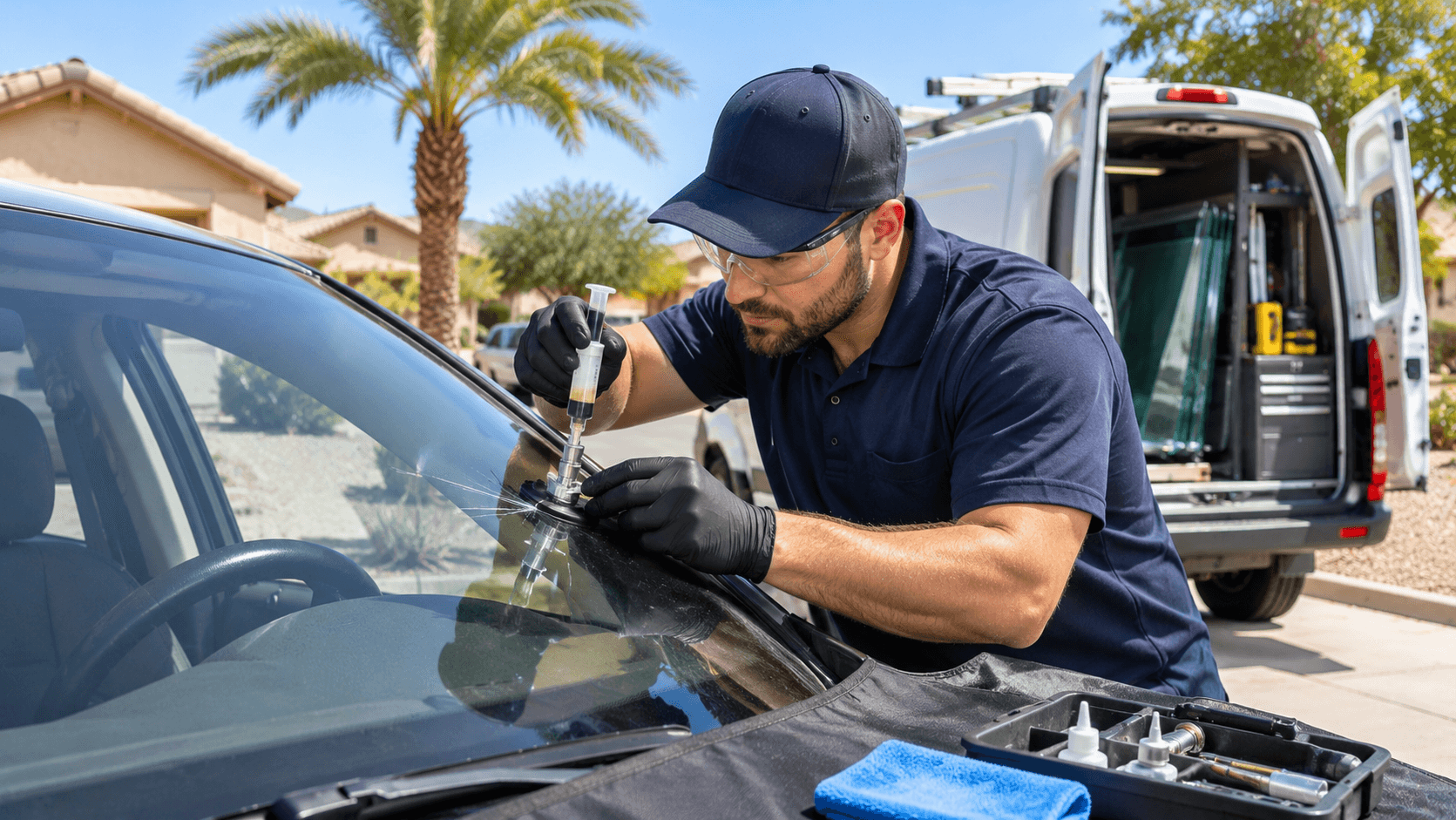
A mobile setup lets you serve customers at home or work without a shop lease in Arizona.
Long highway commutes, road debris, and intense sun make chips and cracks a common headache for Arizona drivers. A mobile windshield repair business brings the service to the customer's driveway or office parking lot, which saves them a trip and saves you a shop lease. Insurance-covered repairs, fleet contracts, and partnerships with auto dealers and rental agencies can fill your calendar faster than advertising alone. This is a skill-based business, so training matters. Quality work and fast response times drive reviews and repeat referrals.
- Estimated startup cost: $3,000–$15,000 for a van or truck, repair tools and resin kits, glass inventory, insurance, and training.
- Licenses and permits: Arizona does not require a special statewide license for windshield repair. Plan on a city business license, liability insurance, and a Transaction Privilege Tax (TPT) license if you sell parts or glass. Ask the Arizona Department of Revenue how tax applies to your mix of parts and labor.
How to get started:
- Complete hands-on training in chip repair and windshield replacement.
- Set up a vehicle with the tools, resin, and glass you need for common jobs.
- Register your business, get insurance, and check TPT requirements.
- Partner with insurance agents, dealers, fleet managers, and rental agencies.
- Ask every customer for a Google review to build local visibility.
9. Food Truck

A focused menu and a good location in Arizona can build a loyal following.
Tourism is a heavyweight in Arizona. The Arizona Office of Tourism reports that visitors spent a record $29.3 billion in 2023, and that restaurants and food-service businesses collected $6.8 billion in visitor-related spending. Domestic overnight travel dipped about 1.7% in 2025, so a distinctive concept matters more than ever.
A food truck lets you test a concept without a restaurant lease. Lunch routes at office parks, weekend slots at breweries and markets, festivals, and corporate catering all work. Catering is where many trucks make their margin, because a booked event has a guaranteed headcount and an upfront deposit.
- Estimated startup cost: $40,000–$175,000 for the truck or trailer, kitchen equipment, permits, initial inventory, insurance, and branding. A used unit lowers the entry cost, and a custom build raises it.
- Licenses and permits: In Maricopa County, you need a Mobile Food permit from Environmental Services, with Type I, II, or III depending on menu complexity. Expect plan review for custom-built units, a commissary agreement, a route sheet, a menu, and photos of the unit. A Certified Food Protection Manager certificate is required, and food-handling employees need food-handling cards that expire every 3 years. Fire inspections are also common. Other Arizona counties have their own programs, and you will likely need a TPT license too, so check with each county or city where you want to operate.
How to get started:
- Choose your concept, such as specialty coffee, tacos, barbecue, or event catering.
- Identify busy locations, local events, breweries, and corporate catering opportunities.
- Contact your county environmental health office about permit type, plan review, and commissary needs.
- Account for the truck or trailer, cooking equipment, inventory, insurance, and permits.
- Start with a focused menu and pursue catering bookings and partnerships with recurring events.
For more guidance and practical tips, explore Swyft Filings’ guide to starting a food truck business before launching your venture.
10. Handyman and Remodeling Services
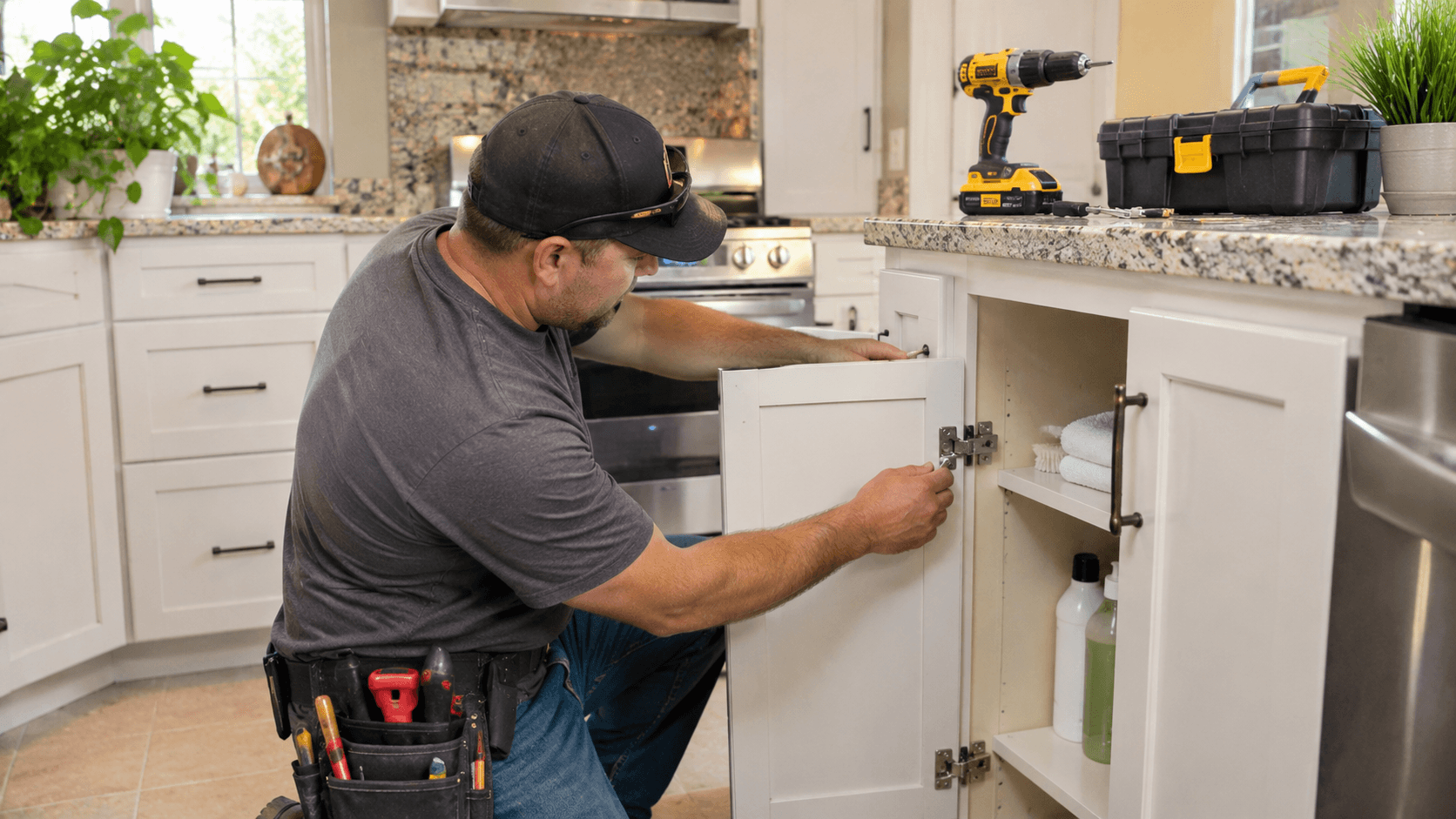
Small repairs can grow into larger remodeling projects as your Arizona business reputation builds.
As we already discussed, Arizona has 3,373,746 housing units, and a 67.4% owner-occupied rate means many homeowners want repairs, updates, and upgrades. Handyman work is one of the lowest-barrier entries on this list. Many owners begin with small fix-it jobs, then specialize in flooring, painting, or kitchens and baths as they build a crew and a client list.
Written estimates, signed contracts, and prompt communication do more for your reputation than advertising. Most leads come from referrals and neighbors.
- Estimated startup cost: $2,000–$50,000, from basic tools and a truck for small jobs up to a full remodeling setup with insurance and working capital for materials.
- Licenses and permits: Arizona has no general handyman license, but the ROC generally requires a contractor license when labor and materials exceed about $1,000, or when a permit is required at any price. Unlicensed operators must include "not a licensed contractor" in their advertising, and splitting a larger project into smaller contracts to avoid licensing is not allowed. Confirm the current classifications and limits with the ROC.
How to get started:
- Start with a specialty such as painting, flooring, or small repairs.
- Keep each job under the licensing threshold, or apply for the right ROC classification.
- Obtain licenses for work that crosses into electrical, plumbing, or HVAC, or hire licensed subcontractors.
- Budget for tools, transportation, insurance, and materials.
- Build a client base through referrals, HOA contacts, and reliable communication.
11. Sign and Vinyl Graphics
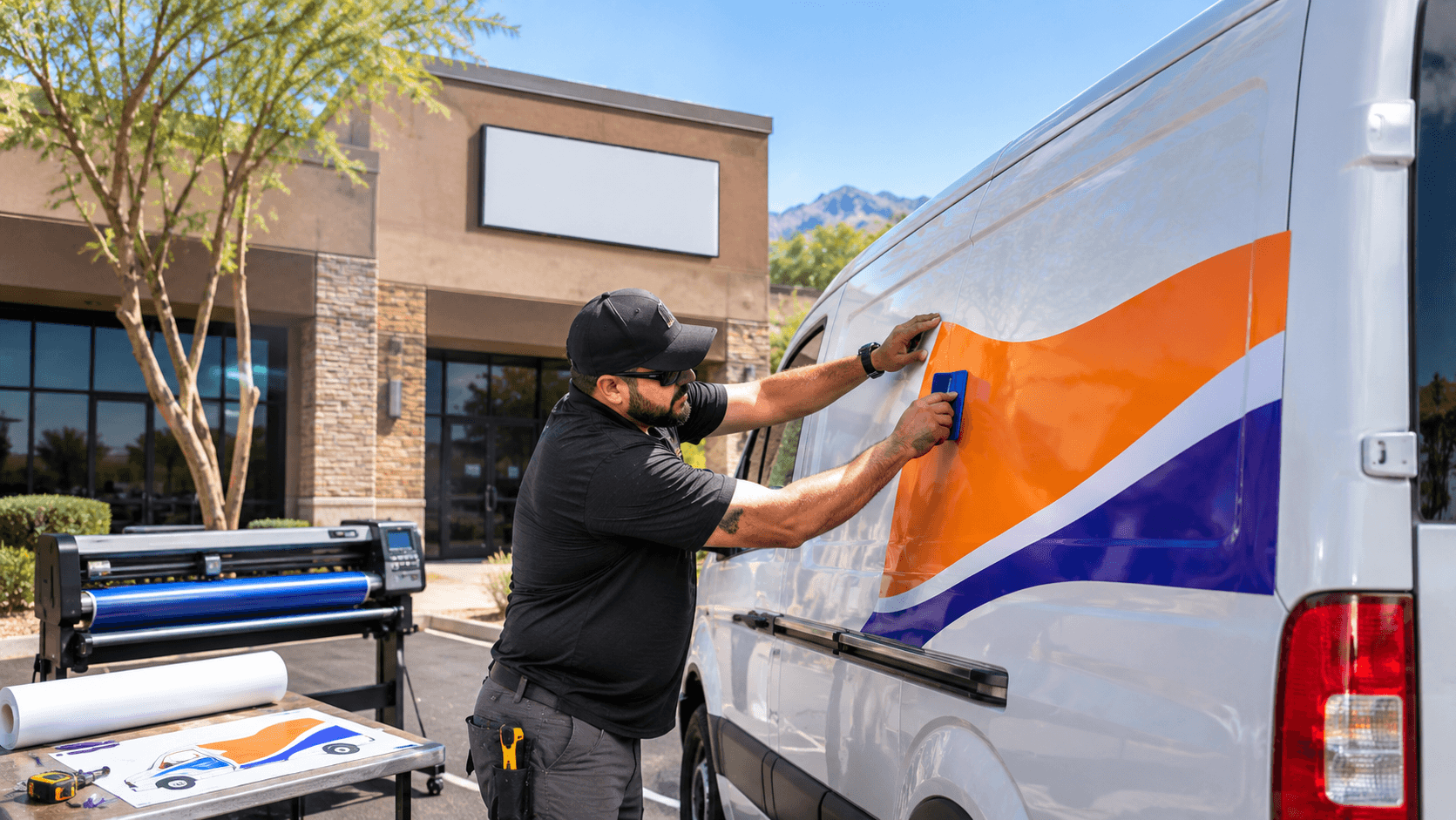
New businesses and growing fleets create steady demand for signs and vehicle wraps.
Every new storefront, office, and job site needs signage, and Arizona's growth keeps new businesses opening. The semiconductor boom adds to that demand. A 2026 industry report counted more than 70 semiconductor expansions since 2020, worth over $214 billion and roughly 28,000 jobs, and every contractor, supplier, and service firm following those projects needs branding.
Vehicle graphics, window lettering, storefront signs, and construction site banners are all realistic starting points. Pair signage with a nearby print or design partner to take on bigger projects.
- Estimated startup cost: $3,000–$25,000 for a vinyl cutter or plotter, a laminator, design software, installation tools, insurance, and a vehicle. Outsourcing production and focusing on installation reduce costs.
- Licenses and permits: No dedicated statewide sign-maker license applies in most cases, but exterior signs usually require a city sign permit, and some jobs are subject to zoning rules. Work involving electrical or structural components may require an ROC license, so check before you take those jobs.
How to get started:
- Choose your focus: vehicle graphics, storefront signs, or construction banners.
- Learn installation techniques and build a portfolio of sample projects.
- Check city sign permit rules and whether any jobs need a contractor license.
- Reach out to new businesses, contractors, and property managers.
- Offer fleet packages for repeat contracts.
12. Bilingual Digital Marketing Agency

Websites, local search, and bilingual content help Arizona businesses reach more customers.
Arizona has about 678,000 small businesses, and many rely on word of mouth and a website that has not been updated in years. Restaurants, contractors, clinics, salons, and law offices all need to show up in local search, collect reviews, and answer questions online. About 32.5% of Arizonans are Hispanic or Latino, so an agency that builds bilingual websites, Spanish-language ads, and bilingual Google Business Profiles serves customers many competitors overlook.
Pick one or two services (local SEO, website builds, paid ads, or social media) and one industry, then use your first projects as case studies. Retainers beat project fees for stability, and you can work with clients anywhere in the state.
- Estimated startup cost: $500–$10,000 for a computer, software subscriptions, a portfolio site, and basic business expenses.
- Licenses and permits: Marketing and web services do not require a statewide professional license. Check your city's business license rules, carry professional liability insurance, and ask the Arizona Department of Revenue how any hosting or software services you resell are taxed.
How to get started:
- Choose a niche, such as restaurants, healthcare practices, contractors, or local service businesses.
- Focus on services like local SEO, bilingual websites, Spanish-language ads, or social media management.
- Set up a portfolio website that shows your services and results.
- Build case studies by working with a few initial clients and tracking measurable outcomes.
- Reach potential clients through local business networks, referrals, and targeted outreach.
Common Mistakes to Avoid While Starting a Business in Arizona
- Skipping the license and Seller's Permit check: Unlicensed contracting work can lead to fines and legal issues. You may also face problems collecting payment for work that requires a license. For more information, read our guide to Arizona Seller’s Permit.
- Looking only at Phoenix: As noted earlier, much of the growth is now in the outer suburbs.
- Underestimating summer: Outdoor work slows during peak heat, so plan your schedule and cash flow accordingly.
- Ignoring insurance: General liability is cheap compared to one bad day.
- Chasing trending ideas: Pick businesses with proven local demand, not trends
Final Thoughts
Arizona isn't a magic wand. But it does offer something many states don't: a growing population, a hot climate that creates everyday demand, a booming clean-energy sector, and a once-in-a-generation semiconductor build-out, all with low state filing costs and simple taxes.
If you are short on cash, start with a low-cost business service. If you have capital and a trade, look at HVAC or solar business options. And if you want to ride the biggest wave in the state, look at the businesses that serve the companies moving in. Whichever business you choose to start, make sure to start small, check your licenses, and talk to ten potential customers before you buy anything big. Swyft Filings can assist you with the business formation process, allowing you to concentrate on building your customer base and growing your company. You can also read our our 20-step checklist for founders on how to start a new business.
Disclaimer: This guide is for general information, not legal, tax, or financial advice. Fees, licensing rules, and incentives change, so confirm details with the relevant agency before you file or invest.
FAQs
Profit depends more on execution than industry, but HVAC, solar, commercial cleaning, and specialized home services tend to have strong demand and recurring revenue in Arizona. Margins vary, so build a simple budget before you commit to starting any business in Arizona.
Some service businesses in Arizona can reach that level with enough clients, such as pool routes, commercial cleaning contracts, or HVAC. Reaching it usually takes months of consistent customer acquisition, not weeks. Treat any "guaranteed" income claim with suspicion.
Some promising business opportunities in Arizona in 2027 include HVAC services, pool maintenance, desert landscaping, solar and energy storage services, senior home care, and pest control. These businesses address ongoing local needs created by Arizona's hot climate, growing population, housing market, and aging residents. Bilingual digital marketing, cleaning, and sign-making also offer opportunities.
HVAC repair, pool maintenance, landscaping, pest control, and cleaning services can benefit from recurring demand in Arizona. The state's long, hot summers create a sustained demand for cooling systems and pool care, while homeowners, property managers, and commercial facilities require regular maintenance and cleaning. Demand will vary by location, competition, and the services you offer.
Startup costs depend on the type of business, equipment, staffing, and licensing requirements. Based on the estimates in this guide, a bilingual digital marketing agency may cost around $500–$10,000 to start, while a cleaning business may need $2,000–$20,000. More equipment-intensive businesses, such as HVAC services, may require $40,000–$150,000. These are ballpark estimates, not fixed costs.
Arizona does not have one general statewide business license for every business. However, you may need a city business license, industry-specific permits, or professional credentials depending on your services. For example, HVAC, certain landscaping jobs, and regulated contracting work may require an Arizona Registrar of Contractors license. Food trucks also need county health permits, while pest control businesses must meet Arizona Department of Agriculture licensing requirements.
A bilingual digital marketing agency, cleaning service, or small handyman business can be relatively accessible to start because you may not need a large facility or extensive equipment at the beginning. The actual requirements depend on the services you provide. For example, handyman work is subject to Arizona contractor licensing rules when a job crosses the applicable labor-and-materials threshold or requires a permit.
With around $5,000, you could consider starting a small cleaning service, a bilingual digital marketing agency, a mobile windshield repair service, or a basic handyman business. A solo landscaping or pool maintenance operation may also be possible with used equipment and a limited service area. Your actual budget will depend on transportation, insurance, supplies, training, and local licensing requirements.