Key Takeaways
- Home and property services, cottage food, tourism, freight and logistics, and in-home care are five sectors worth exploring in 2027, based on Alabama's existing small-business activity and demand.
- Most businesses listed in this guide can be started with a small team or as a solo operation, although licensing requirements vary by industry.
- Alabama has no single statewide general business license. Depending on your activity and location, you may need county, city, professional, or industry-specific licenses.
Which businesses actually work in Alabama in 2027, and what does it take to register one? Five sectors backed by state data, with startup costs and licensing for each.
Starting a business in Alabama can be a practical way to turn your skills, experience, or a promising idea into a steady source of income. But choosing what to sell or which service to offer is only part of the decision. You also need to understand where demand exists, how much it costs to get started, and what licenses you need before taking your first customer.
Alabama has 465,610 small businesses, representing 99.4% of all businesses in the state. Many operate without employees, showing that you don't necessarily need a large team or substantial infrastructure to build a business here.
From lawn care and property maintenance to cottage food, tourism, freight, and senior care, several sectors offer opportunities for new entrepreneurs. In this guide, we will explore five of the best businesses to start in Alabama in 2027, backed by state-specific business data
Best Businesses to Start in Alabama in 2027
1. Lawn Care and Property Maintenance Services
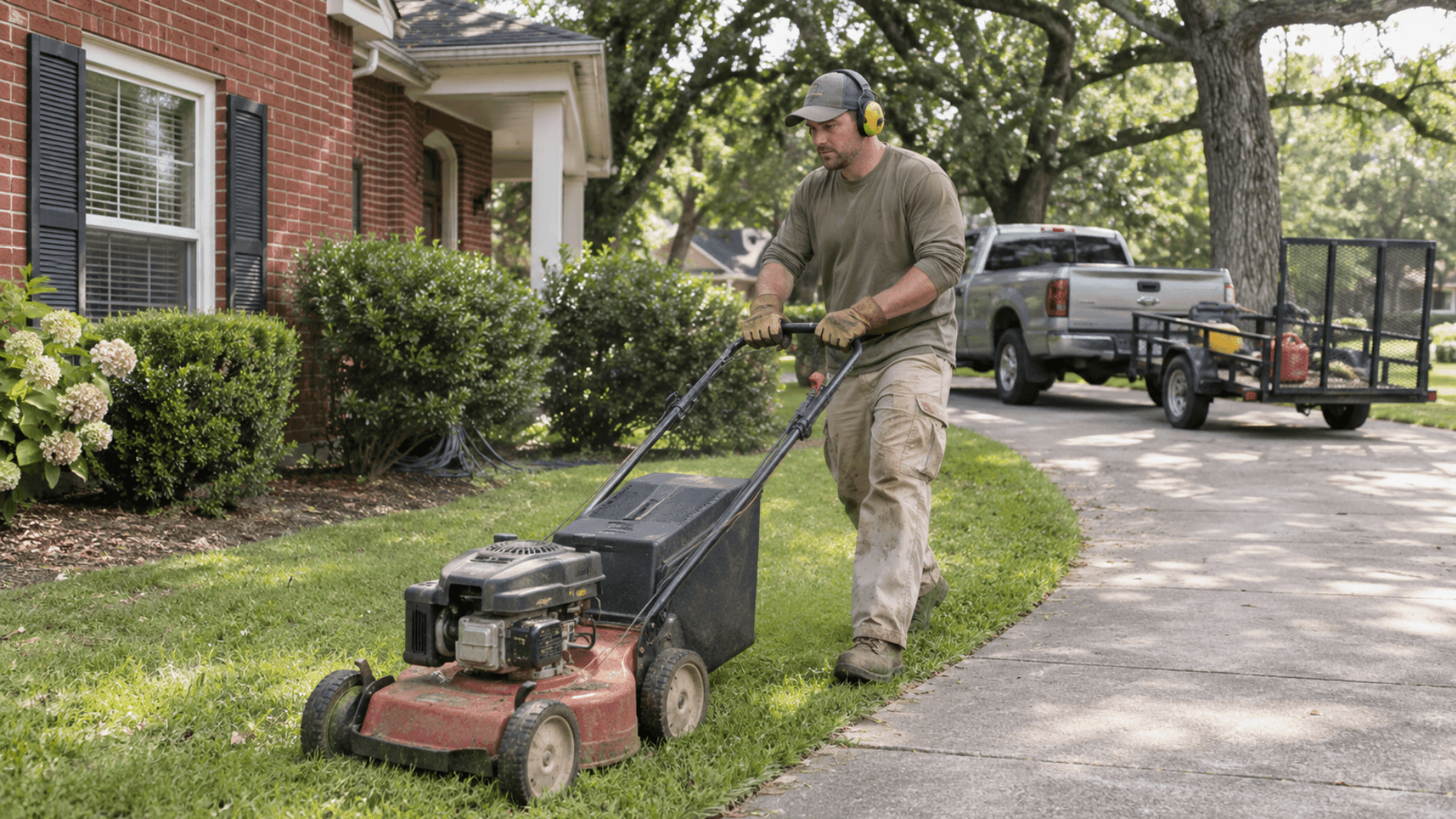
Lawn care, landscaping, pressure washing, house cleaning, handyman work, and appliance repair.
Why it works: This is the largest solo operator category in the state. Administrative and support services plus construction accounted for more than 111,000 Alabama small businesses, and roughly 90 percent of them had no employees. Demand repeats, so one customer can become a monthly customer.
What you need: A county business privilege license for your activity, and a city license where you work. Cleaning, mowing, and edging sit outside state board licensing. Four landscaping categories do not. Landscape design, setting landscape plants, tree surgery, and ornamental and turf pest control each need a Horticulture Professional Services License from the Alabama Department of Agriculture and Industries. It costs $175 a year, runs October through September, and requires a certified operator who has passed the exam for that category.
Skilled trades are licensed separately again. HVAC and refrigeration contractors go through the state HVAC board, where active status calls for a $20,000 performance bond.
2. Cottage Food and Specialty Food

Baked goods, jams and preserves, candy, dried herbs and mixes, roasted coffee, and dried baking mixes made in your own kitchen.
Why it works: Alabama's Cottage Food Law lets you sell food you prepare at home without a commercial kitchen or a food service permit. The Alabama Department of Public Health confirms the annual income limit under the law has been removed, so there is no sales ceiling. The county health department reviews your course certificate and your labels. It does not inspect your home kitchen.
What you need: A food safety course approved by ADPH, such as the Alabama Extension Cottage Food Law course (a $25 enrollment fee and valid for 3 years), or any ANSI-accredited program. Then submit a Cottage Food Review Form with a sample label to your local county health department, and a city business license.
The limits worth knowing up front: You sell directly to consumers only, in person, by phone, or online, within Alabama. Wholesale to stores and restaurants sits outside the law. Meat, poultry, and fish are excluded, which rules out jerky and meat-filled baked goods. Pickles, salsa, and other fermented or acidified items need pH verification from a processing authority first, and freeze-dried items need water activity verification. Every package needs a label in at least 10-point font with the food's name, your operation's name and address, the ingredients in descending order, a statement that the food is not inspected by the health department, and an allergen disclaimer.
Sellers trading under a brand name rather than their own also need to register an Alabama trade name.
3. Tourism, Lodging, and Short-Term Rentals

Vacation rentals, guided tours, outdoor recreation, and visitor services.
Why it works: Alabama tourism set a fifth consecutive record in 2025. The Alabama Tourism Department reports 29 million visitors spending $24.9 billion, supporting 255,780 jobs, or 11.6 per cent of non-agricultural employment. Baldwin, Jefferson, Madison, Mobile, and Montgomery counties drew the most visitors.
What you need: A city and county license, lodging tax registration through the Department of Revenue, and your city's short-term rental rules, which differ between Gulf Shores, Birmingham, and Huntsville. Owners commonly hold rental property in an LLC to keep business and personal assets separate.
4. Freight, Trucking, and Logistics Support

Freight dispatch, regional trucking, last-mile delivery, and contractor support services.
Why it works: Alabama's strong transportation and logistics network creates consistent demand for these services. The Port of Mobile, major interstate corridors, and the state's automotive and aerospace manufacturing industries provide a steady stream of potential business customers. This demand is reflected in the 2025 Small Business Profile, which reports 36,753 small businesses in Alabama's transportation and warehousing sector, including 33,996 with no employees. These figures highlight the sector's substantial presence of small, independently operated businesses and the opportunities available to entrepreneurs.
What you need: A county business privilege license, plus federal FMCSA registration if you run commercial vehicles across state lines. Dispatch and brokerage work carries its own federal requirements, separate from driving.
5. In-Home Care and Health Support Services

Non-medical senior care, companion services, mobile phlebotomy, and support for people aging at home.
Why it works: According to the SBA 2025 report, health care and social assistance covered 34,359 Alabama small businesses, and 26,625 of them run with no employees. Demand comes from an aging population and holds up through slower economic periods.
What you need: This sector carries the heaviest licensing of the five, and your requirements depend on where you draw the line between everyday help and medical care. Non-medical companion work is lighter than skilled care, which needs state health licensure. The Alabama Department of Senior Services lists companion and homemaker services among the supports in its Medicaid waiver programs, which is one route to funded work once you meet provider requirements.
What It Costs to Start a Business in Alabama in 2027
Your startup cost has two parts. The state filing fee is fixed, no matter what business you pick. The licensing is where your choice of business changes the number.
State Filing Costs
Alabama requires two filings, in order. You reserve your name first, then file the document that creates your company. The Secretary of State fee schedule and the Alabama.gov filing portal set these amounts.
Filing | By Mail | Online |
Certificate of Name Reservation, required first | $25 | $28, or $27 with a yearly subscription |
Certificate of Formation | $200 | $208 |
Total to Form an LLC | $225 | $236 |
Foreign LLC Registration, For Out-of-State Companies | $150 | $156 |
Change of Registered Agent Later | $100 | $100 |
EIN from the IRS | $0 | $0 |
Trade Name Registration, Optional | $30 | $30 |
Half of the $200 formation fee is county money. The state's own LLC formation form says the Secretary of State pays $100 of it to the county treasurer where your initial registered agent's office sits.
Licensing Costs
Alabama has no single statewide general business license. Instead, the Department of Revenue's Business and License Division oversees state and county business privilege licenses, which your county issues.
License fees vary by profession and location, so your business type decides the amount. There is a $1 issuance fee per license, and some counties add their own. Under state law, the county portion is 50 percent of the state portion.
Start operating after April 1, and you may qualify for a half-year license. Licenses renew during October, with a 15 percent penalty plus interest after October 31.
If you sell taxable goods, you also register for sales tax and collect it. Our guides on Alabama business license requirements and seller's permit registration cover both.
How to Register Your Alabama Business in Seven Steps
Steps 1 to 3: Structure, Name, and Formation
1. Choose your structure: Most Alabama small business owners form an LLC, which keeps business debts and lawsuits separate from personal assets while staying simple to run. A sole proprietorship needs no state filing but offers no separation.
2. Reserve your name: Alabama requires a Certificate of Name Reservation before it accepts your formation documents, which is unusual among the states. Search the state's records first through an Alabama business entity search to confirm your name is clear. Your LLC name has to end with "Limited Liability Company," "L.L.C.," or "LLC."
3. File your Certificate of Formation: This is the document that creates your company. A copy of your name reservation certificate goes with it, and filings that arrive without one get rejected. The form asks for your business name and address, your purpose, and your registered agent's name and Alabama street address.
Your registered agent receives legal notices and state mail for your company. It can be you, if you have an Alabama street address and are there during business hours, though that address becomes public record. An Alabama registered agent service keeps your home address off the public file.
Steps 4 to 7: EIN, Taxes, Licenses, and Banking
4. Get your EIN: An Employer Identification Number is your federal tax ID. Apply directly with the IRS at no charge, and you receive it immediately online. Form your company first, then apply.
5. Register for state taxes: Set up your tax accounts through My Alabama Taxes, including a sales tax account if you sell taxable goods.
6. Get your county and city licenses: Visit the licensing official in each county where you conduct business. The Department of Revenue publishes a county probate office directory with contacts for all 67 counties. Then check with your city clerk, because municipal licenses are separate.
7. Open a business bank account: Bring your filed formation documents and your EIN. Keeping business and personal money apart is what supports the liability separation your LLC provides.
Staying Compliant After You Open
Alabama is lighter here than most states, and two changes since 2024 are the reason.
1. There is no annual report for LLCs: Alabama LLCs never had one, and Act 2024-213 repealed the corporation annual report effective October 1, 2024. Older guides still describe an Alabama annual report with a fee attached. For an LLC in 2027, no such filing exists.
2. Most small LLCs owe no Business Privilege Tax: For tax years beginning after December 31, 2023, a calculated tax of $100 or less means you owe nothing and do not file the return. The tax remains in place and is based on net worth, so it matters once your business grows. The Department of Revenue's Business Privilege Tax guidance covers who still files. The tax keeps accruing every year your company stays registered, even if you stop trading, until you formally dissolve it.
What stays on your calendar: a registered agent on file, county and city license renewals each October, cottage food certification every three years where that applies, and workers' compensation insurance once you regularly employ five or more people.
Conclusion
The five sectors above share three things. Alabama residents already earn a living in them, you can start without employees, and the licensing is something you can work through step by step.
Your state filing cost is the same regardless of which one you choose. The difference sits in the licensing, so check your county and city requirements before you commit rather than after.
When you are ready to register, Swyft Filings handles both Alabama filings, the name reservation and the Certificate of Formation, along with registered agent service and EIN filing. You can start your Alabama LLC and focus on the business itself.
FAQs
Home and property services have the lowest entry cost of the five sectors above. Lawn care, pressure washing, and house cleaning need basic equipment, no premises, and no state professional board. The Alabama data support this: administrative and support services, plus construction, cover more than 111,000 small businesses here, and around 90 percent operate with no employees. Cottage food is the other low-cost option. You use your own kitchen, and the main costs are the $25 food safety course and your local license.
State filing costs $225 by mail or $236 online for an LLC, covering the required name reservation plus the Certificate of Formation. Your EIN is free from the IRS. On top of that, your county business privilege license fee depends on your profession and location, and your city may charge its own.
Alabama has no single statewide general business license. Most businesses instead need a state and county business privilege license, issued by the licensing official in each county where they do business. The Department of Revenue oversees and coordinates these. Whether your activity requires one depends on the license categories in state law. Cities license separately, so a county license does not cover you inside a municipality. Food, lodging, and health services carry further requirements.
Yes. A Certificate of Name Reservation has to be obtained before you file your formation documents, and a copy must be attached to the Certificate of Formation. Alabama is one of very few states treating this as a required first step rather than an optional hold. It costs $25 by mail or $28 online and holds your name for one year.