Key Takeaways
- Florida offers opportunities across several industries. Tourism, housing, an aging population, and a large small-business community provide useful starting points for researching business ideas.
- Costs to start a business in Florida vary widely. Service businesses can be a practical starting point. Cleaning, lawn care, digital marketing, and handyman services may allow you to begin on a smaller scale and expand as you gain customers.
- Check licensing requirements before investing to start a business in Florida. Businesses such as HVAC, pest control, home health care, real estate, and food trucks may need specific state licenses, registrations, or permits.
- Choose your location in Florida to start a business based on local demand. Research potential customers, competition, operating costs, and local requirements before deciding where to launch.
- Market demand doesn't guarantee profit. Build a budget that accounts for equipment, insurance, staffing, marketing, taxes, and ongoing expenses.
Read this guide to discover 14 of the best business ideas to start in Florida, from property management to food trucks, with estimated startup costs and key licensing requirements.
Florida's growing population and strong tourism industry create opportunities for entrepreneurs across a range of industries. According to the Census Bureau’s latest data, the state added approximately 1.9 million residents between April 2020 and July 2025. It also welcomed a record 39.88 million visitors in the first quarter of 2026, according to VISIT FLORIDA.
And more residents and more visitors commonly mean more customers for nearly every kind of business. But demand alone doesn't guarantee success, as many new businesses close within their first few years. So the business idea you pick, the licenses and permits you will hold, and the city you launch in all matter.
To ensure you start smart from day one, we have researched the market on your behalf and shortlisted the best businesses to start in Florida. For each business idea, we will cover estimated startup costs and the licenses and permits you may need to get started.
How We Shortlisted the Best Businesses to Start in Florida
We didn't randomly select the business ideas to start in Florida. We focused on opportunities that align with measurable demand in Florida, including:
- Population growth (July 2025): 23,462,518, up 8.9% since April 2020
- An aging population (Residents aged 65 and older): 22.8%
- Housing units (July 2025): 10,789,047
- Building permits (2025): 178,297
- Residents under 65 with a disability: 8.9%
Source: Census Bureau
These factors play an important role in identifying promising business opportunities in Florida and in deciding which location and industry may offer the best potential for growth in the coming years.
NOTE: These figures help explain Florida's market potential, but they don't prove demand for every business idea.
Top 14 Businesses to Start in Florida
Whether you are planning a small business or a larger venture, Florida has plenty of opportunities worth exploring. The table below compares 14 business ideas by estimated startup costs, profit potential, recurring revenue, scalability, and market demand. We will then break down each idea in detail.
Business | Estimated Startup Cost | Profit Potential | Recurring Revenue | Scalability | Market Demand |
Vacation Rental and Property Management | $5,000–$50,000 | Medium–High | High | High | Strong |
Home Care and Senior Services | $10,000–$50,000+ | Medium–High | High | High | Strong |
HVAC Services | $50,000–$250,000 | High | High | High | Strong |
Solar Installation | $50,000–$250,000 | Medium–High | Medium | High | Growing |
Landscaping and Lawn Care | $5,000–$50,000 | Medium–High | High | Medium–High | Strong |
Pest Control | $15,000–$75,000 | Medium–High | High | High | Strong |
Cleaning Services | $2,000–$20,000 | Medium–High | High | High | Strong |
Real Estate Brokerage or Agent Services | A few hundred–$1,000+ | Variable | Low–Medium | High | Strong |
Handyman and Home Maintenance | $2,000–$15,000 | Medium–High | Medium–High | Medium–High | Strong |
Moving Services | $15,000–$100,000 | Medium | Low–Medium | High | Strong |
Food Truck | $50,000–$200,000 | Medium | Medium | Medium | Strong |
Child Care (Family Day Care Home) | $5,000–$30,000+ | Medium | High | Medium | Strong |
Digital Marketing and IT Consulting | $2,000–$10,000 | High | High | Very High | Strong |
E-Commerce Brand | $5,000–$50,000 | Variable | Medium–High | Very High | Strong |
1. Vacation Rental and Property Management

Property manager manages bookings, guest services, and property maintenance for Florida vacation rentals.
With a record 143.3 million visitors last year, Florida creates significant opportunities for vacation rental management. You can enter this market without buying property by managing bookings, guest communication, cleaning, pricing, and maintenance for property owners. Owners who live out of state or manage multiple properties may value having someone local handle these day-to-day tasks.
Look for areas in Florida with steady visitor demand, a healthy supply of short-term rental properties, and property owners who need management support. Tourist destinations such as Orlando, Kissimmee, Tampa, and the Florida Keys are worth researching, but compare local rental restrictions, competition, seasonal occupancy, and management fees before choosing your market.
- Estimated startup cost: $5,000–$50,000, excluding property purchases. Your actual costs will depend on whether you work from home, hire staff, invest in management software, or offer additional services.
- Licenses and permits: Qualifying short-term rentals generally need a license from the DBPR Division of Hotels and Restaurants. The rules generally cover properties that are rented more than three times a year for stays of under 30 days or one calendar month, or that are advertised as regularly available for short-term stays. Managing rentals for others may also require a real estate license. Check local business tax receipt requirements.
- Taxes to consider: Short-term rentals may be subject to Florida 6% state sales tax, applicable surtax, and county tourist development taxes. Confirm requirements with the Florida Department of Revenue.
2. Senior Home Care Services

Home care services that help Florida seniors manage daily activities and remain comfortable at home.
As mentioned above, 22.8% of Florida’s population is aged 65 or older, creating demand for services that help seniors live comfortably at home. You can start this business by helping seniors with everyday needs, such as companionship, meal preparation, light housekeeping, and errands. You don't necessarily need to provide the care yourself.
You can hire caregivers, match them with clients, schedule visits, and charge families for the services provided. This way, you charge clients for the services provided and pay your caregivers and other operating expenses from that revenue. For example, you charge a client $30 per hour and pay a caregiver $19 per hour; the $11 difference helps cover insurance, administrative costs, travel, and other expenses. Any amount left after all expenses is your profit. However, the services you offer determine which registrations and licenses you will need.
- Startup cost (estimate): $10,000 to $50,000 for companion and homemaker services and $50,000 to $150,000 or more for a licensed home health agency.
- Licenses and permits: Companion and homemaker services generally require registration with AHCA, while skilled and aide services require an AHCA home health agency license. Expect background screening requirements and a local business tax receipt.
3. HVAC Services

Start an HVAC business serving Florida homeowners and businesses with air conditioning repairs, installation, and maintenance.
Florida's hot weather makes air conditioning essential for homes and businesses. This creates steady demand for HVAC services. With 10.8 million housing units across the state, you can build a business by installing air conditioning systems, repairing breakdowns, and providing routine maintenance. You can start by serving homeowners and landlords, then expand to commercial properties and larger contracts as your business grows.
- Startup cost (estimate): $50,000 to $250,000 for vehicles, tools, inventory, and insurance.
- Licenses and permits: A certified air-conditioning or mechanical contractor license from the Construction Industry Licensing Board (CILB) at DBPR, which requires an exam, documented experience, and financial responsibility. Florida generally requires a state contractor license for air-conditioning work above a minor-work threshold, so confirm the current limit with the DBPR. Add permits, liability insurance, and workers' compensation if you hire.
4. Solar Installation

Solar installation business for homes and businesses in Florida.
Florida's abundant sunshine makes solar installation a worthwhile business opportunity. Homeowners and businesses can use solar panels to generate electricity or heat water, creating opportunities for contractors who install and maintain these systems.
You can start by focusing on residential installations and later expand to commercial projects as your business grows. The Bureau of Labor Statistics projects 37% national employment growth for solar photovoltaic installers from 2025 to 2035. This projected growth makes solar installation a business worth exploring, especially if you can connect with homeowners looking to add solar power to their properties.
- Estimated startup cost: $50,000–$250,000 for tools, safety equipment, vehicles, insurance, and initial supplies. Your costs will depend on whether you hire installers, keep equipment in stock, or subcontract certain parts of each project.
- Licenses and permits: Florida requires an appropriate contractor license for solar installation work. Depending on the systems you install, this may be a solar contractor license through the Construction Industry Licensing Board (CILB) or an electrical contractor license for photovoltaic systems. You will also need to check local building permit requirements and utility approval procedures before starting installations. Industry certifications such as NABCEP are optional but helpful.
5. Landscaping and Lawn Care
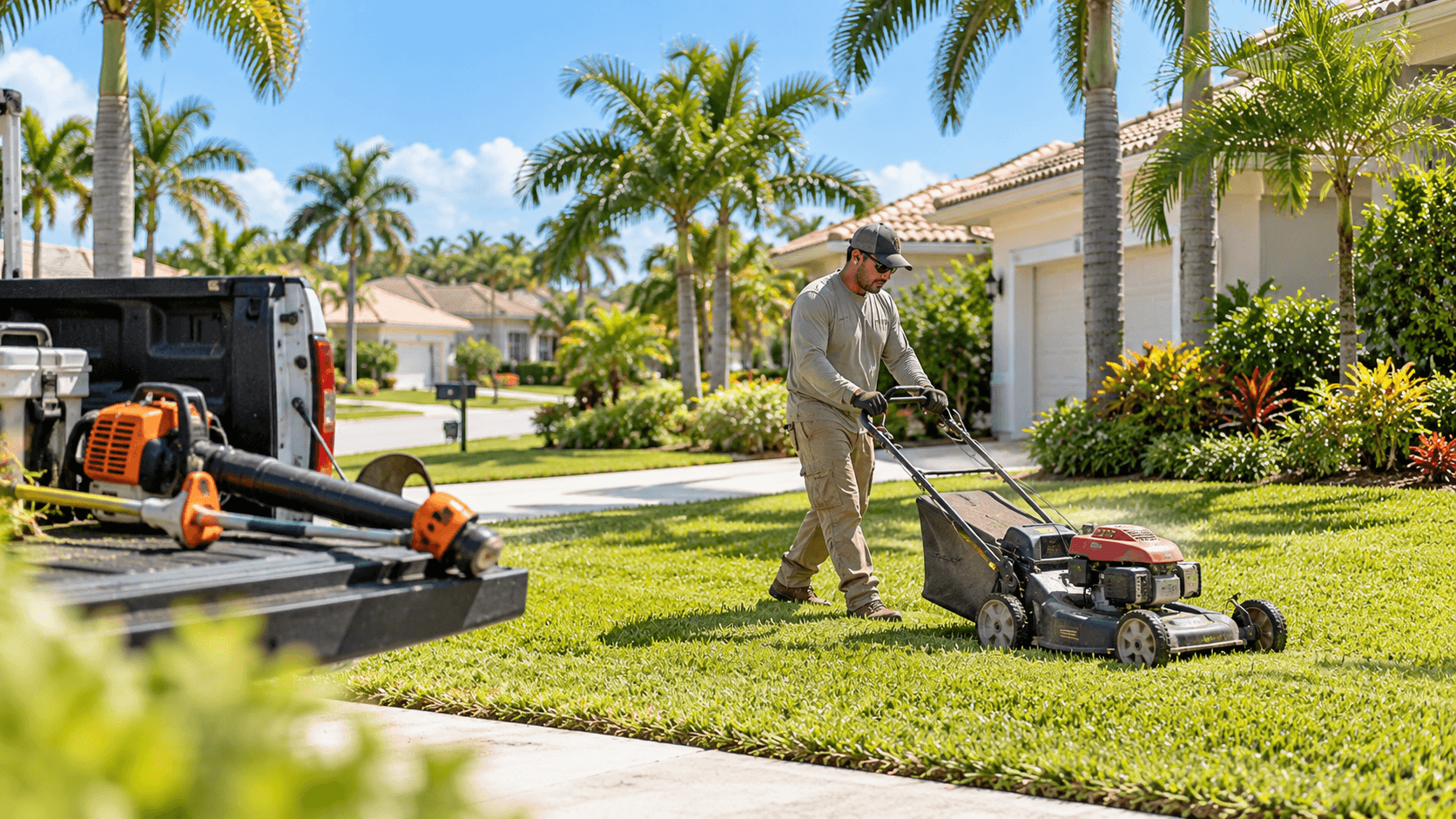
Build a lawn care business by offering mowing, trimming, and regular outdoor maintenance.
Florida's warm climate means grass, plants, and lawns need regular maintenance for much of the year. With so many single-family homes and rental properties, you can build a business by mowing lawns, trimming hedges, removing weeds, and maintaining outdoor spaces for homeowners, landlords, and commercial properties.
You don't need to own a landscaping company with a large crew from day one. You can start with basic equipment and a few regular customers, then expand into larger properties and ongoing maintenance contracts as your business grows. You can charge customers per visit or offer monthly maintenance packages.
- Estimated startup cost: $5,000–$50,000 for a lawn mower, trimmers, a blower, transportation, fuel, and insurance. You may spend less if you already own some equipment, while larger jobs and additional employees can increase your costs.
- Licenses and permits: Basic lawn mowing and maintenance generally don't require a statewide professional license, but you may need a local business tax receipt and liability insurance. If you plan to apply fertilizer commercially, Florida requires the appropriate certification. Pesticide applications have separate restrictions and licensing requirements. Check the Florida Department of Agriculture and Consumer Services (FDACS) for the rules that apply to your services.
- Where to start: Look for neighborhoods with single-family homes, rental properties, and homeowners' associations that need regular lawn care. Start by offering a few basic services, set prices based on lawn size and the time required, and approach homeowners or property managers in your area. Reliable service and repeat customers can help you build a steady schedule before investing in more equipment or hiring a crew.
6. Pest Control
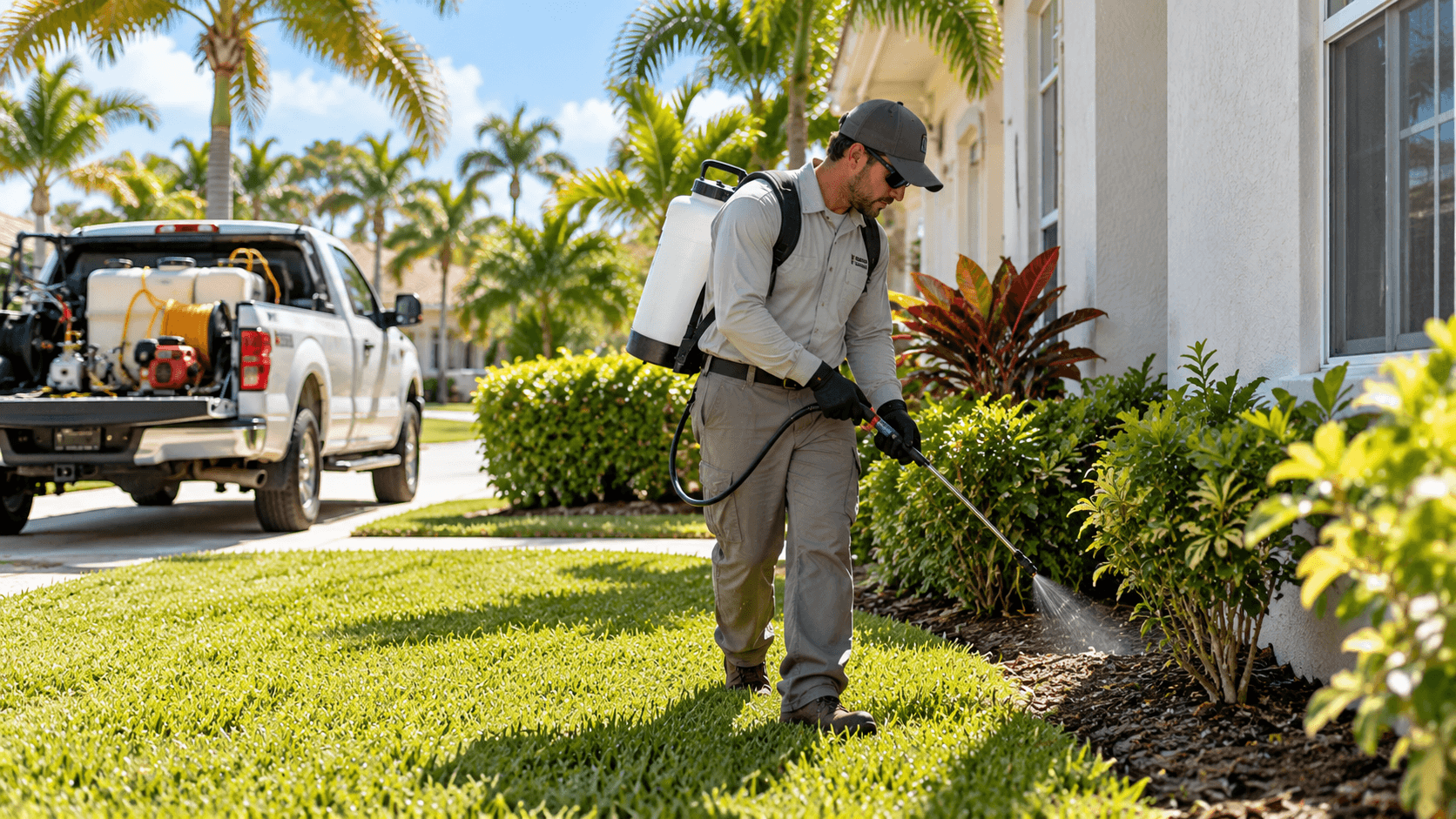
Serve Florida homeowners and businesses with pest inspections, treatments, and prevention plans.
Florida's warm, humid climate keeps pests such as termites, ants, cockroaches, and mosquitoes active throughout much of the year. This creates opportunities for businesses that help homeowners, landlords, restaurants, and offices keep pests under control.
You can start by offering routine pest treatments for homes, then expand into termite control or commercial contracts. You can charge customers for one-time treatments, inspections, and ongoing pest prevention plans. Monthly or quarterly service agreements can attract repeat business, while termite treatments and other specialized services can generate additional revenue. Your profit will depend on the cost of chemicals, equipment, labor, insurance, and travel.
- Estimated startup cost: $15,000–$75,000 for a service vehicle, pest control equipment, treatment supplies, insurance, and marketing. Your actual costs will depend on the services you offer, the equipment you need, and whether you hire employees.
- Licenses and permits: An FDACS pest control business license, a certified operator in charge for each category of service, and proof of required insurance. Under Florida Statute 482.071, the license fee is set by FDACS between $75 and $300.
7. Cleaning Services

Start a cleaning business serving homes, offices, and vacation rentals across Florida.
Florida's busy tourism industry creates demand for cleaning services across vacation rentals, hotels, offices, and residential properties. With millions of tourists arriving each year, vacation rental owners need reliable cleaners to prepare properties between guest stays. You can start with basic home or office cleaning and expand into vacation rental turnovers or commercial contracts as you gain customers. You don't need a large team to get started, and you can add employees as bookings increase.
You can charge per visit, by the size of the property, or through recurring cleaning contracts. Vacation rental turnovers may include changing linens, cleaning bathrooms and kitchens, and restocking supplies. Regular residential and office contracts can provide recurring income, while deep cleaning can generate additional revenue.
- Estimated startup cost: $2,000–$20,000 for cleaning supplies, equipment, transportation, insurance, and marketing. You can keep costs low by starting on your own and purchasing additional equipment as your client base grows.
- Licenses and permits: General cleaning services don't typically require a statewide professional license in Florida, but you may need a local business tax receipt. Specialized services, such as mold remediation, have separate requirements, so check the Florida Department of Business and Professional Regulation (DBPR) before offering them.
8. Real Estate Brokerage or Agent Services

Real estate sales and property services in Florida's housing market with professionals.
The recent press release from Florida Realtors revealed that Florida recorded 255,012 closed sales of existing single-family homes last year, up 0.9% from 2024. This stronger, more sustainable housing market volume is a good opportunity for agents in 2026 who help people buy and sell homes.
You can start as a real estate sales associate, working with buyers, sellers, landlords, or renters, without opening your own brokerage. As you gain experience and build a network of clients, you can specialize in residential sales, rental properties, or investment properties. Most real estate brokers and sales agents are self-employed or work on a commission basis. However, local markets vary, so compare sales activity, inventory, and competition in your target area before choosing where to focus.
- Estimated startup cost: A few hundred to around $1,000 for pre-licensing education, exams, and application fees. Opening your own brokerage can cost $5,000 or more, depending on office expenses, marketing, and staffing.
- Licenses and permits: A sales associate license through the DBPR Division of Real Estate, which requires a 63-hour pre-licensing course and a state exam. Sales associates must work under a sponsoring broker.
9. Handyman and Home Maintenance

Offer everyday home repairs and maintenance services to Florida homeowners and property managers.
The latest U.S. Census Bureau data shows that Florida had 10,789,047 housing units and issued 178,297 residential building permits. This large housing base creates potential demand for everyday repairs, property upkeep, and maintenance between tenants. You can target homeowners, landlords, and property managers who often need help with tasks such as assembling furniture, fixing doors, patching drywall, and handling minor repairs.
You can start as a one-person business with basic tools and expand into a team as you build a steady customer base. You can also charge by the hour, per job, or through maintenance agreements with landlords and property managers. Repeat repair work can provide steady income, while larger permitted projects may offer additional opportunities if you hold the necessary license.
- Estimated startup cost: $2,000–$15,000 for tools, transportation, safety equipment, insurance, and marketing. Costs depend on the repairs you offer and whether you already own essential tools.
- Licenses and permits: Florida does not require a general handyman license for every type of minor repair, but regulated work, such as electrical, plumbing, and air-conditioning services, requires the appropriate licenses. State and local rules may also apply to larger projects.
10. Moving Services

Help Florida residents relocate with local moving, packing, and transportation services.
The latest data published by the Florida Housing Data Clearing house show that Florida gained approximately 201,191 residents through domestic and international migration. Although migration has slowed from its 2022 peak (598,737), people moving into, out of, and within the state still create potential demand for household moving services.
You can start with local moves, packing, loading, and furniture transportation, then expand into larger jobs as you acquire vehicles and hire a team. Customers may include families relocating within Florida, apartment residents, and businesses moving to new premises.
- Estimated startup cost: $15,000–$100,000 for a truck or van, moving equipment, fuel, insurance, and labor. Costs will depend on whether you buy or rent a vehicle and how many workers you hire.
- Licenses and permits: Moving companies handling household goods within Florida generally need to register with the Florida Department of Agriculture and Consumer Services (FDACS). Interstate movers generally need federal registration through the Federal Motor Carrier Safety Administration (FMCSA). Check applicable insurance, local business tax receipt, and vehicle requirements before operating.
11. Food Truck

Take your menu to permitted locations, festivals, and community events with a food truck business in Florida.
Florida’s annual festivals, fairs, and outdoor events give food truck owners opportunities to reach customers in different locations throughout the year. Upcoming events include:
- Florida Seafood Festival in Apalachicola (November 6–7, 2026)
- Gasparilla Pirate Fest in Tampa (January 30, 2027)
- The South Florida Fair in West Palm Beach (January 15–31, 2027)
- The Florida State Fair in Tampa (February 4–15, 2027)
- The Florida Strawberry Festival in Plant City (March 4–14, 2027)
So, instead of opening a traditional restaurant, you can sell a focused menu from a food truck at permitted locations, events, and busy commercial areas. You might specialize in tacos, sandwiches, seafood, desserts, or another menu that fits your target customers. Before choosing where to operate, check event calendars, vendor application requirements, and permitted vending locations.
Apply early because spaces may be limited and approval isn't guaranteed. Keep in mind that large crowds don't automatically mean higher sales, so compare vendor fees, expected foot traffic, travel costs, and other operating expenses before committing.
- Estimated startup cost: $50,000–$200,000 for a truck, kitchen equipment, permits, initial ingredients, insurance, and branding. A used truck may reduce your upfront investment, while a custom-built vehicle can cost considerably more.
- Licenses and permits: A DBPR Division of Hotels and Restaurants mobile food dispensing vehicle license. You need either a commissary or a self-sufficient vehicle, and the application may require plan review. Add local permits, a business tax receipt, and sales tax registration.
12. Child Care (Family Day Care Home)

Explore the requirements for starting a child care business in Florida.
Children under 18 make up 18.9% of Florida's population, while 4.9% of residents are under age five, according to the U.S. Census Bureau. These figures provide useful context for businesses serving families with young children.
If you enjoy working with children, a family day care home can be a way to start a small business from your own residence, subject to applicable state and local requirements. You can begin with a permitted home-based setup and consider a larger facility if demand grows and you meet the additional requirements.
- Estimated startup cost: $5,000–$30,000 for a home-based program, or $100,000 or more for a child care center. Costs can include safety improvements, furniture, toys, learning materials, insurance, and staff.
- Licenses and permits: The Florida Department of Children and Families (DCF) licenses child care facilities and licenses or registers family day care homes. A handful of counties run their own local licensing programs. Expect required training, background screening, and zoning checks.
13. Digital Marketing and IT Consulting

Help Florida businesses improve their online presence through digital marketing, web development, and IT consulting.
Florida had approximately 3.5 million small businesses, accounting for 99.8% of businesses in the state, according to the SBA's 2025 Small Business Profile. Many of these businesses need to improve their online presence or manage their technology. To them, you can offer services such as website development, search engine optimization (SEO), social media management, paid advertising, IT support, or software consulting.
So, choose one or two services that match your skills and identify businesses that need them. Build a simple website or portfolio showing your work, connect with local business owners, and use early projects to develop case studies and referrals. As demand grows, you can add services or hire specialists to handle more clients.
Unlike many service businesses, you can often work from home and serve clients across Florida or elsewhere in the country. You can charge hourly rates, project fees, or monthly retainers.
- Estimated startup cost: $2,000–$10,000 for a computer, software subscriptions, a website, marketing, and other basic business expenses. Costs depend on the tools you use and whether you work independently or hire specialists.
- Licenses and permits: General digital marketing and IT consulting don't typically require a Florida state professional license. However, you will need to check local business tax receipt requirements and consider professional liability insurance. Specialized services may have additional requirements.
14. E-Commerce Brand

Build an e-commerce brand in Florida by selling products through your own website or an online marketplace.
Online selling gives you a way to reach customers without opening a physical store. You can build an e-commerce brand around products such as home accessories, clothing, beauty products, or specialty goods. You might sell through your own website, an established marketplace, or both. Florida's ports and logistics network can also be useful if your business involves importing products or shipping physical inventory.
- Estimated startup cost: $5,000–$50,000, depending on your products, inventory, packaging, website, and marketing. A small product range or a print-on-demand model may require less upfront spending than holding large amounts of stock.
- Licenses and permits: Register with the Florida Department of Revenue to collect sales tax if you sell taxable goods. Get a local business tax receipt and a DBA if you sell under a brand name different from your LLC.
NOTE: Startup costs are estimates and may vary based on location, equipment, staffing, insurance, and business model. Profit potential, recurring revenue, scalability, and market demand are qualitative assessments, not guarantees of business performance. Real estate income, for example, may depend on commission-based transactions, while e-commerce profitability varies with product costs, advertising, and fulfillment expenses.
Conclusion
Florida offers a range of business opportunities, from lower-cost service businesses like cleaning and digital marketing to larger investments in HVAC, solar installation, and food trucks. The right choice depends on your skills, budget, experience, and the customers you want to serve.
Before committing to an idea, research demand in your target area, compare competitors, estimate your startup and monthly costs, and check the licenses and permits required for your services. Once you pick a plan and complete your research, choose Swyft Filings to handle the rest of the business formation paperwork. Start with a clear business plan, and remember that you don't have to launch a large operation from day one.
FAQs
The best business depends on your budget, skills, and local demand. Cleaning, lawn care, handyman services, and digital marketing may be suitable for entrepreneurs looking to start small. Vacation rental management, home care, HVAC, and food trucks are other options to explore based on your experience and investment capacity.
Potential business opportunities in Florida include vacation rental management, home care and senior services, HVAC, lawn care, pest control, cleaning, and moving services. Florida's tourism industry, large housing base, warm climate, and aging population provide useful reasons to investigate these markets. However, demand varies by location, and these trends don't guarantee profitability.
Yes, some small service-based or online businesses may be possible with a $5,000 budget. Examples include a basic cleaning service, a small handyman operation, or digital marketing consulting if you already have some necessary equipment and skills. Remember to budget for registration, insurance, supplies, marketing, and operating expenses, not just equipment.
Florida does not have one universal business license that applies to every business. Requirements depend on your industry, business activities, and location. Some businesses need professional or industry-specific licenses, while many also need local business tax receipts, permits, or tax registrations. Check the Florida Business Information Portal and your local government's requirements before opening.
Digital marketing and IT consulting, e-commerce, some cleaning businesses, and certain property management operations may be run from home, depending on how they operate. A family day care home may also be an option if you meet the applicable licensing, safety, and zoning requirements. Check local rules before using your home as a business location.
Start by identifying your target customers and researching where they live, work, or spend money. Compare local competition, rent, wages, transportation, customer demand, and licensing requirements. For example, tourism-related businesses may investigate major visitor destinations, while lawn care and home maintenance businesses may focus on residential neighborhoods with enough potential customers.