Learn how to start a plumbing LLC in 2027, from choosing a business name to meeting licensing requirements, getting insurance, and estimating startup costs.
Ready to stop working for someone else and start your own plumbing business? Before you take your first customer, you need to get your business structure, licenses, permits, and paperwork in order.
A plumbing LLC is one option for setting up your business. It can help separate your personal assets from certain business liabilities, but registering an LLC doesn't automatically permit you to do plumbing work. You may need a contractor license, a master plumber, or another qualifying individual, and specific permits depending on your state.
If you are planning to start a plumbing LLC, it is important to understand the difference between setting up a legal business and meeting the requirements for carrying out plumbing work.
This guide explains how to start a plumbing LLC, what to check before accepting jobs, and how Swyft Filings can help with business formation and documentation.
Why Should You Form an LLC for a Plumbing Business?
An LLC gives your plumbing business a separate legal structure. It can offer personal liability protection, help keep your finances organized, and give you flexibility in how your business is taxed.
Here is what that means in practice:
- Personal asset protection: If your business faces certain debts or claims, your personal assets may be protected. However, an LLC does not protect you from every lawsuit or personal liability.
- Separate business finances: You can open a business bank account and keep customer payments, equipment expenses, and other business transactions separate from your personal money.
- Tax flexibility: A single-member LLC is generally taxed as a disregarded entity by default for federal income tax purposes. A multi-member LLC is generally taxed as a partnership unless it elects another treatment.
- Room to grow: You can build a formal business, hire employees when appropriate, and bring in additional owners under suitable agreements.
How to Start a Plumbing LLC in 7 Steps
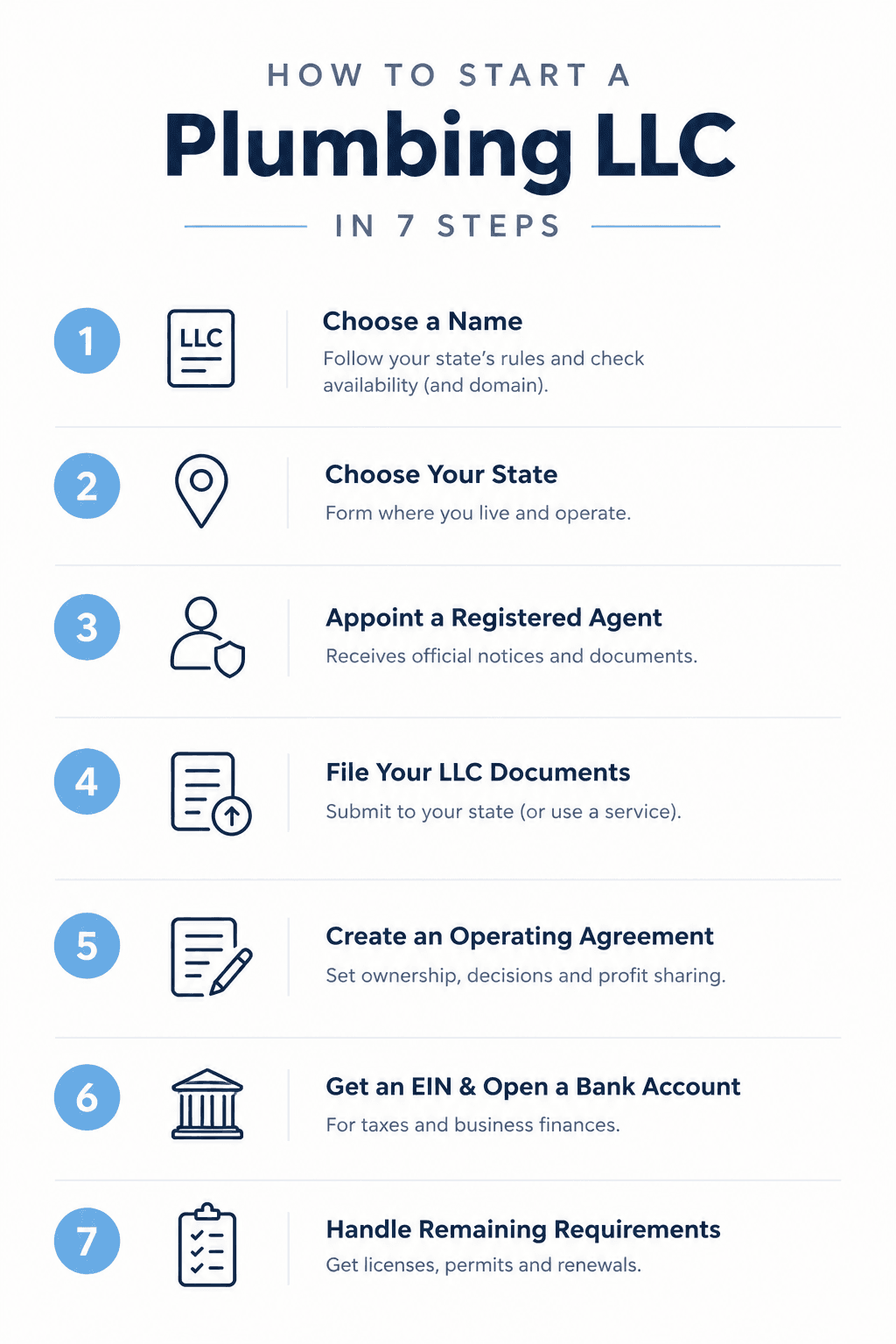
Follow these 7 essential steps to establish your plumbing LLC and ensure your business meets all state registration and licensing requirements.
You can generally establish an LLC by following these seven steps. The exact paperwork and fees depend on your state.
1. Choose a Name for Your Plumbing Business
Choose a name that complies with your state's LLC naming rules and is available in the state's business registry. You may also want to check domain availability before committing to a name.
If you plan to advertise under a different name, check whether you need to register a trade name or fictitious business name.
2. Choose Your Formation State
For most plumbers, forming an LLC in the state where they live and operate is a practical starting point.
Registering in another state does not automatically eliminate local licensing requirements. You may need to register your business in additional states if you operate there.
3. Appoint a Registered Agent
A registered agent receives official state notices and legal documents for your LLC. The agent must meet your state's requirements, including any rules about having a physical address in the state.
Swyft Filings offers a registered agent service if you prefer not to handle this responsibility yourself.
4. File Your LLC Formation Documents
You will generally need to file Articles of Organization, or the equivalent document required by your state. Your LLC is established when the state approves the filing.
You can file directly with the state or use Swyft Filings' LLC formation service. The Basic package has a $0 service fee plus state fees. Swyft Filings prepares your formation document, reviews your order for common filing issues, and submits it to the state. Standard and Premium packages offer additional services and faster processing options. Check the current package details before choosing.
Remember: LLC formation does not automatically provide a plumbing contractor license, permits, or insurance.
5. Prepare an Operating Agreement
An operating agreement explains who owns your LLC, how decisions are made, how profits are distributed, and what happens if an owner leaves.
It is especially useful if you start the business with another plumber. Even when your state does not require one, a written agreement can help prevent disagreements.
Swyft Filings offers an LLC Operating Agreement service; you can use them too.
6. Get an EIN and Open a Business Bank Account
An Employer Identification Number (EIN) is a federal tax ID for your business. You may need one for tax purposes, employees, or certain banking requirements. You can apply directly through the IRS website for free.
Once your LLC is established, consider opening a separate business bank account. Use it for customer payments, equipment purchases, insurance, and other business expenses. Keeping accurate records also makes tax preparation easier.
7. Complete Your Remaining Business Requirements
Before taking jobs, check whether you need state tax registrations, local business licenses, plumbing contractor licenses, permits, or other approvals.
Create a calendar for license renewals, annual reports, tax deadlines, and other ongoing obligations. Missing a renewal can affect your ability to operate legally.
Can You Start a Plumbing LLC Without Being a Master Plumber?
Possibly. It depends on your state's licensing rules. Some states allow you to own a plumbing company without personally holding a master plumber license, but the business may need to employ or designate a qualified individual.
For example, Michigan's plumbing contractor licensing instructions state that an applicant must hold a master plumber license or employ someone who does. The applicant must also meet the state's eligibility requirements and pass the applicable examination. The master plumber is responsible for code compliance and can qualify only one plumbing contractor license at a time. See the Michigan Department of Licensing and Regulatory Affairs' official plumbing licensing guidance.
Other states may have different rules about ownership, supervision, employment, and qualifications.
Before you start your plumbing contractor business, confirm:
- Do you need a plumbing contractor license in addition to an individual plumbing license?
- Must a master plumber or another qualifying individual be associated with your business?
- Can that person be an employee, or must they be an owner?
- Must the person work full-time or meet specific supervision requirements?
- What happens if they leave the business or their license expires?
- Are there bonding, insurance, experience, or examination requirements?
- Do separate municipal or county requirements apply?
Do not assume that hiring a licensed plumber automatically satisfies every requirement. Check with your state licensing authority before offering regulated services.
What Licenses and Permits Does a Plumbing LLC Need?
You may need a contractor license, a local business license, and permits for certain jobs. The exact requirements depend on where you operate and the work you perform.
Requirement | What it means |
Business license | Local or state authorization to operate, where required. |
Plumbing contractor license | Authorization to contract for or perform regulated plumbing work. |
Individual plumbing license | Credentials required for the person performing or supervising certain work. |
Job-specific permit | Approval that may be required for particular installations or alterations. |
For example, replacing a fixture may have different requirements from installing a new plumbing system during a construction project. Some jobs may require inspections after the work is completed.
How Can You Check Which Plumbing Licenses and Permits You Need?
Follow these steps before accepting a job:
- Identify where you will work. Start with the state where your plumbing business will operate.
- Check state licensing rules. Find the official plumbing or contractor licensing authority and confirm which credentials apply to your business and the people performing or supervising the work.
- Check local requirements. Contact the city or county building department to find out whether additional business registrations, permits, or inspections apply.
- Confirm who obtains the permit. Ask whether the contractor, property owner, or another party must apply and whether a licensed contractor must submit the application.
- Check ongoing obligations. Confirm renewal dates, inspection requirements, supervision rules, and any other conditions that apply to the work.
Swyft Filings offers a Business License Research service. It provides a customized list of identified licenses and permits, application links, and renewal information based on your business and location. Confirm that the research covers your specific plumbing activities and licensing needs. You may still need to verify specialized requirements directly with the relevant licensing authority.
What Insurance Does a Plumbing Business Need?
The insurance your plumbing LLC needs depends on your state, employees, contracts, and the work you perform. Some coverage may be legally required, while other policies help manage common business risks.
Insurance type | Why it matters |
General liability insurance | May cover certain third-party injury or property damage claims, subject to the policy terms. |
Commercial auto insurance | May cover eligible vehicles used for business purposes. Personal auto policies may not cover every type of business use. |
Workers' compensation | May be required if you employ workers, depending on state law and exemptions. |
Tools and equipment coverage | May cover specified losses involving insured tools and equipment. |
Professional liability or errors and omissions insurance | May be relevant if your business provides certain design, advisory, or other professional services. Coverage depends on the work and the policy available. |
Consider a simple example. If a plumbing job results in water damage to a customer's property, the customer may make a claim against your business. Whether insurance covers the loss depends on your policy, the circumstances, and any exclusions.
An LLC does not replace insurance. Speak with a licensed insurance professional about your work, employees, vehicles, and contractual requirements before choosing coverage.
How Much Does It Cost to Start a Plumbing LLC?
Your plumbing business startup costs depend on your state, licensing requirements, insurance, and equipment. The LLC filing fee is only one part of the total.
Budget for:
- LLC formation: Your state's filing fee and any formation service fee.
- Licenses and permits: Application, examination, renewal, and permit fees that apply to your business.
- Insurance: Premiums for the coverage you need.
- Tools and equipment: Plumbing tools, safety equipment, and testing devices.
- Vehicle expenses: A work van or truck, fuel, maintenance, and appropriate insurance.
- Business expenses: Banking, accounting, marketing, and ongoing compliance.
Swyft Filings' Basic LLC formation package has a $0 service fee plus state fees. Standard and Premium offer additional services at different prices. Check the current LLC formation packages for the latest pricing and inclusions.
There is no single startup cost that applies to every plumber. A solo plumber working from home may have very different expenses from a contractor hiring employees and operating several vehicles.
What Mistakes Should You Avoid When Starting a Plumbing LLC?
Before accepting your first job, make sure you have not overlooked these common issues:
- Assuming LLC registration replaces a plumbing contractor license.
- Failing to check master plumber or qualifying individual requirements.
- Starting regulated work before confirming permit requirements.
- Operating without legally required insurance.
- Mixing personal and business finances.
- Agreeing to additional work without documenting the price.
- Missing license renewals or state filing deadlines.
Taking care of these details early can help you avoid costly delays and disagreements as your business grows.
Start Your Plumbing LLC With Swyft Filings
Starting a plumbing business means getting both your legal structure and your industry requirements right.
Swyft Filings can help prepare and submit your LLC formation paperwork, provide registered agent services, and research business licensing requirements. Swyft Forms also offers documents such as Operating Agreements and General Service Agreements to help you organize important business arrangements.
Ready to get started? Visit Swyft Filings' LLC formation service to review your options.
FAQs
No. A plumber may operate under another permitted business structure, such as a sole proprietorship. However, forming an LLC creates a separate legal entity and can provide liability protection for personal assets against certain business debts and claims.
Possibly. Some states allow a plumbing contractor to qualify for a license through an employed master plumber, while others have different licensing requirements. Check your state's plumbing contractor regulations before relying on this arrangement.
Yes. A dedicated business bank account for your plumbing LLC helps separate personal and business finances. It also supports accurate bookkeeping, simplifies tax preparation, and maintains clear records of business transactions.
Not necessarily. A general service agreement may cover many plumbing jobs, but certain construction projects or jurisdictions may require specific contract terms, disclosures, or specialized agreements. Review the applicable local and state requirements before using the same contract for every plumbing job.