Key Takeaways
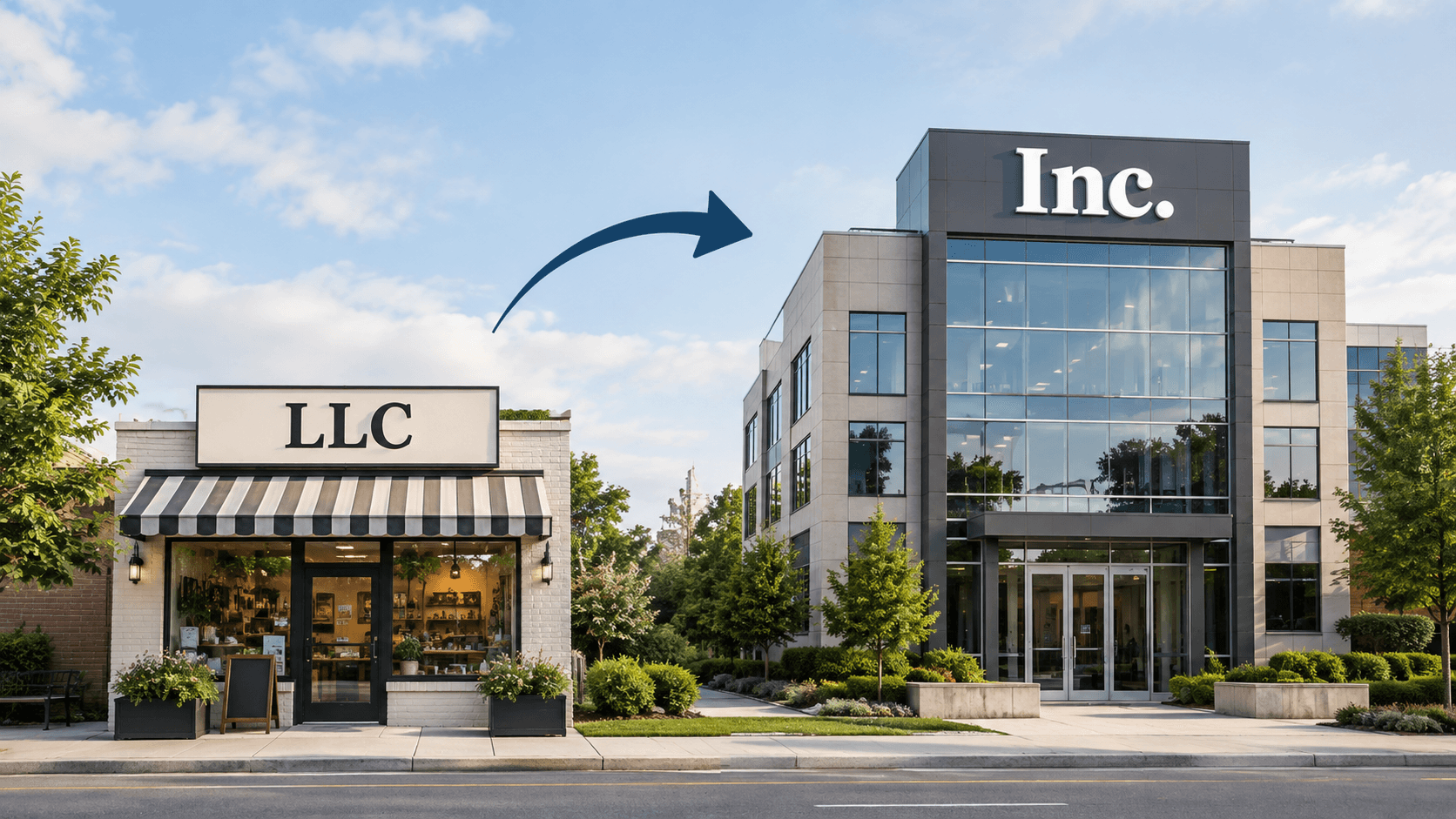
- Moving your LLC does not have to mean starting over. Domestication lets you keep the same legal entity while changing your home state.
- Your EIN, formation date, business credit history, and business history usually carry over when you domesticate.
- Domestication only works when both your current state and your destination state allow it. Roughly 13 states and territories do not offer it for LLCs.
- If one of your states does not allow domestication, foreign qualification, merger, or dissolve and re-form are your other paths forward.
- Most domestications take 3 to 8 weeks and involve filings in both states, plus an update to the IRS and your registered agent.
- Filing costs usually run between $150 and $600 in the new state, depending on whether that state charges separately for the conversion and the formation.
Learn what LLC domestication is, how to move your LLC to another state, which states allow it, and the steps, costs, and requirements involved.
Many owners hear "relocating" and think "new LLC." They assume they have to close the old one and set up a fresh one in the new state. Fewer owners ask what starting over would actually mean for their EIN, their bank accounts, and their signed contracts.
Here is the short answer. There are three ways to move an LLC to another state: domestication (which some states call conversion), foreign qualification, or dissolving the old LLC and forming a new one. Only the first one moves your existing company without replacing it.
Think of domestication like updating your address. You change where you live. You do not become a different person.
Your LLC can work the same way. Depending on your two states, you may not need a new LLC at all. You may just need a new home state for the one you already have.
This guide explains what LLC domestication is, when it is an option, how it works step by step, what it costs, and what changes after you file.
What Is LLC Domestication?
LLC domestication is the legal process of moving an LLC from its original state to a new state while keeping the same legal entity intact.
Your LLC does not close. It does not restart. It simply changes its home state.
This matters because your LLC's identity is tied to things that are hard to replace, such as:
- EIN
- Bank account
- Contracts with vendors and clients
- Business history
Domestication keeps those in place while shifting your LLC's state of registration.
In practice, you file paperwork in your new state to accept the LLC. You also file paperwork in your old state to release it. When the process is done, your LLC is a domestic LLC of the new state, and no longer registered in the old one.
Domestication, Redomestication, Conversion and Continuance: Are They the Same?
Mostly, yes. The names change by state, but the goal is the same: move the LLC without creating a new entity.
Domestication | The general term used in many states. |
Redomestication | The same process means the LLC is being re-domiciled in a new state. Some states use this term in their statutes. |
Conversion | This term is used in states like Delaware and Texas. In those states, you file conversion documents to carry the LLC in or out of the state. Conversion is also used when an LLC changes entity type (for example, LLC to corporation), so context matters. |
Continuance | It is used in a few states and often in cross-border moves. It carries the same intent. |
The paperwork may have a different title in each state. The outcome is the same: one legal entity, now registered in a different state.
Can You Transfer an LLC to Another State? When LLC Domestication Is Available
Yes, in most cases you can, but only if both states cooperate. Domestication is available when two conditions are met:
- Your current state allows an LLC to leave through domestication or conversion.
- Your new state allows an LLC to come in through the same process.
Both states have to say yes. If either state does not offer statutory domestication, you cannot use this path.
A few other factors matter:
- Your LLC should be in good standing in its current state. That means annual reports, taxes, and fees are up to date.
- Your operating agreement may require member approval before the move. Most do.
- Timing matters. If your old state has a pending compliance filing, resolve it first.
If any of these pieces are missing, you may need to use foreign qualification or dissolve and re-form instead.
What Is a Certificate of Articles of Domestication?
The Certificate of Articles of Domestication (sometimes just called Articles of Domestication) is the main document you file with the new state. It tells the state that your LLC is relocating and asks for recognition as a domestic LLC.
The document usually includes:
- The LLC's name in both states
- The original state of formation and original formation date
- The new state's required formation details
- The signature of an authorized person
Different states call this document different names. A few examples:
- Delaware: Certificate of Conversion, filed with a Certificate of Formation
- Connecticut: Certificate of Domestication
- Colorado: Statement of Conversion
- Nevada: Articles of Domestication
- Texas: Certificate of Conversion
- California: Articles of Organization-Conversion (Form LLC-1A)
- Arizona: Statement of Domestication (Arizona Corporation Commission Form M090)
- Florida: Articles of Conversion, filed with Articles of Organization
The job is the same across all of them. The document legally carries your LLC into the new state.
Which States Allow LLC Domestication?
State laws change, and some states call the process conversion or continuance. Confirm the current rules with your Secretary of State before you file. The National Association of Secretaries of State directory is a good starting point to reach the right office.
The table below shows which states generally allow LLCs to domesticate inbound (move in) or outbound (move out). States marked LLC-specific have different rules for LLCs than for corporations.
State | Allows LLC Domestication/Conversion In | Allows LLC Domestication / Conversion Out |
Alabama | Yes | Yes |
Alaska | Yes | Yes |
Arkansas | Yes | Yes |
California | Yes (conversion) | Yes |
Colorado | Yes | Yes |
Connecticut | Yes | Yes |
Delaware | Yes (conversion) | Yes |
District of Columbia | Yes | Yes |
Florida | Yes (conversion) | Yes |
Georgia | No | No |
Hawaii | Yes | Yes |
Idaho | Yes | Yes |
Illinois | Yes | Yes |
Indiana | Yes | Yes |
Iowa | Yes | Yes |
Kansas | Yes | Yes |
Kentucky | No | No |
Louisiana | Yes | Yes |
Maine | Yes | Yes |
Maryland | No | No |
Massachusetts | No | No |
Michigan | Yes | Yes |
Minnesota | Yes (Ch. 332C domestication) | Yes |
Mississippi | Yes | Yes |
Missouri | No | No |
Montana | No | No |
Nebraska | Yes | Yes |
Nevada | Yes (conversion) | Yes |
New Hampshire | Yes | Yes |
New Jersey | Yes (LLC only) | Yes |
New Mexico | No | No |
New York | No | No |
North Carolina | No | No |
North Dakota | Yes | Yes |
Ohio | Yes | Yes |
Oklahoma | Yes | Yes |
Oregon | Yes | Yes |
Pennsylvania | Yes | Yes |
Rhode Island | Yes | Yes |
South Carolina | No (LLC) | No |
South Dakota | Yes | Yes |
Tennessee | No | No |
Texas | Yes (conversion) | Yes |
Utah | Yes | Yes |
Vermont | Yes | Yes |
Virginia | Yes | Yes |
Washington | No | No |
West Virginia | No | No |
Wisconsin | Yes | Yes |
Wyoming | Yes | Yes |
Which States Do Not Allow LLC Domestication?
Based on the table above, these states do not currently offer statutory LLC domestication or conversion in either direction: Georgia, Kentucky, Maryland, Massachusetts, Missouri, Montana, New Mexico, New York, North Carolina, South Carolina, Tennessee, Washington, and West Virginia.
If your current state or your destination state appears on that list, domestication is off the table. Your realistic options are foreign qualification, a merger into a new LLC formed in the destination state, or dissolving the old LLC and forming a new one.
How To Move an LLC to Another State: The Domestication Process Step by Step
Step 1: Confirm Both States Allow Domestication
Check the Secretary of State website in both states. Confirm the exact process name (domestication, conversion, or continuance) and get the current filing forms. California, for example, uses Form LLC-1A, Articles of Organization-Conversion, under California Corporations Code § 17710.08.
Step 2: Prepare a Plan of Conversion or Plan of Domestication
Most states require a formal plan that outlines the terms of the move, the LLC's name in both states, and the method for transferring member interests. This is the document your members formally approve.
Step 3: Get Member Approval
Review your operating agreement. Most require a majority or unanimous vote. Document the vote in your records with the Plan of Conversion attached.
Step 4: Request a Certificate of Good Standing From Your Current State
This confirms your LLC is active and compliant. Many states require a certificate of good standing as part of the domestication filing. Processing can take a few business days to a couple of weeks.
Step 5: Appoint a Registered Agent in the New State
Every state requires an LLC to have a registered agent with a physical address in that state. Your old state's agent does not carry over. If you would rather not handle this yourself, you can consider registered agent services in the state you are looking in.
Step 6: File With the New State and the Old State in the Correct Order
Most states want the new filing accepted first, then you file to withdraw or cancel in the old state. Filing in the wrong order can create gaps in your LLC's registration.
Step 7: Update the IRS
If your business address or responsible party changes, file IRS Form 8822-B. A responsible party change must be reported within 60 days. The IRS does not charge a fee for this update.
Step 8: Update Your Records, Licenses, and Accounts
Your business licenses, permits, bank, and vendors need the new information. For broader guidance on registration steps after a move, the SBA's Register Your Business page is a helpful reference.
How to Move an LLC From California to Texas: A Worked Example
California and Texas both allow LLC conversion, so domestication works between them. Here is how the steps above look in practice for this specific pair:
- Get member approval as your operating agreement requires, and attach the Plan of Conversion to your records.
- Request a Certificate of Good Standing from the California Secretary of State.
- File the Texas Certificate of Conversion of a Foreign Entity Converting to a Texas Filing Entity, together with a Texas Certificate of Formation. Texas charges $300 for each, so budget $600.
- Appoint a Texas registered agent with a physical Texas address.
- Settle California's requirements on the way out. California requires final tax clearance from the Franchise Tax Board before you can withdraw, and California's $800 minimum franchise tax can still apply for the part of the year your LLC was a California entity.
- File IRS Form 8822-B if your address or responsible party changes.
How Much Does LLC Domestication Cost and How Long Does It Take?
Costs and timelines vary by state. Here is what to budget for and what to expect.
What Are the Costs of LLC Domestication?
- Domestication or conversion filing fee in the new state (commonly $25 to $300)
- A separate formation filing fee in the new state, which most states also charge (commonly $90 to $300)
- Certificate of Good Standing from your current state
- Certified copy of your current Articles of Organization
- Withdrawal or dissolution fee in the old state
- Registered agent service in the new state
- Expedited processing, if you need the filing done faster
- Final state taxes in the old state, which can be the largest line item in states with a minimum franchise tax
How Much Does LLC Domestication Cost in Different States?
- Delaware charges $200 for the Certificate of Conversion plus $90 for the Certificate of Formation, which comes to $290 for the new state's filing. A certified copy adds $50 per document.
- Florida charges $25 for the Articles of Conversion plus $125 for the Articles of Organization and registered agent designation, which comes to $150.
- Texas charges $300 for the conversion filing plus $300 for the Certificate of Formation, for a total of $600.
- Minnesota charges $60 to file its Chapter 322C domestication form by mail, or $80 for expedited in-person service.
How Long Does LLC Domestication Take?
Processing time depends on your state. Some states process conversions in a few business days. Others take several weeks.
Can You Expedite the LLC Domestication Process?
Expedited processing is often available for an added fee if you need the filing done faster. Add 1 to 2 weeks for your Certificate of Good Standing and any records you need from the old state.
As a general estimate, most LLC domestications take 3 to 8 weeks from start to finish. That range covers member approval, gathering records from the old state, and processing in both states. Your actual timeline depends on the two states involved and whether you pay for expedited service, so treat it as a planning figure rather than a promise.
What Changes and What Stays the Same After LLC Domestication?
Here is where domestication quietly keeps things stable, and where it does require some updates.
What Usually Stays the Same
- Your EIN. The IRS treats your LLC as the same entity, so your EIN typically carries over.
- Your original formation date. Your business history is preserved.
- Your bank accounts, as long as you update the bank with your new state information.
- Your contracts with vendors and clients. Your LLC is still the same legal party.
- Your business licenses and permits may transfer, depending on the licensing authority.
What You Will Need to Update
- Operating agreement: Revise it to reference the new state's laws and your updated registered agent. Not every state requires this, but it is a good step for clarity.
- Registered agent: You need a new one with a physical address in the new state. You can consider requesting a change of registered agent as part of the move.
- Business address: File IRS Form 8822-B if your mailing or responsible party address changes.
- Bank: Let your bank know your LLC has domesticated. Some banks will update the file. Others may ask for new documentation.
- Licenses and permits: State and local licenses often need to be re-issued in the new state.
- Annual reports: Your old state's filing stops after you withdraw. You will file your annual report in the new state going forward. Make a note of the new state's deadline so you do not miss it.
When Domestication Is Not the Right Fit
Domestication is a strong fit for a permanent move between two states that allow it. It is not always the right call.
Consider other options (foreign qualification/dissolving, reforming) if:
- One of your states does not allow domestication.
- Your move is temporary, and you plan to keep business ties to the old state.
- You still have customers, employees, or property in the old state.
- Your LLC is not in good standing, and bringing it current would cost more than starting fresh.
You can weigh all three paths for moving an LLC by reading our full guide on whether you can move an LLC to another state.
Do You Need Help With LLC Domestication?
LLC domestication has moving parts in two states at once. The paperwork, the order of filing, the registered agent setup, and the IRS update all need to line up.
If you want help getting the filing right the first time, Swyft Filings can walk you through LLC formation online in your new state and handle registered agent services, EIN filing, and annual report filings on your behalf.
A clear plan and the right support can keep the process calm and keep your business on track.
FAQs
A domestic LLC is an LLC in the state where it was originally formed. For example, if you formed your LLC in California, it is a domestic LLC in California. If the same LLC registers to do business in Nevada, it is considered a foreign LLC in Nevada.
In most cases, you do not need a new EIN when domesticating an LLC because the IRS generally treats the domesticated LLC as the same legal entity. If your business address or responsible party changes, file Form 8822-B with the IRS to update your records. If you dissolve your existing LLC and form a new one instead, you may need a new EIN.
California and Texas allow LLC domestication, so you may be able to move your LLC using that process. Generally, you will need member approval, a Certificate of Good Standing from California, and the required conversion and formation documents in Texas. You should also verify California's withdrawal requirements and any applicable tax clearance obligations before proceeding.
Yes. LLC domestication generally preserves your original formation date because the business continues as the same legal entity rather than creating an entirely new company. The destination state recognizes the LLC's continued existence, subject to its applicable laws and filing requirements.
LLC domestication itself is generally not a taxable event when the business continues as the same legal entity, but the tax treatment depends on your circumstances and the applicable laws. Your state income tax, franchise tax, and gross receipts tax obligations may change after the move. Consult a qualified tax professional to understand the implications for your LLC.
Yes. Both your current state and your destination state must permit LLC domestication or an equivalent conversion process for you to use that method. If either state does not allow it, you may need to consider foreign qualification or dissolving your existing LLC and forming a new one.
You generally need a Certificate of Good Standing from your current state, a certified copy of your Articles of Organization if required, member approval or written consent, and the required domestication or conversion documents for the destination state. Additional formation documents may also be necessary. Requirements vary by state, so check the filing instructions of both states before submitting your paperwork.
Yes. Notify your bank about the domestication and provide the updated state registration documents so it can revise your business records. Depending on the bank's policies, you may also need to submit updated signature cards, address information, or other documentation. Ask your bank whether any additional steps are required to maintain your existing business account.
Not always, because the requirements depend on your destination state's laws and the terms of your existing operating agreement. However, updating the agreement is a good idea to reflect the new state's LLC laws, registered agent, and any changes to your business arrangements. Keeping your documents current can help prevent confusion and future disputes.
Foreign qualification may be a better option when your LLC wants to keep operating in its original state while expanding into another state. Instead of moving the LLC's legal home, you register the existing business to operate in the new state. This can help you maintain operations in both states, although you may need to pay fees and meet compliance requirements in each one.