Swyft Filings
Swyft Filings
Customer support(877) 777-0450
Sign inGet Started
Swyft Filings

LLC

LLC

The business entity type of choice for most business owners

S

S Corporation

Keep your tax burden low while growing your business

C

C Corporation

For big business needs, a C Corporation is the way to go

NP

Nonprofit

Take a big step towards making the world a better place

DBA

DBA

Try out that new business idea before incorporating

Helpful Resources

Business Name Generator

Compare Business Types

Sign inGet Started
Swyft Filings

Any questions?

We're available Monday through Friday from 9am - 6pm CST

Popular Services

LLC (Limited Liability Company)
S Corporation
Registered Agent Service
DBA Registration
Form a Nonprofit
C Corporation
501(c)(3) Applications

Learn More

Blog
Best States to Form an LLC
LLC vs Corporations
LLC vs DBA
Business Licenses and Permits
Responsibilities of Registered Agent
Annual Report and Franchise Tax
Compare Business Types

Company

Support
About Us
Contact Us
Reviews
Partner Marketplace
Careers
FAQs
Learning Center
Privacy Policy
Terms of Service
360 Legal

Privacy Settings

Follow Us

Privacy Policy

Swyft Filings is a document filing service. Swyft Filings provides access to independent attorneys through Legal Plan subscriptions. We are not a law firm and cannot offer legal advice. The

information on our website is for general informational purposes only and is not legal advice. Use of the website is subject to our Terms of Service and Privacy Policy.

*Attorney Advertisement

The law firm responsible for the trademark filing offering constituting an advertisement is Swyft Legal, LLC who can be reached at [email protected]. Swyft Legal, LLC is licensed by the Arizona Supreme Court under license number 70173. All legal services provided in connection with the attorney-led trademark process are provided by Swyft Legal, LLC. Swyft Filings is an affiliate of Swyft Legal, LLC.

  1. Home
  2. |sellers permit

Excellent

7,486 reviews

Seller's Permit Registration to Legally Collect Sales Tax

Get your seller’s permit fast and start collecting sales tax legally. Swyft Filings handles state filing so you can buy wholesale tax-free, stay compliant, and avoid penalties.
  • Collect sales tax legally
  • Buy wholesale inventory tax-free
  • Avoid penalties and stay compliant

Get Started

Have questions? Call us at (877) 777-0450

Business formation mobile app
capital-one-logo
forbes-advisor-logo
investopedia-white-logo
startup-wise
truic-logo

Get Your Seller's Permit in 3 Simple Steps

1

Submit Your Information

Fill out our simple online form with your business details. It only takes a few minutes, and everything is secure.

2

We Prepare & File

Our specialists review your information and submit your seller's permit application to the correct state agency on your behalf.

3

Receive Your Permit

Once your permit is approved, we deliver it to you so you have the legal authority to start collecting sales tax and selling right away.

Get Started

Seller's Permit Package

$129+ state fees
File My Seller's Permit

What's Included in Our Seller's Permit Service:

  • Custom preparation of your application using your business details.

  • Thorough review of the documentation to prevent errors.

  • Direct filing with the correct state tax authority on your behalf.

  • Timely delivery so you can start collecting sales tax quickly.

  • Live specialist support to guide you throughout the process.

Why Choose Swyft Filings for Seller's Permit

Legal Authority

Get official state authorization to collect sales tax, ensuring compliance and avoiding penalties.

Wholesale Benefits

Purchase inventory tax-free and unlock wholesale pricing with a valid resale certificate.

Live Expert Processing

Our specialists answer your questions and guide you through the seller's permit process.

Filed Correctly Every Time

Your application is carefully reviewed and submitted accurately, reducing delays or rejections.

Get Started

What Is a Seller's Permit and How Does It Work

A seller's permit is a state-issued registration that gives your business the legal authority to collect sales tax from customers. It is one of the foundational compliance steps for any business that sells taxable goods or services.
With a sales tax permit, your business can generally collect sales tax on taxable transactions and remit it to the appropriate state agency. In many cases, registered sellers may also buy qualifying items for resale without paying sales tax upfront, provided the purchase is supported by a valid resale certificate and the state allows that treatment.
States collect sales tax to fund public services. When a business sells taxable goods or services, the state requires that business to register, collect the correct tax amount from customers, and send it to the state on a regular schedule. The seller's permit is how the state tracks who is authorized to do that.

Do You Need a Seller's Permit for Your Business

If any of the following apply to your business, you likely need a seller's permit in the states where you have nexus.

You sell physical products

Retail goods, handmade items, packaged products, and most tangible merchandise are taxable in the majority of states.

You run an e-commerce store

Selling online does not exempt you from sales tax. If you have nexus in a state, you need to be registered there.

You sell on platforms like Shopify, Amazon, or Etsy

Marketplace platforms may collect and remit tax on certain facilitated sales, but that does not automatically eliminate your separate registration or filing obligations.

You buy inventory to resell

A seller's permit is what allows you to purchase wholesale goods tax-free using a resale certificate.

You sell taxable services

Some states tax specific services such as digital subscriptions, repairs, or personal services. If your state is one of them, registration is required.

You store inventory in another state

Amazon FBA sellers and others who use third-party fulfillment centres may have nexus in multiple states due to where their inventory is physically held.

You have crossed an economic nexus threshold

You may be required to register for a seller's permit if your sales volume or transaction count exceeds certain limits in a state. These "nexus thresholds" vary by state; common benchmarks are $100,000 in sales or 200 individual transactions, but some states have lower limits or different criteria.

When a Seller's Permit May Not Be Required

There are some circumstances where registration may not apply. These vary by state, so it is worth verifying your specific situation.
Requirements vary by state. If you are unsure whether your business needs to register, our team can help you work through the details before you get started.

You sell only tax-exempt goods

Certain items are exempt from sales tax in specific states. Common examples include unprepared groceries, prescription medications, and some agricultural supplies.

You have no nexus in a state

If you have no physical presence and have not crossed the economic nexus threshold in a state, you generally have no registration obligation there.

Your business is based in a no-sales-tax state

Oregon, Montana, New Hampshire, Delaware, and Alaska do not have a state sales tax. Businesses operating only within these states do not need a seller's permit for state sales tax purposes.

You only sell to other businesses using resale certificates

In some cases, wholesale-only sellers whose customers are all registered resellers may have limited obligations, though this varies by state.

Your sales volume is below state thresholds

Some states have minimum thresholds below which registration is not required. Once you cross them, registration becomes necessary.

What Types of Businesses Need a Seller's Permit

Retail Businesses

If you sell physical products to customers, whether in a store, at a market, or through any other channel, you may need a seller's permit in each state where you have nexus. This is the most straightforward category for registration.

E-commerce Stores

Online sellers are not exempt from sales tax. If your e-commerce store sells to customers in a state where you have nexus, you are required to collect and remit sales tax there. Many e-commerce platforms have tax collection tools built in, but you still need to be registered first.

Shopify Sellers

Shopify has sales tax collection features, but the platform does not register your business with any state. You need your own seller's permit before you can legally collect and remit tax from Shopify sales. Once registered, you can configure Shopify to apply the correct rates automatically.

Amazon FBA Sellers

Amazon FBA sellers store inventory in Amazon fulfilment centres across multiple states. That storage creates a physical nexus in each of those states, which means you may need seller's permits in several states at once. Knowing where your inventory is stored is the first step to understanding your registration requirements.

Etsy Sellers

Etsy collects and remits sales tax on behalf of sellers in many states under marketplace facilitator laws. However, there are situations where Etsy sellers still need their own registration, particularly for states not covered by those rules or for sales made outside the Etsy platform.

Dropshipping Businesses

Dropshipping creates sales tax complexity because the transaction involves a retailer, a supplier, and a customer who may each be in different states. Most dropshippers still need a seller's permit in states where they have nexus, even if they never physically handle the product.

Wholesale Businesses

Wholesale sellers need a seller's permit to document tax-exempt sales to resellers. The permit is also what makes it possible to issue and accept resale certificates, which are used to remove sales tax from transactions between businesses.

Pop-Up Vendors and Events

Selling at a craft fair, trade show, or seasonal market still triggers sales tax obligations in most states. Many states offer temporary seller's permits for short-term sales activity. If you sell regularly at events, a standard permit is usually the right move.

Food and Mobile Vendors

Food trucks, caterers, and mobile vendors selling taxable food or beverages need a seller's permit just like any other retail business. Whether food is taxable depends on the state and the type of food sold, so requirements vary.

How Does a Seller's Permit Differ From a Business License

These two registrations are often confused, but they serve completely different purposes. Many product-based businesses need both a general business license and sales tax registration, but requirements vary by state and locality.

What a Seller's Permit Covers

A seller's permit is a tax registration. It authorizes your business to collect sales tax from customers and remit it to the state. It has no bearing on whether your business is allowed to operate generally.

What a Business License Covers

A business license is a general operating authorization issued by a city, county, or state. It confirms that your business is registered to operate in that jurisdiction. It does not give you the authority to collect sales tax.

Key Differences Between Them

Feature
Seller's Permit
Business License
Primary Purpose
Tax collection and remittance
Legal permission to operate
Issuing Agency
State Department of Revenue
Local City or County Clerk
Focus
Sales of tangible goods/services
Zoning, safety, and local activity
Required For
Anyone selling taxable items
Almost every physical business

Do You Need Both for Your Business?

Most businesses that sell products need both. The business license establishes your right to operate. The seller's permit establishes your right to collect sales tax. Getting one does not substitute for the other.

Seller's Permit vs. Resale Certificate Explained

When You Need a Seller's Permit

You need a seller's permit when your business sells taxable goods or services and is required to collect sales tax from customers. It is a registration with the state tax authority that puts you in the system as a collector.

When You Need a Resale Certificate

A resale certificate is used when you are buying goods that you plan to resell. It tells your supplier that you are not the end consumer and that sales tax should not be applied to that purchase. You use it when buying, not when selling.

How Wholesale Tax Exemptions Work

When you present a valid resale certificate to a supplier, they remove sales tax from your purchase. You are not avoiding tax permanently. You are deferring it to the point where the final customer buys from you, at which point you collect and remit it. Your seller's permit is what gives the resale certificate its validity.

What Is Sales Tax Nexus and Why Does It Matter
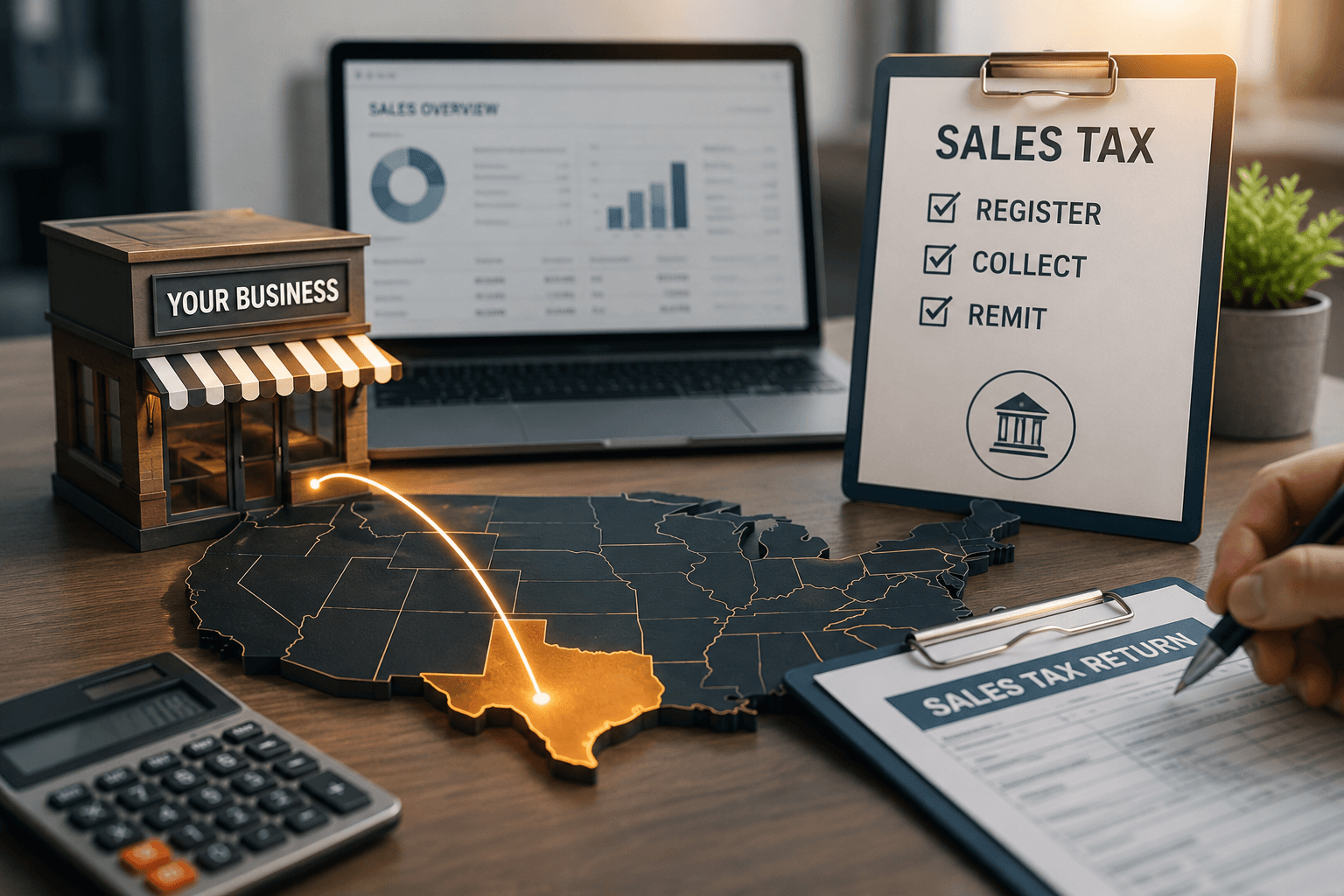
Nexus is the connection between your business and a state that creates a sales tax obligation. If you have nexus in a state, you are generally required to register, collect, and remit sales tax there.
What Is Sales Tax Nexus and Why Does It Matter

Physical Nexus

Physical nexus is created when your business has a tangible presence in a state. This includes an office, a store, a warehouse, employees, or inventory storage. It is the traditional standard for determining sales tax obligation.

Economic Nexus

Economic nexus was established after the 2018 South Dakota v. Wayfair Supreme Court decision. It means that reaching a certain sales volume or number of transactions in a state can create a tax obligation even without any physical presence there. Many states have adopted economic nexus thresholds, commonly set at $100,000 in sales or 200 transactions per year.

Marketplace Facilitator Laws

Many states have passed laws that require large marketplaces like Amazon, Etsy, and eBay to collect and remit sales tax on behalf of third-party sellers. This does not always eliminate your own registration requirements, particularly if you sell through your own website or reach sales thresholds independently.

How Nexus Affects Seller's Permit Requirements

Every state where you have nexus is a state where you likely need a seller's permit. If your business operates in multiple states or sells to customers across state lines, understanding your nexus footprint is the starting point for knowing where to register.

How to Apply for a Seller's Permit Step-by-Step

If you prefer to handle the registration yourself, here is what the process typically looks like.

Step 1: Gather Required Business Information

Before starting your application, collect the following:
  • Your business name and structure
  • Federal EIN
  • Business address
  • Owner or officer information
  • A description of what you sell
  • Your estimated monthly sales volume

Step 2: Register with the State Tax Authority

Each state has its own tax agency responsible for seller's permit registration. In California, that is the CDTFA. In Texas, it is the Comptroller's office. In New York, it is the Department of Taxation and Finance. You will need to locate the correct agency for each state where you have nexus.

Step 3: Submit Your Application

Most states now offer online registration through their tax agency portals. Some states still accept paper applications. Complete all required fields carefully. Errors or missing information are the most common cause of processing delays.

Step 4: Receive Approval From the State

Processing times vary by state. Some states issue permits immediately upon online submission. Others review applications manually and may take several days to a few weeks. You may receive a confirmation number before your official permit arrives.

Step 5: Start Collecting Sales Tax Legally

Once your permit is approved and in hand, you are authorized to collect sales tax from customers in that state. Make sure your point-of-sale system or e-commerce platform is configured to apply the correct rates before your first sale.

How Long Does It Take to Get a Seller's Permit

Fast Approval States

Several states process seller's permit applications the same day or within a few business days through their online portals. California, Texas, and Florida are among the states that typically move quickly for standard applications.

Standard Processing Timelines

Most states complete standard applications within five to ten business days. If your application is submitted correctly with all required information, this timeline is usually reliable.

Common Causes of Delays

Applications get delayed most often when information is missing, business details do not match state records, or the application is submitted to the wrong agency. Submitting accurate and complete information the first time is the most reliable way to avoid a longer wait.

DIY Filing vs. Professional Filing Support

Feature
DIY Filing
Swyft Filings
Cost
•
State fee only (usually $0)
•
$129 + state fees
Time Required
•
1 to 3+ hours
•
~10 minutes of your time
Finding the Right Agency
•
You research and locate it
•
We handle it for you
Application Preparation
•
You complete it yourself
•
Prepared and reviewed by our team
Risk of Errors
•
Higher without prior experience
•
Reduced through our review process
Support
•
State agency only
•
Live specialist support
Permit Delivery
•
Managed by you
•
Delivered directly to you

What Happens If You Operate Without a Seller's Permit

Getting registered protects your business and keeps your operations on solid ground. Here is what being unregistered can mean for you.

1

Financial Penalties and Fines

States can assess penalties for collecting sales tax without a permit or for failing to register when required. The amount varies by state, but it can add up quickly, especially if the business has been operating unregistered for some time.

2

Back Taxes and Interest Charges

If a state determines that your business should have been collecting and remitting sales tax, it can assess back taxes for prior periods along with interest. Getting registered proactively puts you in a much better position than being identified through an audit.

3

Audit Risks and Compliance Issues

Unregistered businesses that are flagged by state tax authorities may face a formal audit. Audits take time and resources to respond to. Staying registered and filing on schedule is the simpler path.

4

Business Operation Restrictions

In some states, operating without required permits can affect your ability to renew other business licenses or maintain good standing. Registration keeps all parts of your compliance picture clean.

Common Seller's Permit Mistakes Businesses Should Avoid
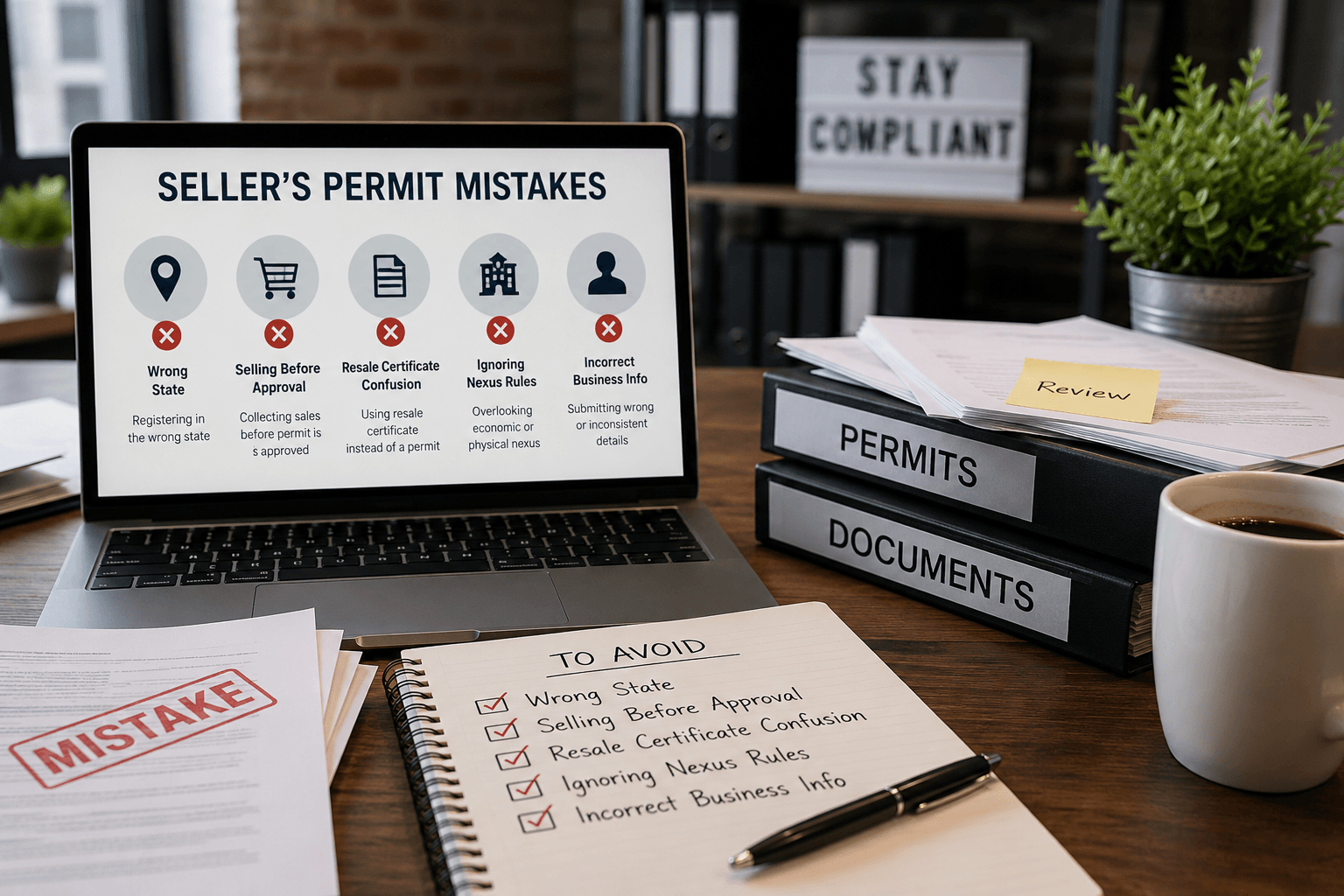
These are the situations we see most often. Knowing about them ahead of time makes the process smoother.
Common Seller's Permit Mistakes Businesses Should Avoid

1. Registering in the Wrong State

If your business has nexus in multiple states, you may need a permit in each of them. Registering only in your home state and overlooking other nexus states is a common gap, particularly for e-commerce businesses that sell nationally.

2. Selling Before Approval

Starting to collect sales tax before your permit is officially approved creates a compliance problem. Wait until your permit is confirmed and in hand before you begin collecting.

3. Confusing Seller's Permit With Resale Certificate

These two documents work together but are not interchangeable. The seller's permit is your registration with the state. The resale certificate is a document you use with suppliers. You cannot use one in place of the other.

4. Ignoring Economic Nexus Rules

Many online sellers focus only on their home state and overlook economic nexus obligations in states where their sales volume has crossed registration thresholds. Reviewing your sales data by state at least annually helps you stay ahead of this.

5. Using Incorrect Business Information

Submitting an application with a name, address, or EIN that does not match your state business registration records is one of the most common reasons applications get delayed or returned. Double-check everything before you submit.

Special Seller's Permit Cases for Online Sellers
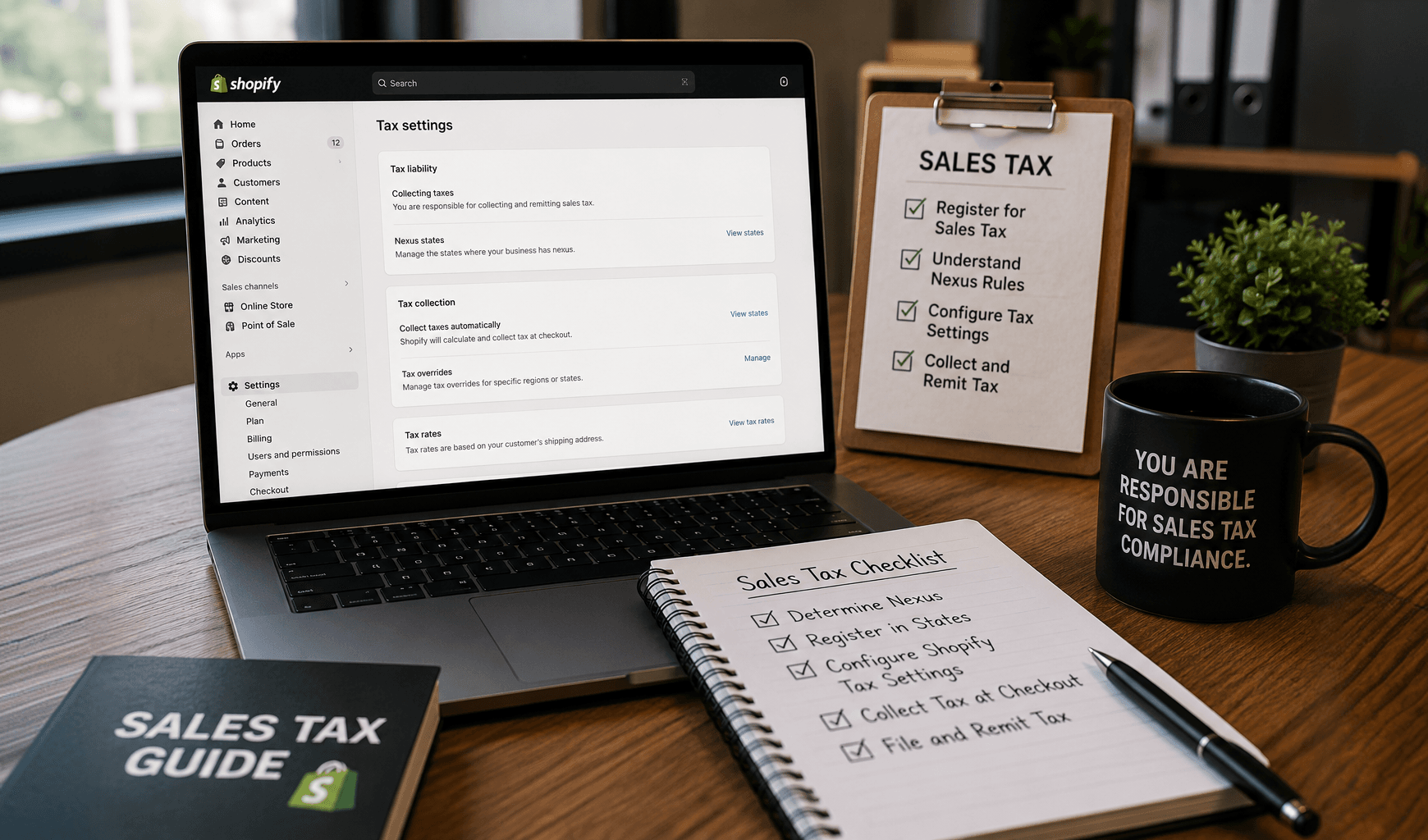
Shopify Store Sales Tax Requirements
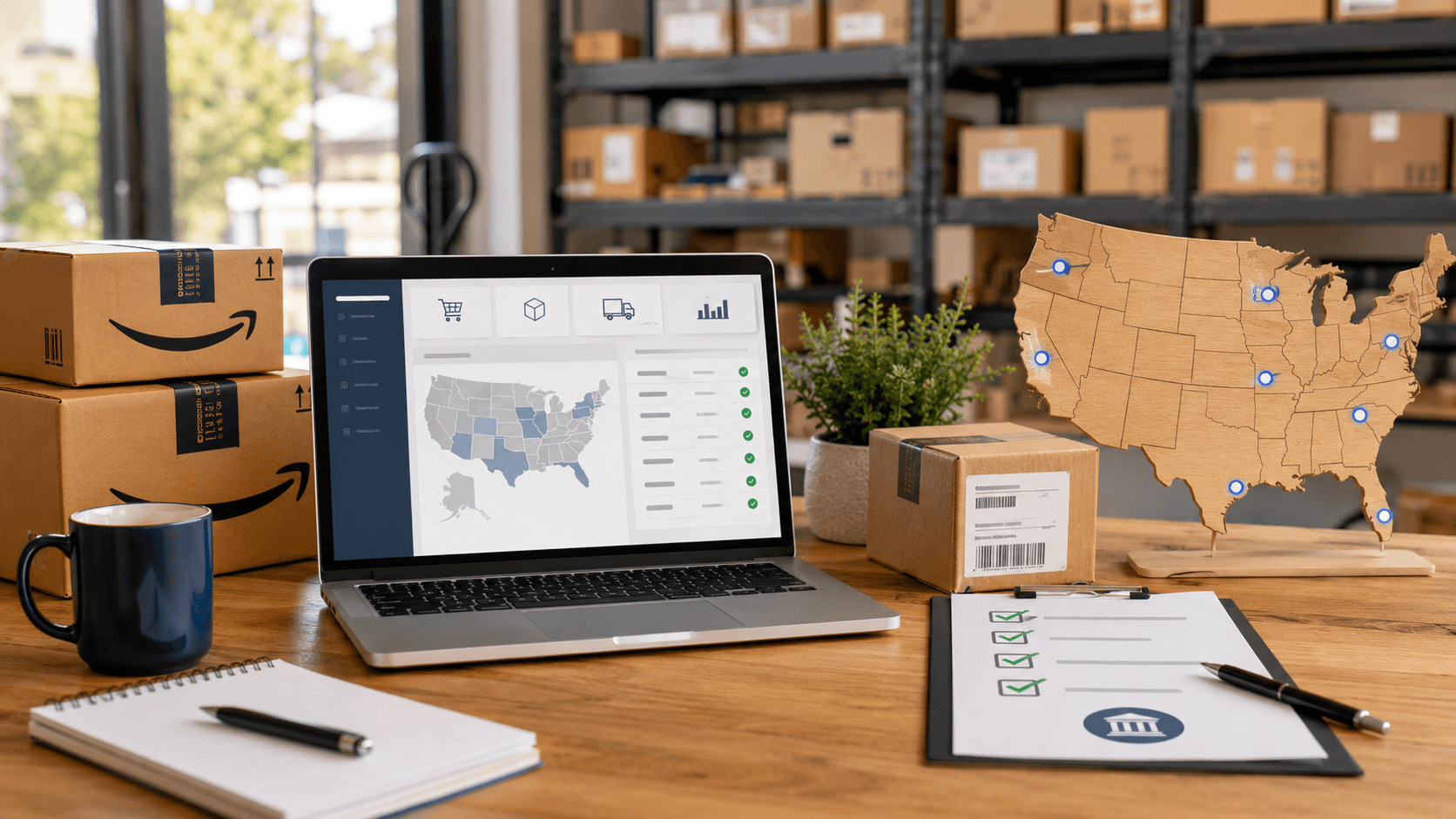
Shopify Store Sales Tax Requirements

Shopify does not register your business for sales tax or obtain permits on your behalf. You are responsible for registering in each state where you have nexus. Once registered, Shopify's tax settings allow you to configure collection and rates for each state
Amazon FBA and Marketplace Facilitator Rules
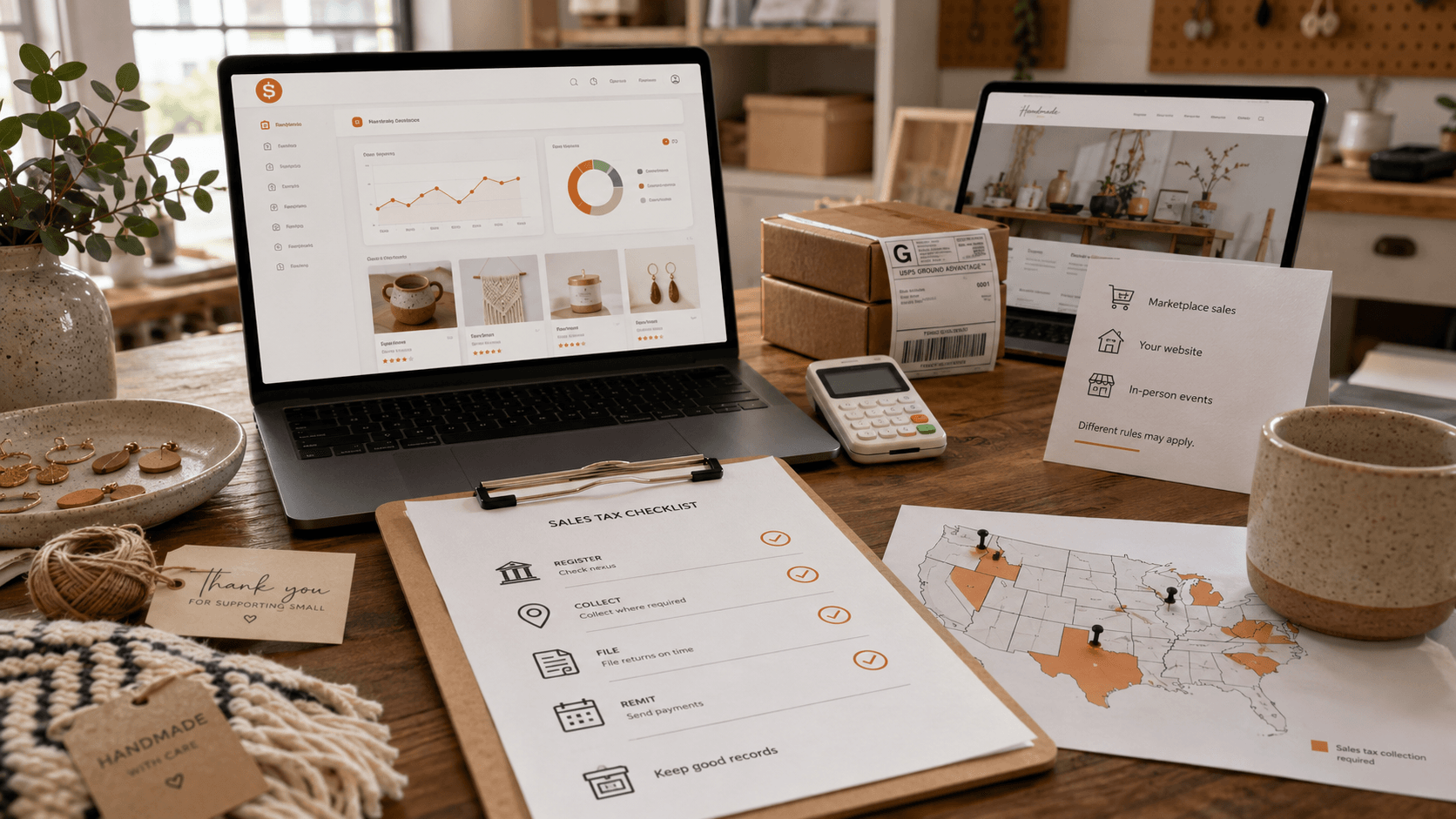
Amazon FBA and Marketplace Facilitator Rules

Amazon collects and remits sales tax for third-party sellers in most states under marketplace facilitator laws. However, FBA sellers with inventory stored in Amazon warehouses may still have their own nexus and registration requirements independent of what Amazon handles
Etsy Seller Tax Obligations

Etsy Seller Tax Obligations

Etsy collects and remits sales tax in marketplace facilitator states. If you also sell through your own website or at in-person events, you may have registration requirements that Etsy's collection does not cover.
Dropshipping Sales Tax Responsibilities

Dropshipping Sales Tax Responsibilities

Dropshippers typically need to register in states where they have nexus, even without physical inventory. The supplier relationship adds complexity because both the dropshipper and the supplier may have obligations depending on the state. Resale certificates play an important role in managing this correctly.
Temporary Seller's Permits for Events

Temporary Seller's Permits for Events

If you sell at a single event or market rather than on an ongoing basis, many states offer temporary or event-specific seller's permits. These are short-term registrations that cover a defined sales period. They are the right option for one-time or occasional sellers
Digital Products and Tax Considerations
Digital Products and Tax Considerations

Sales tax on digital products varies significantly by state. Some states tax digital goods like software, e-books, and streaming services. Others do not. If your business sells digital products, checking the rules in each state where you have customers is an important step.
Mobile App Mockup

Why 600,000+ Owners Trust Swyft Filings

Surprisingly good customer service? What?

"Not normally one to write reviews, but will do so here as this was just an instance of abnormally high quality customer service.Story goes: Called in ..."

Eric B

Apr 10, 2024

Positive and knowledgable

"Positive and knowledgable"

customer

Apr 2, 2024

I love Swyft, they save me time, time is money!

"I love Swyft Filings. I was hesitant to spend the extra money on things I thought were simple to do on my own. After have difficulties getting in touc..."

C.S

Mar 26, 2024

I love your people customer service…

"I love your people customer service…"

William

Mar 22, 2024

Sussana Was BEYOND AMAZING

"Sussana Was BEYOND AMAZING. she took the time to listen to my concerns and was able to secure my trust to make sound decisions regarding my business, ..."

Donna

Mar 12, 2024

Friendly and helpful

"Friendly and helpful"

George

Mar 8, 2024

Great onboarding, FAST and amazing Service

"Great onboarding, amazing customer support, and fabulous service. I bought a same day LLC filling service, after business hours on Feb 29th. My busi..."

Evrim Aslan

Mar 2, 2024

Excellent immediate live support

"We had 2 issues that had to be resolved immediately, caused by me. The support staff (April) was so professional and prompt that I would recommend the..."

Ali

Feb 27, 2024

Great customer service

"Great customer service. Walked me through process and answered all questions I had said call anytime with questions. Friendly efficient service. Highl..."

customer David

Feb 15, 2024

They will work with your budget

"They worked with my budget"

Elmstreet Kennels

Feb 13, 2024

The agents were extremely helpful..

"The agents were extremely helpful! with every question I had!!! Even for some questions I thought I should know already; they were very informative an..."

Gabriela

Feb 6, 2024

Super nice and quick customer Service

"Super nice and quick customer Service The rep was responsive, and was able to answer all my questions!"

GT

Feb 6, 2024

Swift and professional service

"Swift and professional service. Thank you Jodin for your prompt and courteous response. Dr.Melvin Brooks"

Dr.Melvin

Feb 5, 2024

Thank Swyft for you great customer service!

"Representative I spoke with regarding my issue was very knowledgeable and prompt!"

Ricky

Feb 3, 2024

I never write reviews

"I never write reviews, but because Sanora was a wonderful help, I decided to do so this time. Sanora was kind and supportive. She did what she could t..."

Customer

Feb 3, 2024

Seller's Permit Guides by State

Requirements, fees, and filing steps vary by state. Find the guide for where you do business.

A

  • Alabama
  • Alaska
  • Arizona
  • Arkansas

C

  • California
  • Colorado
  • Connecticut

D

  • Delaware

F

  • Florida

G

  • Georgia

H

  • Hawaii

I

  • Idaho
  • Illinois
  • Indiana
  • Iowa

K

  • Kansas
  • Kentucky

L

  • Louisiana

M

  • Maine
  • Maryland
  • Massachusetts
  • Michigan
  • Minnesota

N

  • New Hampshire
  • New Jersey
  • New Mexico
  • New York
  • North Carolina
  • North Dakota

O

  • Ohio
  • Oklahoma
  • Oregon

P

  • Pennsylvania

R

  • Rhode Island

T

  • Texas

V

  • Virginia

W

  • Washington
  • West Virginia
  • Wisconsin
  • Wyoming

Important State Variations in Seller's Permit Rules

Not every state handles seller's permits the same way. A few things to be aware of as you plan your registrations.

  • Some states, like Oregon, Montana, New Hampshire, and Delaware, do not have a state sales tax at all. Businesses in or selling into those states do not need a seller's permit for sales tax purposes.
  • States that do have sales tax each set their own registration thresholds, filing frequencies, and form requirements. What applies in California does not automatically apply in Texas or Florida
  • Some states, like Colorado, allow local jurisdictions to administer their own sales tax separately from the state. This can mean multiple registrations depending on where your customers are located.
  • Renewal requirements also vary. Some permits are valid indefinitely as long as you stay active. Others require annual renewal or periodic confirmation of your business details.

Important State Variations in Seller's Permit Rules

Frequently Asked Questions About Seller's Permits

Speak directly with a Business Specialist, please give us a call at (877) 777-0450. We love to help!

Get StartedSee More FAQS

Get Your Seller's Permit and Start Selling Legally Today

Stay compliant with U.S. sales tax laws and give your business the proper foundation it needs. Swyft Filings handles your seller's permit registration, so the process is fast, accurate, and done right the first time.
Get Started Today