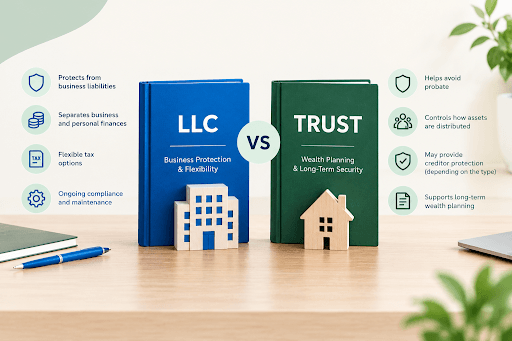
An EIN is a nine-digit federal tax ID that every registered business needs to operate, bank, and hire legally. Applying is free and takes just minutes online.
An EIN is your business’s key to opening bank accounts, hiring employees, and building credit. Don't let complex IRS forms slow you down. Swyft Filings provides a fast, affordable, and hassle-free filing service so you can skip the paperwork and get back to business.
- Human Reviewed Accuracy
- Lifetime Digital Access
- Comprehensive Compliance Support
What Is an EIN?
An Employer Identification Number (EIN) is a unique nine-digit number assigned by the Internal Revenue Service (IRS) to identify your business for federal tax purposes. It works like a Social Security Number (SSN) for your business, and it helps the IRS track your tax filings, payroll records, and business identity.
An EIN is also called a:
- Federal Tax Identification Number (FTIN)
- Federal Employer Identification Number (FEIN)
- Tax ID Number
- Business Tax ID
These terms all refer to the same number. When a vendor, bank, or government agency asks for your "tax ID" or "federal ID number," they're asking for your EIN.
The EIN format is always the same: XX-XXXXXXX (two digits, a hyphen, then seven digits).
Why You Need an EIN

Most registered entities and any business with employees will need an EIN early on. Here's why it matters:
Open a Business Bank Account
Banks require an EIN to open a dedicated business checking account. Keeping business and personal finances separate is essential for liability protection and clean bookkeeping.
Hire Employees Legally
If you plan to bring on staff, you must have an EIN. It's used to report payroll taxes, issue W-2 forms, and fulfill your employer obligations to the IRS and the Social Security Administration.
File Federal and State Taxes
For corporations, partnerships, nonprofits, and LLCs taxed as corporations, the IRS expects you to use an EIN on your federal business tax returns and most related state tax filings. (Sole proprietors and some single‑member LLCs filing on Schedule C can sometimes use an SSN instead).
Separate Your Personal and Business Identity
Using an EIN instead of your SSN protects your personal information when dealing with vendors, contractors, and clients, reducing the risk of identity theft.
Apply for Business Licenses and Permits
Many state and local licenses require an EIN as part of the application process.
Establish Business Credibility
An EIN signals to clients, vendors, and financial institutions that you're operating a legitimate, registered business.
Who Needs an EIN?
The IRS requires an EIN for most business formations. You need an EIN if your business:
- Has one or more employees
- Operates as a corporation (C-Corp or S-Corp)
- Operates as a partnership
- Is structured as an LLC with multiple members, or a single-member LLC electing corporate tax treatment
- Files employment, excise, alcohol, tobacco, or firearms tax returns
- Withholds taxes on income paid to non-resident aliens
- Is a nonprofit organization
Additional entity types that require an EIN:
- Trusts (except certain grantor-owned revocable trusts)
- Estates
- Farmers' cooperatives
- Plan administrators
What about sole proprietors?
A self‑employed U.S. sole proprietor with no employees and no excise or pension plan tax filings is not legally required to get an EIN and can use a personal SSN on Schedule C. However, many sole proprietors still choose to get an EIN to avoid sharing their SSN, open a dedicated business bank account, and present a more professional image to clients and vendors. [1]
When Do You Need an EIN?
There are specific triggering events that make getting an EIN necessary:
Starting a new business | Apply before you open a bank account or begin hiring |
Hiring your first employee | Required before reporting payroll taxes |
Opening a business bank account | Most financial institutions won't open a business account without an EIN |
Changing your business structure | If you convert from a sole proprietorship to an LLC or corporation, you'll need a new EIN |
Filing certain tax returns | Excise taxes, employment taxes, and other filings require an EIN |
After a death in the family | Estates and inherited trusts typically need a new EIN as soon as the estate becomes active |
The safest approach is to apply for your EIN early, before you need it. The online process is fast and free, and having it ready removes a bottleneck when you're ready to move quickly. [2]
Step-by-Step: How to Apply for an EIN
Step 1: Determine Your Eligibility
Before beginning your application, confirm that you meet the IRS eligibility requirements:
- Your principal place of business is in the United States or a U.S. territory
- You have a valid taxpayer identification number (SSN or ITIN), which is required to act as the responsible party
- One online EIN per responsible party per day
- International applicants or U.S. owners without a U.S. tax ID generally apply by phone or by submitting Form SS‑4 by fax or mail instead of using the online system.
Step 2: Gather Required Business Information
Having everything ready before you start will make the EIN filing process faster. You'll need:
- Your legal business name exactly as it appears on your formation documents.
- Full address of your principal place of business.
- Specific entity type, such as an LLC, corporation, or nonprofit.
- Legal name of the responsible party and their SSN or ITIN.
- The reason for applying, i.e., banking or hiring employees.
- The date your business was officially started or acquired.
- Estimate the number of employees you expect to hire this year.
- Your business's primary industry or activity
If you're unsure about any of your formation details, like the exact legal name or date of formation, check the state records where you registered your LLC or corporation. Most states have publicly searchable business registries.
Step 3: Complete IRS Form SS-4
Form SS-4 is the official IRS application for an Employer Identification Number. It collects all the business and responsible party information listed above.
When applying online, Form SS-4 is built into the IRS application interface. You fill out each field as prompted rather than downloading a paper form. If you're applying by fax or mail, you'll need to download the SS-4 from the IRS website, complete it manually, and submit it through the appropriate channel. [3]
Step 4: Submit Your Application via the IRS
- Online (Recommended): The IRS Online EIN Application at IRS.gov is the fastest and most reliable method. The application is available Monday through Friday, 7:00 a.m. to 10:00 p.m. Eastern time. Once you complete and submit the form, your EIN is issued immediately and displayed on screen. You can download your official EIN confirmation letter (CP 575) right away.
- By Fax: You can fax your completed Form SS-4 to the IRS. Fax numbers are provided in the SS-4 form instructions. If your application is approved, the IRS will fax your EIN back within four business days. If you don't have a fax machine, several online faxing services are available.
- By Mail: Mailing a completed Form SS-4 to the IRS address listed in the form instructions is the slowest method. Expect to wait approximately four weeks to receive your EIN by mail. Only use this method if the online and fax options aren't available to you.
Step 5: Receive Your EIN Confirmation
Once your EIN is assigned, the IRS will provide your number and issue a formal EIN Assignment Letter (CP 575). Keep this document saved and accessible. You'll need it when opening a bank account, applying for business licenses, and filing taxes.
If the online system encounters an error and prompts you to call the IRS, don't panic. This occasionally happens due to application volume or data mismatches. Calling the IRS Business & Specialty Tax Line is the fastest way to resolve it.
How Long Does It Take to Get an EIN?
The time it takes to receive your EIN depends entirely on the application method you choose:
Application Method | Processing Time |
Online (IRS.gov) | Almost immediately |
By Fax | 4 business days |
By Mail | Approximately 4 weeks |
The online application is by far the fastest option. In most cases, you complete the application, submit it, and your EIN appears on the confirmation screen within minutes.
Delays can occur if there are errors in your application, mismatched business names, or discrepancies in the responsible party's information. This is why most businesses prefer professional EIN filing to reduce errors and minimize the delay.
Is an EIN Free to Apply?
Yes, applying for an EIN directly through the IRS is completely free.
There is no government fee to apply for an EIN. You do not pay the IRS to submit Form SS-4, whether you apply online, by fax, or by mail. However, many business owners choose to work with professional filing services to avoid mistakes and delays. These services charge a separate fee to assist with the EIN application process and provide guided support.
Common Mistakes to Avoid When Applying for an EIN
Even a small error on your EIN application can delay your number by days or weeks. Watch out for these common issues:
1. Entering the Wrong Business Structure
Selecting the incorrect entity type, for example, choosing "sole proprietor" when you've formed an LLC, can create tax classification problems that are difficult to fix later.
2. Responsible Party Information Mismatch
The name and SSN of the responsible party must match IRS records exactly. Any discrepancy will trigger a rejection or a request to call the IRS.
3. Applying Multiple Times
If your application doesn't go through, don't reapply immediately. Multiple EIN applications in a short period can flag your account and slow down processing. Check your email for a confirmation, or call the IRS Business line to verify.
4. Using an Incorrect or Informal Business Name
The legal name on your EIN application must match the name in your official state filing documents, not a DBA or informal trade name.
5. Wrong Tax Classification
LLCs have flexibility in how they're taxed (as a sole proprietor, partnership, or corporation). Choosing the wrong tax classification on the SS-4 can affect how your business is treated by the IRS at tax time. When in doubt, consult a tax professional before submitting.
6. Errors in Form Fields
Missing fields, incorrect dates, or transposed digits are surprisingly common. Triple-check every field before hitting submit.
Apply for an EIN Through Swyft Filings
Applying for an EIN online is simple, but getting it right the first time can be tricky for someone new. A mistake on your SS-4 slows things down when you are in need.
Swyft Filings offers a guided EIN application service that walks you through every step of the process. Whether you're starting a new business, forming an LLC, or setting up a trust, we make the EIN process fast, simple, and accurate.
Bibliography
- U.S. Census Bureau. Obtaining an EIN for Foreign Trade Regulations Filings.
- Accessed on May 11, 2026. U.S. Small Business Administration. Get Federal and State Tax ID Numbers. Accessed on May 11, 2026.
- Internal Revenue Service. About Form SS‑4. Accessed on May 11, 2026.
Disclaimer: Swyft Filings is a private filing service, not a law firm or affiliated with any government agency. We provide document preparation and filing services for a fee. We do not provide legal, financial, or tax advice.
FAQs
An EIN is used to identify your business for federal tax purposes. Businesses use it to file tax returns, open bank accounts, hire employees, apply for licenses and permits, and establish a credit history separate from the owner's personal finances.
Most LLCs need an EIN. Multi-member LLCs are required to have one. Single-member LLCs need an EIN if they have employees, file certain excise taxes, or elect to be taxed as a corporation. Even if not required, an EIN is strongly recommended for banking purposes.
Yes, in most cases. An EIN is a type of tax ID number. It is a federal tax identification number for businesses. The terms EIN, federal tax ID, FEIN, and business tax ID number all refer to the same nine-digit identifier.
Yes. The IRS offers a free online EIN application at IRS.gov that is available Monday through Friday, 7:00 a.m. to 10:00 p.m. Eastern time. Applying online is the fastest method; your EIN is issued immediately upon approval.
Through the IRS online application, your EIN is issued immediately on screen. Fax applications take approximately four business days. Mailed applications can take up to four weeks.
Not always. A sole proprietor with no employees and no excise or pension tax filing requirements can use their SSN instead. However, getting an EIN is recommended to protect your SSN, open a business bank account, and project professionalism.
You need an SSN or ITIN only if you want to use the IRS’s online EIN application; the online system will not accept an application without a valid taxpayer ID for the responsible party. If you do not have a U.S. SSN, you can still obtain an EIN by completing Form SS-4 and applying by phone, fax, or mail as an international or non-SSN applicant. Many non-resident owners and foreign entities find it helpful to work with a business formation specialist to navigate this process.
No. Once assigned, your EIN is permanent and never expires. It stays with your business entity for the life of that entity. You may need a new EIN if your business undergoes a major structural change, such as converting from a sole proprietorship to a corporation or forming a new partnership after dissolving the old one.
Yes. The IRS does not charge any fee to apply for or receive an EIN. The application is free whether you apply online, by fax, or by mail. Professional filing services that charge a fee provide guided support and error review.
Trusts typically need their own EIN when they become irrevocable or begin generating income. The responsible party for the trust (usually the trustee) applies using Form SS-4 and selects "Trust" as the entity type. The application can be completed online through the IRS.
An estate requires its own EIN as soon as assets need to be managed or distributed after someone passes. The executor or administrator applies as the responsible party using Form SS-4, selecting "Estate" as the entity type.